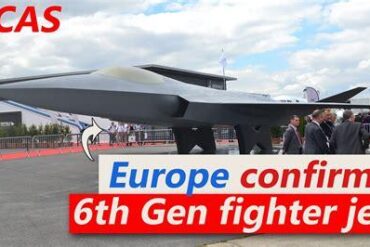
The €100 billion Future Combat Air System (FCAS), once promoted as Europe’s defining leap into sixth-generation airpower, now stands on the edge of collapse. Germany’s threat to withdraw from the program marks the gravest crisis yet for a project already crippled by industrial rivalry, strategic mistrust, and years of stalled negotiations. What began as Europe’s boldest attempt to achieve defense sovereignty is rapidly devolving into a geopolitical tug-of-war between Paris and Berlin.
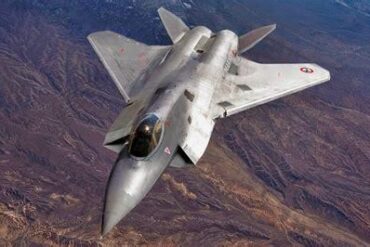
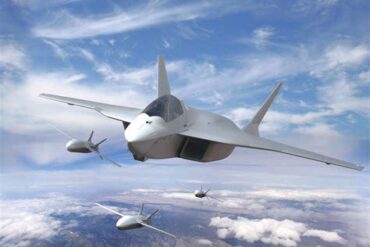
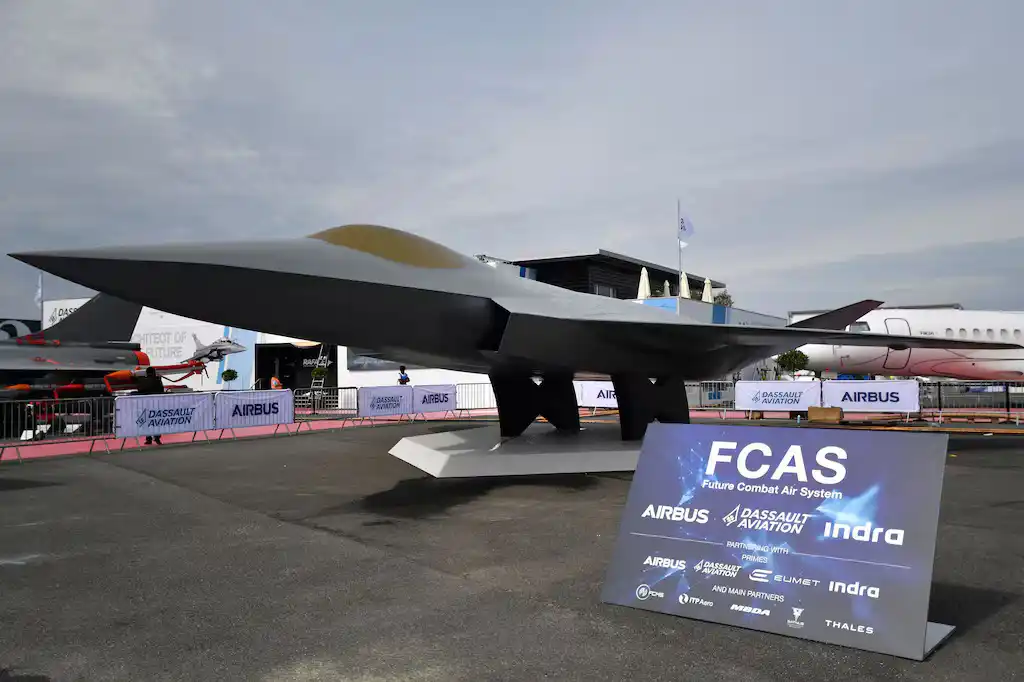
At the center of the crisis is the Next-Generation Fighter (NGF) — the crown jewel of the FCAS “system of systems.” The aircraft, meant to replace the Rafale and Eurofighter Typhoon from the 2040s onward, has become a battleground between Dassault Aviation and Airbus. Both states are now pushing their respective champions to reach a deal before December 18, a deadline that could determine whether FCAS survives or disintegrates into fragmented national programs.
France insists that Dassault must retain primacy over the NGF’s design. Germany demands equal footing for Airbus. Neither side is budging. Their deadlock is now so severe that officials are openly discussing abandoning the fighter jet altogether and instead narrowing FCAS to a shared “combat cloud” system — a drastic scaling back of Europe’s most ambitious joint military project.
Berlin’s Warning: Withdraw Or Reinvent the Program
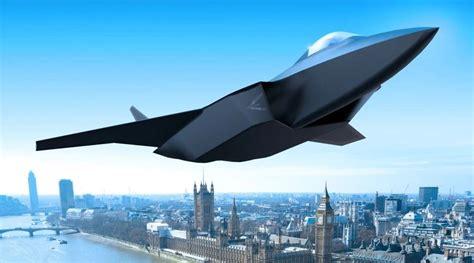
Germany’s recent statements have shaken European defense circles. German Air Force Chief Lt. Gen. Holger Neumann hinted that Berlin might pivot toward the GCAP — the rival sixth-generation fighter initiative led by the UK, Italy, and Japan. His remarks suggested that Germany is losing patience with FCAS delays and French inflexibility.
Defense Minister Boris Pistorius has been more explicit. He warned that unless Paris and Berlin reach consensus by year’s end, Germany will “pull the plug.” That threat now looms heavily over a program already lagging far behind international competitors such as America’s F-47, the Anglo-Japanese-Italian GCAP, and China’s emerging sixth-generation prototypes.
Dassault vs. Airbus: A Battle That Could Sink FCAS
At the heart of the dispute is workshare and design authority. Dassault argues that only it has the expertise to lead the NGF, drawing on decades of producing aircraft like the Rafale. CEO Éric Trappier has repeatedly rejected equal workshare, saying it would dilute technical quality. Airbus, representing both Germany and Spain, rejects a subordinate role and refuses to accept Dassault’s dominance.
The standoff is so entrenched that industrial teams have failed for years to agree on fundamentals such as cockpit design, flight controls, or the digital architecture of the aircraft. Without a resolution, Phase 2 of the program — the step leading to a flying demonstrator — cannot begin.
Paris and Berlin Consider a Radical Alternative: Ditch the Fighter, Keep the Cloud
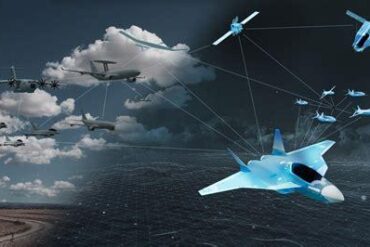
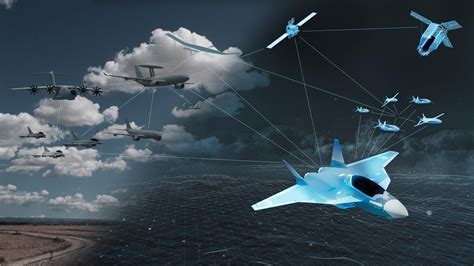
Amid growing frustration, French and German officials have floated a dramatic fallback option: cancel joint development of the NGF and salvage FCAS by focusing solely on the Combat Cloud — the advanced, distributed command-and-control network designed to link jets, drones, ships, sensors, and ground forces.
Airbus Germany leads this “cloud” pillar and sees it as the true heart of future warfare. Dassault rejects the idea, arguing that the cloud is meaningless without the fighter as the program’s centerpiece. The philosophical divide is now as large as the industrial one.
The Broader FCAS Ecosystem Is Also Feeling the Strain
The FCAS architecture spans seven technical pillars, involving major players across Europe:
- Dassault: Crewed NGF lead.
- Airbus: Combat cloud, stealth technology, and remote carriers.
- Safran: New-generation jet engine.
- Indra (Spain): Advanced sensor suite.
These pillars are interdependent; major delays in the NGF now risk paralyzing the entire system. Phase 1B — research, conceptual design, and early system development — is behind schedule. The demonstrator jet originally planned for 2029 is no longer feasible without immediate political intervention.
Germany’s Anger Intensifies Amid Domestic Industrial Pressure
Airbus Defence & Space’s Works Council has openly questioned whether Dassault should remain involved at all, calling for political leaders to defend German industrial interests. The Council’s chairman Thomas Pretzl argues that the French aerospace sector is using FCAS to shield Dassault’s dominance while marginalizing German workers.
This domestic pressure is fueling Berlin’s hardening stance. For Germany, an 80% French workshare on the NGF — a figure Paris denies but Berlin fears — is politically impossible.
France Signals It Can Go It Alone
Paris has long hinted that if FCAS fails, it will simply build a Rafale successor independently, just as it did when the Eurofighter program fell apart in the 1980s. Some French officials see Germany as an unreliable partner unwilling to accept French leadership in combat-air design.
A breakup would not be without precedent: France has repeatedly abandoned joint European defense projects when strategic visions diverged.
Europe Risks Losing the Sixth-Generation Race
While FCAS founders, rival programs surge ahead. The United States continues rapid development of its F-47, due to enter service in 2029. GCAP aims for the mid-2030s. China’s next-generation fighters are already conducting flight tests.
Europe, once poised to lead the next revolution in air warfare, may instead find itself decades behind. A failed FCAS could fracture European defense planning and deepen reliance on American systems such as the F-35.
Can Paris and Berlin Rescue the Vision?
Whether FCAS survives now depends on a few critical political decisions due before the end of the year. Either Paris and Berlin settle the Dassault–Airbus dispute, or FCAS splinters into national or alternative alliances. The stakes go beyond a single aircraft. The program embodies the question of whether Europe can act strategically, industrially, and militarily as one.
The next weeks will determine whether FCAS becomes Europe’s greatest defense triumph — or its most spectacular collaborative failure.