Boeing’s commercial aircraft business has always depended on a delicate balance between global airline demand, manufacturing timing, and geopolitical stability. That balance is now facing a new stress point. Roughly 14% of Boeing’s total aircraft backlog is tied to Middle Eastern airlines and leasing companies, a concentration that has suddenly become far more significant as regional tensions ripple through global aviation markets. While airlines have historically treated the Gulf region as a reliable hub of long-haul growth, recent instability is forcing analysts to reassess whether that demand will arrive on schedule. For Boeing, whose widebody strategy is already under intense scrutiny, the stakes are unusually high.
The risk is not simply about airlines canceling orders overnight. Aircraft manufacturing economics operate on long timelines, where delivery schedules, financing agreements, and final payments determine when revenue actually materializes. Boeing may report a record backlog, but that backlog only becomes real cash when aircraft are delivered and accepted by customers. If airlines delay those deliveries, the financial consequences cascade through the company’s balance sheet. With the manufacturer still navigating production challenges and investor concerns around major programs, any disruption tied to a key region could amplify uncertainty.
What makes the current situation unusual is how heavily the widebody segment is intertwined with Gulf airline expansion strategies. Airlines such as Emirates, Qatar Airways, and Etihad have built global networks around long-haul connections through major hubs like Dubai, Doha, and Abu Dhabi. Their business model depends on stable airspace access, predictable fuel costs, and uninterrupted transit flows between continents. When geopolitical disruptions interfere with these elements, the entire traffic engine that supports large aircraft orders begins to wobble.

Middle East Exposure Is Concentrated In Boeing’s Widebody Strategy
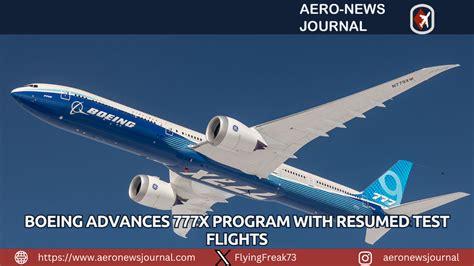
The structure of Boeing’s backlog reveals why analysts are paying close attention. According to industry assessments, Middle Eastern airlines account for a disproportionately large share of Boeing’s widebody orders, particularly within the next-generation 777X program. Across the region, airlines and leasing firms collectively have around 1,710 aircraft on order, and Boeing holds roughly 57% of that demand. That exposure is much higher than Airbus, whose backlog distribution is spread more evenly across regions.
The vulnerability becomes even clearer when looking at a single customer: Emirates. The Dubai-based airline has ordered 270 Boeing 777X aircraft, making it the single most important customer for the program. In effect, the long-term commercial success of the aircraft depends heavily on Emirates maintaining its ambitious fleet expansion plans. Aviation history offers a precedent for this type of relationship. Emirates once played a similar role as an anchor buyer for the Airbus A350 program, providing the scale needed to justify development and production.
However, anchor customers can become pressure points when external conditions shift. If travel demand weakens, financing costs rise, or regional conflicts disrupt operations, airlines often respond by delaying fleet deliveries rather than canceling outright. Those deferrals may sound harmless, but they can reshape a manufacturer’s financial timeline dramatically.
Cash Flow Pressure And The Timing Problem
For Boeing, the central financial risk lies in timing rather than order cancellations. Aircraft orders typically involve milestone payments spread over several years, with the largest payment occurring upon delivery. When deliveries slip, the associated revenue and profit shift forward as well. A cluster of delays from Middle Eastern airlines would therefore slow the conversion of backlog into cash.
This matters especially for widebody aircraft, which generate higher margins than narrowbody jets. Each delivery carries significant revenue weight, meaning even small schedule shifts can influence quarterly financial results. Boeing’s commercial division already operates under investor scrutiny following multiple program challenges and production slowdowns.
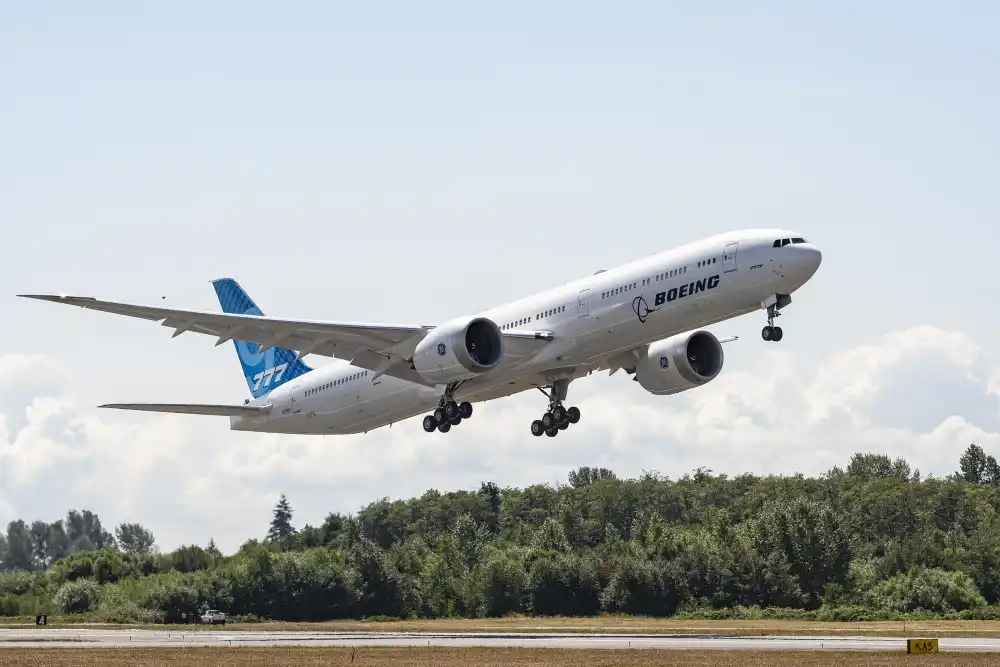
The 777X program adds another layer of sensitivity. In October 2025, Boeing recorded a $4.9 billion pre-tax charge tied to the aircraft’s development, while simultaneously pushing the expected delivery of the first 777-9 variant to 2027. Those delays have already stretched the timeline for recouping development costs. If major customers begin deferring deliveries on top of that delay, the path toward profitability becomes even longer.
Possible Paths Forward For Boeing And Gulf Airlines
The future trajectory of this situation depends heavily on geopolitical developments and airline demand recovery. In the most optimistic scenario, regional tensions ease relatively quickly. Airlines maintain their long-term fleet strategies, and Boeing experiences only minor schedule adjustments. Deliveries might shift slightly, but the core backlog remains intact and the 777X enters service with strong customer commitment.
A more moderate outcome would involve a prolonged but manageable period of instability. Fuel prices remain elevated, certain airspace corridors stay restricted, and long-haul demand through Gulf hubs grows more slowly than anticipated. Airlines might respond by stretching their delivery timelines or renegotiating financing arrangements. Boeing would still deliver aircraft, but the pace would slow, gradually pushing revenue further into the future.
The most challenging scenario emerges if geopolitical disruptions intensify. Extended conflict, persistent route closures, or major energy market shocks could significantly weaken the hub-and-spoke model that Gulf airlines rely on. Widebody aircraft orders are less flexible than narrowbody purchases because they are customized and produced in smaller numbers. That makes it harder for manufacturers to quickly redirect production slots to alternative customers.
In that environment, Boeing’s backlog concentration becomes a structural vulnerability rather than a temporary inconvenience. The company still possesses an enormous $682 billion commercial aircraft backlog covering more than 6,100 jets, but size alone does not eliminate risk. When a critical share of high-value aircraft depends on a single region and a handful of airlines, global events can echo through the balance sheet with surprising force.