The global aviation industry is once again demonstrating a familiar pattern: when airlines seek efficiency, flexibility, and profitability on short-to-medium routes, regional jets become strategic assets. In 2025, Brazilian aerospace manufacturer Embraer captured this momentum with remarkable force. The company closed the year with a record-breaking $31.6 billion firm-order backlog, the largest in its history and more than 20% higher than the previous year.
Behind that number lies a deeper industry shift. Airlines worldwide are recalibrating their fleets for a post-pandemic travel environment where right-sized aircraft matter more than sheer capacity. Embraer’s E-Jet family—particularly the advanced E2 generation—has emerged as a preferred solution for carriers balancing operational efficiency with passenger comfort.
Financially, the manufacturer delivered strong performance across its divisions. Total revenue exceeded $7.5 billion in 2025, supported by rising aircraft deliveries and sustained demand for both commercial and business aviation products. Operationally, Embraer delivered 78 commercial aircraft, improving on the 73 jets delivered in 2024. This steady growth reflects a broader trend: airlines increasingly favor aircraft capable of profitably serving thinner routes that larger narrow-bodies struggle to justify.
E-Jet Demand Drives Embraer’s Record Backlog
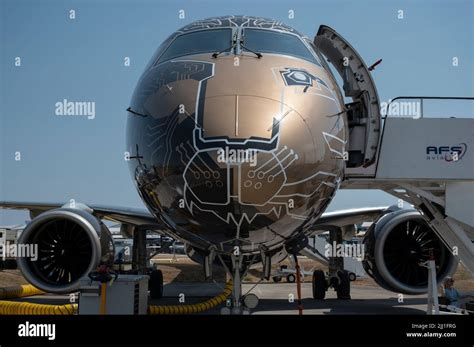
The backbone of Embraer’s surge is the E-Jet program, which continues to dominate the regional jet segment. By the end of 2025, the company recorded 459 firm orders across the E-Jet family, supported by more than 400 additional options and purchase rights.
The flagship E195-E2 stands out as the most successful variant in the portfolio. Out of 401 total firm orders, 166 aircraft have already been delivered, leaving a robust backlog of 235 jets awaiting production. Airlines favor the E195-E2 because it combines lower fuel consumption, reduced emissions, and competitive seat economics, making it particularly attractive for routes carrying between 100 and 130 passengers.
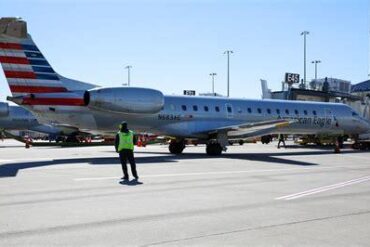
Meanwhile, the E175 continues to play a critical role in North America’s regional aviation network. With 1,003 total orders historically and 813 deliveries completed, the aircraft remains a cornerstone for regional carriers operating under major airline partnerships.
The smaller E190-E2 also maintains a niche market presence. Although its backlog currently stands at 34 aircraft, the model serves operators seeking a balance between capacity and operational flexibility.
Overall, Embraer’s commercial aviation backlog alone represents roughly $14.5 billion of the company’s total order pipeline, underscoring the strategic importance of the E-Jet program to its long-term growth.
Major Airline Orders Reinforce Global Confidence
Demand for Embraer jets accelerated significantly throughout 2025, with the manufacturer securing 154 new E2 sales during the year—more than double the previous record of 76 orders achieved in 2015. These deals came from airlines and leasing companies across multiple continents, reinforcing the global appeal of the platform.
One of the most significant agreements came from Avelo Airlines, which placed a $4.4 billion order for up to 100 E195-E2 aircraft. The deal includes 50 firm orders and 50 purchase options, marking the first U.S. customer for the E195-E2. This milestone carries strategic significance, as the United States remains the world’s largest regional aviation market.

European and international carriers also played a major role in Embraer’s order surge. Scandinavian Airlines (SAS) committed to 45 firm E195-E2 aircraft with an additional ten options, strengthening its regional fleet modernization strategy. In Latin America, LATAM Airlines expanded its relationship with Embraer by ordering 24 E195-E2 aircraft, while securing 50 additional options for future growth.
Leasing companies further amplified demand. Aircraft lessor TrueNoord agreed to purchase 20 firm E195-E2 jets and 20 options, alongside ten E175 aircraft. Meanwhile, Swiss regional carrier Helvetic Airways committed to up to eight E195-E2 aircraft, highlighting the model’s growing presence in European regional networks.
Another noteworthy agreement came from Air Côte d’Ivoire, which signed a deal for four E175 aircraft with eight options, strengthening Embraer’s footprint in Africa’s rapidly expanding aviation sector.
Production Ramp-Up Becomes the Next Challenge
With demand surging, Embraer now faces the classic aerospace industry dilemma: keeping production aligned with rising orders. The manufacturer plans to gradually increase output in the coming years, targeting 80 E-Jet deliveries in 2026 and aiming for approximately 100 aircraft annually by 2027 or 2028.
Scaling production is easier said than done. Like much of the aerospace industry, Embraer continues to navigate supply chain disruptions, particularly involving Pratt & Whitney, which supplies engines for the E2 family. These challenges have slowed production across the sector, affecting manufacturers from Airbus to Boeing.
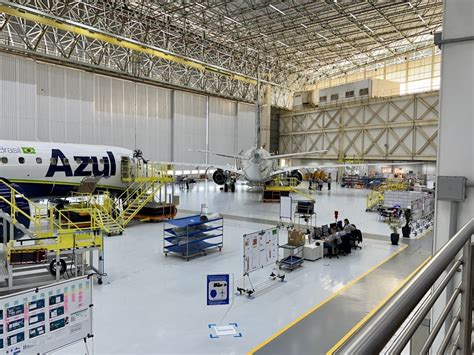
Despite these constraints, Embraer remains confident in its ability to meet demand. In total, the company delivered 233 aircraft across all segments in 2025, representing a 15% year-on-year increase. That figure includes 155 business jets, demonstrating that Embraer’s diversified portfolio—from executive aviation to defense platforms—continues to provide resilience against market fluctuations.
Why Regional Jets Are Reshaping Airline Networks
The resurgence of Embraer’s order book reflects a broader structural change in airline strategy. For decades, airlines pursued growth by deploying ever larger aircraft on hub-to-hub routes. Today, the economics of air travel are evolving toward frequency, flexibility, and right-sized capacity.
Aircraft like the E195-E2 enable airlines to open new routes that might not sustain larger narrow-body jets such as the Airbus A320 or Boeing 737. The result is a more intricate global route network, where smaller jets create direct connections between secondary cities while maintaining profitability.
This dynamic helps explain why Embraer’s backlog has reached unprecedented levels. With 459 aircraft already on order and hundreds more options waiting in the wings, the Brazilian manufacturer sits at the center of a powerful shift in commercial aviation—one where efficient regional jets are no longer niche tools but essential building blocks of modern airline fleets.