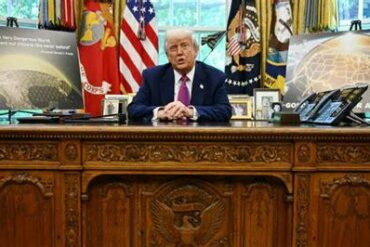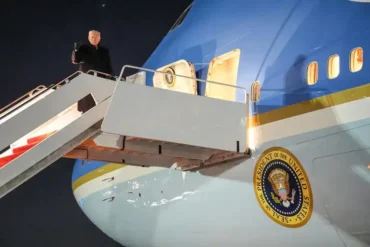
The United States is poised to embark on a new era of strategic missile defense, with President Donald J. Trump proposing a monumental $25 billion investment to kickstart the development of the Golden Dome missile defence programme. This bold initiative, forming the cornerstone of Trump’s proposed $1.01 trillion national defence budget for fiscal year 2026, was formally introduced during a high-level briefing by Pentagon officials. Framed as an urgent response to the accelerating threats posed by adversaries such as China and Russia, the Golden Dome is envisioned as a next-generation missile shield, integrating land, sea, air, and space assets into a seamless, multi-domain defence system.
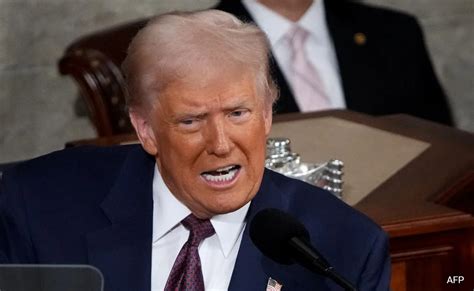
Golden Dome: A Strategic Leap Forward in U.S. Homeland Defence
The Golden Dome programme was officially established through an executive order signed on January 27, 2025, after the Defense Intelligence Agency released a sobering report highlighting the evolving nature of global missile threats. According to the report, adversaries have been aggressively developing advanced capabilities, including hypersonic glide vehicles, low-observable cruise missiles, and even fractional orbital bombardment systems (FOBS)—a class of weapons once thought to exist only in theoretical war-gaming scenarios.
These weapon systems dramatically compress response times, evade traditional radar and missile defence coverage, and in some cases, utilize orbital trajectories that bypass existing U.S. early-warning architectures. The Golden Dome is therefore not merely an expansion of existing defence systems—it is a transformational reimagining of how missile threats are anticipated, tracked, and neutralized.
$25 Billion as a Launchpad: The First Phase of Golden Dome
The initial $25 billion allocation is intended to establish foundational components of the Golden Dome architecture. This will fund:
- Advanced space-based sensors capable of persistent global tracking of missile launches and trajectories.
- Kinetic and non-kinetic interceptors, including laser-based and directed energy systems.
- Next-generation Command and Control (C2) platforms utilizing artificial intelligence, quantum communications, and cloud-integrated threat fusion.
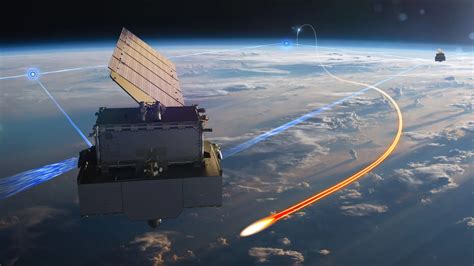
These early-stage technologies will be developed in close collaboration with leading defense contractors, national laboratories, and military R&D agencies such as the Defense Advanced Research Projects Agency (DARPA) and Space Development Agency (SDA).
A Layered, Unified Architecture Across Multiple Domains
At the heart of the Golden Dome is its layered missile defence architecture. Unlike legacy systems that operate largely in isolation, the Golden Dome will link land-, sea-, air-, and space-based assets under a unified command structure. Each domain will contribute its unique strengths:
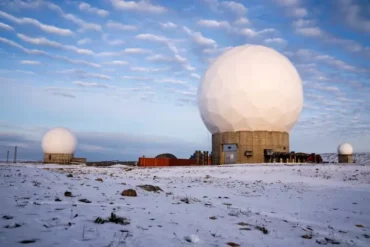
- Land-based elements, such as upgraded THAAD and Patriot systems, will provide point and regional defence.
- Sea-based platforms, particularly Aegis-equipped destroyers, will offer flexible, mobile interception capability.
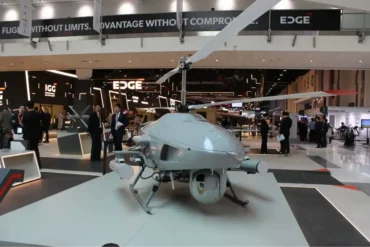
- Airborne assets, including high-altitude drones and airborne lasers, will engage threats in the boost or terminal phase.
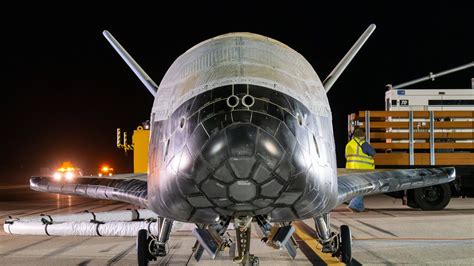
- Space-based sensors and interceptors will monitor and engage threats from low-Earth orbit and beyond.
Command and control across these domains will be executed through a real-time threat fusion network, capable of ingesting sensor data from thousands of nodes and deploying countermeasures within seconds of launch detection. Officials describe this as a “kill web” rather than a traditional “kill chain,” emphasizing its simultaneous multi-vector engagement capabilities.
Countering China and Russia’s Missile Modernisation
The urgency of the Golden Dome initiative is directly tied to China and Russia’s unprecedented strides in missile technology. China has tested multiple hypersonic glide vehicles (HGVs), some of which are capable of maneuvering at Mach 5+ speeds and altering trajectory mid-flight, making them exceedingly difficult to intercept with traditional systems.
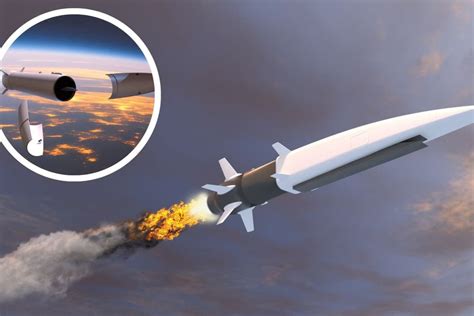
Meanwhile, Russia continues to refine its Avangard HGV and Kinzhal hypersonic missiles, both of which have been fielded in limited numbers. Additionally, Russia’s purported development of FOBS-style weapons, reminiscent of Cold War-era Soviet concepts, has reignited fears of orbital bombardment capabilities circumventing existing missile defence coverage.
Golden Dome, with its space-based sensor net and hypersonic interceptors, seeks to pre-emptively neutralize these threats. The programme’s stated goal is not just to react to launches but to deter them altogether by projecting near-certainty of failure for any first-strike attempt against U.S. interests.
Timeline and Challenges: Five to Ten Years for Full Deployment
Pentagon officials estimate that full deployment of the Golden Dome architecture—particularly its orbital layers—will require five to ten years, contingent on budgetary stability, congressional approval, and interagency cooperation. The programme demands extensive coordination between the U.S. Space Force, Missile Defense Agency (MDA), U.S. Cyber Command, and various intelligence units.
The Department of Defense has already initiated feasibility studies, prototype testing, and risk assessments across multiple domains. Key milestones include:
- Launch of two prototype satellites in FY2026 to test sensor integration.
- Field testing of airborne directed-energy interceptors by 2028.
- Initial Operational Capability (IOC) for integrated command centers projected for 2029.
While highly ambitious, the programme is underpinned by existing technology pathways, many of which were matured under prior initiatives such as the Space-Based Infrared System (SBIRS) and Next-Generation Interceptor (NGI) programs.
Political Dimensions and Strategic Implications
Beyond its technical scope, the Golden Dome is also a geopolitical statement. President Trump’s renewed push for national missile defence reasserts America’s strategic dominance in space and reaffirms its commitment to homeland security against peer adversaries. Critics argue, however, that the system may trigger a new arms race, particularly in anti-satellite (ASAT) weapons and counter-space warfare.
International observers, particularly in Beijing and Moscow, have already issued preliminary condemnations. China’s Ministry of Foreign Affairs labelled the Golden Dome a “destabilizing escalation,” while Russian defense officials warned it could “undermine existing arms control agreements.”
Yet for Trump and his defence advisors, these reactions are seen as validations of the programme’s necessity. As one senior official stated, “Deterrence is only credible when it’s visible, integrated, and impossible to circumvent. Golden Dome is that deterrent.”
The Road Ahead: Funding, Bipartisanship, and Public Discourse
The proposed $25 billion investment marks just the beginning of a multi-phase effort that could eventually cost upwards of $150 billion, according to unofficial estimates. Its fate now lies in the hands of Congress, where bipartisan support for missile defence has historically been strong, though not without scrutiny.
Some Democrats have raised concerns about opportunity costs, suggesting that funding could be diverted from conventional readiness or diplomatic initiatives. Others question the wisdom of militarizing space further at a time of global climate, economic, and cybersecurity crises.
Still, proponents argue that missile defence is a non-negotiable component of 21st-century national security, particularly in an era defined by technological acceleration and geopolitical instability.
Public discourse surrounding Golden Dome is expected to intensify as detailed procurement and deployment schedules are released in the coming months. Hearings before the House and Senate Armed Services Committees will be crucial in shaping the programme’s final contours, timelines, and contractor partnerships.
Conclusion: A Defensive Shield for an Uncertain Future
The Golden Dome missile defence programme represents a paradigm shift in how the United States envisions and executes homeland protection in the missile age. It is bold, unprecedented, and fraught with complexity. But as the threats it is designed to confront grow more sophisticated and global power dynamics tilt toward confrontation, the Golden Dome may prove not just strategic, but essential.
As the world watches the United States chart a new course through the militarised domain of space and beyond, one thing is clear: the age of passive deterrence is over, and active, multi-layered defence is the future.