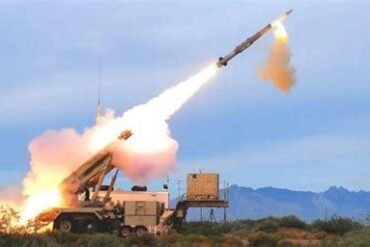
The United States has officially launched the $151 billion SHIELD Golden Dome project, a sweeping initiative aimed at defending the homeland against the rapidly evolving threat of hypersonic and intercontinental ballistic missiles. Announced on July 25, 2025, this historic defense program marks the most comprehensive homeland missile shield effort since the Cold War, integrating land, sea, air, space, and cyber domains under one unified architecture.
The SHIELD Program: A New Era in Homeland Defense
The SHIELD project, short for Scalable Homeland Integrated Ecosystem for Layered Defense, is a forward-leaning response to a new generation of missile threats from peer adversaries such as China, Russia, North Korea, and Iran. Unlike legacy systems focused on regional or midcourse threats, SHIELD aims to provide continuous, layered, multi-domain coverage across the continental United States.
At the heart of SHIELD lies a multi-faceted infrastructure combining:
- Persistent space-based sensors for global tracking
- Advanced ground-based and sea-based radar arrays
- AI-driven command and control systems for real-time coordination
- Land-based missile interceptors capable of engaging threats in all flight phases
Oversight for the project has been assigned to retired U.S. Space Force General Michael Guetlein, who will direct the program from a newly formed federal missile defense authority headquartered at Redstone Arsenal in Huntsville, Alabama — the nation’s epicenter of aerospace and missile innovation.

The Strategic Imperative: Why SHIELD Is Urgently Needed
Modern missile threats are no longer limited to conventional ballistic trajectories. The proliferation of hypersonic glide vehicles (HGVs) and hypersonic cruise missiles (HCMs) has rendered many current missile defense systems inadequate. These weapons can fly at speeds exceeding Mach 5, maneuver unpredictably, and fly at lower altitudes, making them extremely difficult to detect, track, and intercept.
For example, Russia’s Avangard and Kinzhal systems and China’s DF-17 have demonstrated operational capabilities meant to bypass U.S. early-warning systems and existing interceptors. These systems can shift trajectory mid-flight, dodge radar zones, and strike within minutes — compressing reaction windows and overwhelming command systems.
Equally concerning is the development of modern ICBMs armed with MIRVs (Multiple Independently Targetable Reentry Vehicles). Missiles like Russia’s RS-28 Sarmat or North Korea’s Hwasong-17 are capable of releasing multiple nuclear warheads aimed at different targets, significantly complicating interception.

A New Architecture for a New Threat Landscape
The SHIELD program is not merely a hardware upgrade — it is a doctrinal shift in U.S. military thinking. It emphasizes networked integration, persistent detection, and multi-phase engagement. Its goal is to intercept missiles during any phase of flight:
- Boost Phase: Right after launch, when the missile is most vulnerable
- Midcourse Phase: While traversing space — critical for ICBMs
- Terminal Phase: As the missile descends onto its target
Unlike legacy systems such as Ground-Based Midcourse Defense (GMD) or THAAD, which focus on specific phases or geographic regions, SHIELD offers holistic national coverage, incorporating insights from cyber warfare, satellite telemetry, and artificial intelligence into a synchronized command structure.
Industrial and Technological Powerhouses Behind SHIELD
Major defense contractors expected to play key roles include Lockheed Martin, Raytheon, Northrop Grumman, and General Atomics — all of which have contributed to U.S. missile defense platforms for decades. These companies are likely to lead the design and manufacturing of:
- Next-gen interceptors
- High-resolution radar arrays
- Hardened battle management platforms
- AI-based threat analysis systems
In a controversial decision, commercial tech giants like SpaceX and Amazon’s Project Kuiper are not slated for early-phase participation. Despite their expertise in satellite constellations and communications, defense officials appear to prioritize military-grade infrastructure over commercial solutions in the initial buildout, citing concerns over system hardening, survivability, and control.
Redstone Arsenal: The Brain of SHIELD
The decision to centralize SHIELD’s command at Redstone Arsenal underscores Alabama’s role as the brain center of U.S. missile defense. Already home to the Missile Defense Agency, NASA’s Marshall Space Flight Center, and key Army commands, Redstone will now oversee cross-domain integration, system testing, and rapid deployment strategies.
General Guetlein has pledged that SHIELD’s operational timeline will prioritize modular scalability, allowing incremental testing while phasing in full capabilities over the next decade. The first $13 billion in funding will be used to construct key infrastructure, initiate R&D, and begin sensor and command system integration.

The $151 Billion Investment: What It Covers
The federal government will roll out the $151 billion SHIELD budget over ten years, with key allocations going to:
- Development of space-based infrared sensors and orbital platforms
- Construction of hardened command bunkers and battle management nodes
- Expansion of interceptor launch facilities across the Midwest and West Coast
- Integration of cybersecurity and AI-enhanced data fusion
- Continued weapons testing, simulation, and threat modeling
The Missile Defense Agency has confirmed that procurement calls and requests for proposals (RFPs) will be issued by early 2026, with initial deployments expected by 2028.
Adversaries Accelerating Hypersonic Development
SHIELD’s timing is not coincidental. Over the past five years, adversaries have escalated their missile programs aggressively:
- China has fielded multiple DF-17 HGV battalions, with satellite imagery showing deployment near coastal regions.
- Russia claims to have deployed the Avangard system on active-duty ICBMs, and continues flight tests of its nuclear-powered cruise missile, the Burevestnik.
- North Korea tested an ICBM capable of reaching all U.S. states and continues work on miniaturized nuclear warheads.
- Iran is rapidly advancing its Shahab and Sejjil missile families, reportedly developing maneuverable reentry vehicles (MaRVs) for added precision.
These developments have diminished the deterrent value of legacy U.S. systems, particularly those optimized for symmetrical threats. SHIELD aims to reestablish deterrence by denying adversaries confidence in a successful strike.

The Global Implications of SHIELD
Once fully operational, the SHIELD Golden Dome will not only defend the U.S. homeland but likely serve as a model for allied nations seeking similar layered defense systems. In an era of multi-domain warfare, where cyberattacks, missile strikes, and electronic warfare converge, SHIELD is a prototype of future national defense strategies.
There is already speculation that NATO members and Indo-Pacific allies such as Japan, South Korea, and Australia may seek partnerships or purchase components of the SHIELD architecture.
The project also represents a paradigm shift in how nations think about air defense — not as a regional or temporary measure, but as a permanent, space-integrated security umbrella capable of evolving with the threat.
Conclusion: A Monumental Step in American Defense Strategy
The launch of the SHIELD Golden Dome is more than just a budget announcement; it is a strategic milestone for the United States. Faced with the mounting reality of hypersonic proliferation and global instability, SHIELD positions the U.S. to not only defend its territory but shape the global standard for future missile defense.
With hardened assets, AI-enhanced coordination, and comprehensive coverage, SHIELD may become the most significant investment in homeland protection in over half a century. Whether it becomes the technological fortress that renders first-strike threats obsolete will depend not just on funding and engineering — but on strategic foresight, international collaboration, and relentless innovation.