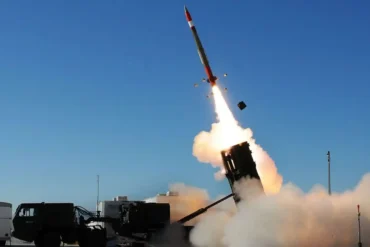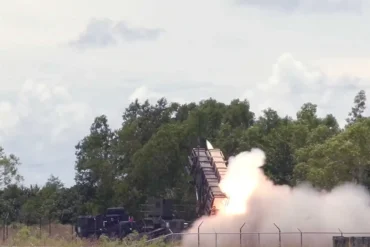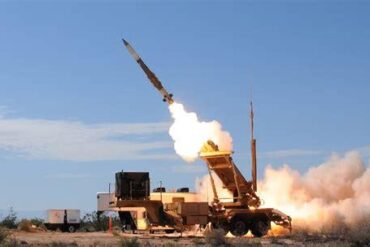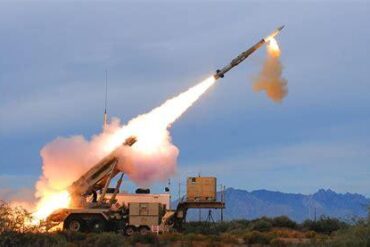
Russia’s continued use of high-speed ballistic and hypersonic weapons against Ukraine has pushed air defense to the center of the war’s strategic equation. In response to mounting strikes on infrastructure and urban centers, Germany has delivered a new batch of PAC-3 Patriot interceptor missiles to Ukraine, reinforcing Kyiv’s ability to counter some of the most dangerous weapons in Russia’s arsenal, including Kinzhal hypersonic missiles and Iskander short-range ballistic missiles. The delivery represents both a tactical reinforcement for Ukraine’s air defense network and a broader signal of European commitment to sustaining the country’s defensive capacity during an increasingly intense missile campaign.
The transfer follows discussions among allied nations during the Ramstein-format defense coordination meetings, where partners have sought ways to strengthen Ukraine’s layered air defense system. According to Ukrainian officials, approximately 35 PAC-3 interceptor missiles were pledged by multiple partners, with the German contribution arriving on March 10. Ukrainian President Volodymyr Zelensky confirmed that the shipment would immediately reinforce the Patriot batteries responsible for intercepting ballistic threats targeting key infrastructure and population centers.
Russia’s recent air campaign illustrates why additional interceptors are urgently needed. Throughout the winter, Russian forces launched hundreds of missiles against Ukrainian energy infrastructure, attempting to disrupt electricity generation, logistics networks, and urban services. Reports indicate that more than 700 missiles were fired during the winter campaign alone, with one night witnessing 32 ballistic missile launches. These attacks combine cruise missiles, ballistic missiles, and drones in coordinated waves designed to overwhelm Ukrainian defenses through sheer volume.
In such an environment, the arrival of even a limited number of interceptors can have outsized operational importance. Ukraine’s Patriot systems represent the only Western-supplied air defense layer specifically designed to defeat ballistic and hypersonic-class threats. While other systems such as NASAMS, IRIS-T, or S-300 variants provide protection against aircraft and cruise missiles, the Patriot PAC-3 interceptor is engineered for high-velocity targets descending at extreme speeds.
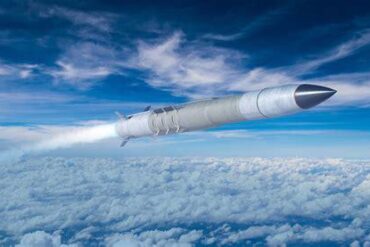
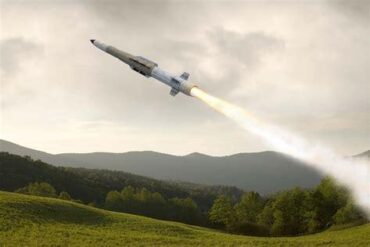
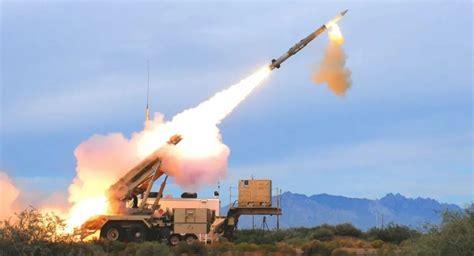
The PAC-3 Patriot missile is a compact but highly sophisticated interceptor designed specifically for missile defense missions. Measuring roughly 5 meters in length and 25 centimeters in diameter, the missile weighs about 218 kilograms and can reach speeds exceeding 6,000 kilometers per hour during interception maneuvers. Its defining feature is the hit-to-kill guidance system, which destroys incoming threats through direct collision rather than relying on proximity explosives.
Unlike older air-defense missiles that detonate near a target to scatter fragments, the PAC-3 interceptor employs precision kinetic impact. The missile’s onboard active radar seeker allows it to independently track the target during the final moments of flight. This capability reduces reliance on continuous radar illumination from the ground system and enables the interceptor to perform high-speed terminal corrections as it closes in on a ballistic target.
The operational envelope of the PAC-3 CRI variant—the configuration frequently referenced by Ukrainian officials—allows engagements at ranges of roughly 45 kilometers and interception altitudes approaching 12 kilometers. More advanced variants, such as the PAC-3 MSE (Missile Segment Enhancement), extend these capabilities with stronger propulsion and expanded engagement geometry. Even if the delivered missiles are baseline PAC-3 units, the architecture of the Patriot system allows flexible integration across multiple interceptor variants.
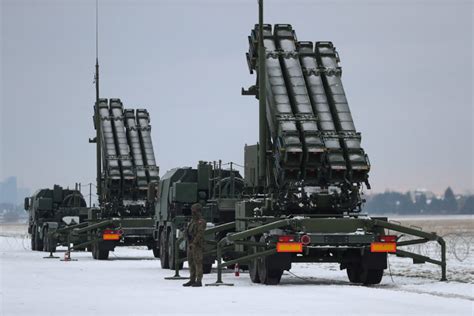
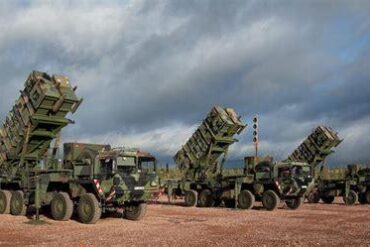
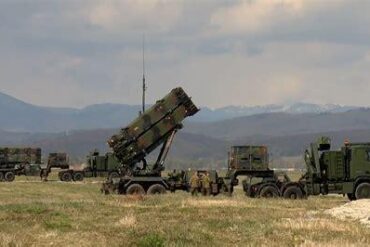
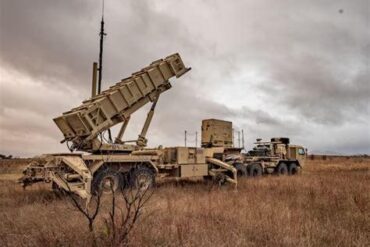
Another critical factor in missile defense is launcher capacity, sometimes referred to as “magazine depth.” The Patriot system’s M903 launcher can carry significantly more PAC-3 interceptors than earlier missile types. While older PAC-2 interceptors occupy four launch tubes per launcher, the smaller PAC-3 design allows up to 16 interceptors on a single launcher. This increase dramatically improves the system’s ability to withstand large missile raids.
For Ukraine, this higher density matters enormously. Russian strike packages often combine ballistic missiles, cruise missiles, and drone swarms in carefully timed sequences. The goal is to force defenders to expend their interceptors quickly and create gaps in the defensive shield. By deploying PAC-3 missiles in larger numbers per launcher, Patriot batteries gain additional resilience against such saturation tactics.
The technical evolution of the PAC-3 family further illustrates why these interceptors are considered among the most valuable assets in modern air defense. The PAC-3 MSE, developed by Lockheed Martin, incorporates a dual-pulse solid rocket motor that provides greater maneuverability and extended range. Enlarged aerodynamic fins and improved control surfaces enhance the missile’s ability to intercept maneuvering ballistic threats.
Additional improvements include advanced guidance algorithms, upgraded lethality mechanisms, and enhanced thermal protection designed to survive the extreme heat encountered during high-speed engagements. These changes expand the missile’s effective engagement envelope and increase the probability of destroying incoming warheads before they can reach their intended targets.
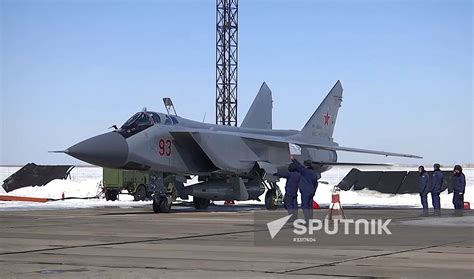
The strategic significance of these interceptors becomes even clearer when examining the weapons they are designed to defeat. Russia’s Kinzhal missile, launched from aircraft such as the MiG-31K, travels at hypersonic speeds and follows a maneuverable trajectory intended to complicate interception. The Iskander ballistic missile, meanwhile, is capable of performing evasive maneuvers during its terminal phase, further challenging traditional air defense systems.
Both missiles have been used repeatedly during the war against high-value targets including power stations, military command centers, logistics depots, and major cities. Their speed and precision are intended not only to destroy infrastructure but also to generate psychological pressure by demonstrating Russia’s ability to penetrate defensive networks.
Patriot systems armed with PAC-3 interceptors represent one of the few defenses capable of countering these threats. Because the interceptor physically collides with the incoming missile, the probability of destroying the warhead itself is higher than with blast-fragment systems. This reduces the likelihood that an intact payload continues toward the target after interception.
The delivery also carries geopolitical implications extending far beyond the battlefield. Global demand for advanced missile interceptors is rising rapidly, driven by conflicts in multiple regions and the increasing proliferation of ballistic missile technology. At the same time, the supply chain for advanced interceptors remains limited.
Recent reports suggest that U.S. interceptor inventories are under growing pressure, partly due to defense commitments in the Middle East and concerns over potential regional escalation. Annual production of PAC-3 missiles has historically been measured in hundreds rather than thousands, creating a persistent gap between demand and manufacturing capacity.
Although Lockheed Martin delivered more than 600 PAC-3 MSE missiles in 2025, long-term plans aim to expand production toward 2,000 units per year through a multi-year industrial expansion program. Even with that increase, however, scaling output across allied defense networks will take time.
For Ukraine, the challenge is immediate rather than long-term. Missile defense consumes interceptors rapidly, particularly during sustained campaigns targeting infrastructure and urban areas. Each incoming ballistic missile may require multiple interceptors to ensure a successful kill, meaning even modest increases in inventory can significantly extend operational endurance.
Germany’s transfer therefore functions as a bridge between urgent battlefield demand and slower industrial expansion across the transatlantic defense base. While the roughly 35 interceptors pledged by allied partners cannot permanently solve Ukraine’s missile defense requirements, they reinforce the single defensive layer capable of countering Russia’s fastest strike weapons.
In strategic terms, that reinforcement complicates Russian planning. The continued presence of operational Patriot batteries forces Russian forces to account for the possibility that high-value missiles such as Kinzhal or Iskander may be intercepted, reducing their reliability as tools for strategic shock.
For Ukraine, the benefit is straightforward: more interceptors mean more chances to protect cities, energy networks, and military infrastructure. For Europe, the decision reflects a broader recognition that sustaining Ukraine’s air defense shield remains essential to preventing Russia’s missile campaign from achieving its intended strategic impact.