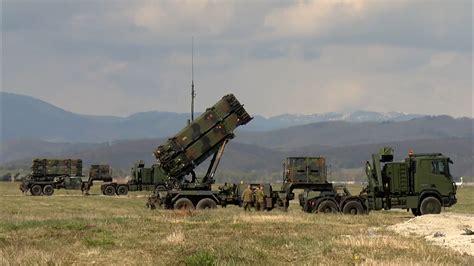
Modern warfare has quietly become a battle of mathematics: missiles launched versus missiles intercepted. In early March 2026, that equation became dramatically visible when nearly 800 Patriot interceptor missiles were reportedly fired in just three days across the Middle East to defend U.S. and allied assets during a major regional crisis. The staggering number quickly sparked debate across military circles, but nowhere was the reaction sharper than in Kyiv.
Ukraine’s Ministry of Defense publicly highlighted a striking contrast. According to its statement, the country has received around 600 Patriot missiles across four years of full-scale war, far fewer than what was used in a single regional confrontation. The comparison ignited a broader discussion about global missile defense priorities, supply shortages, and the strategic reality of modern air warfare.
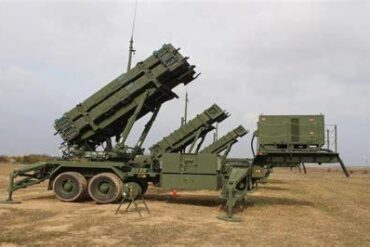
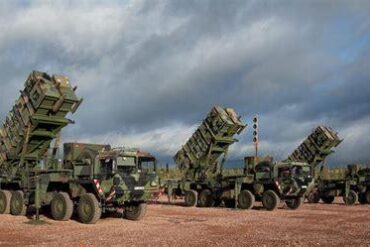
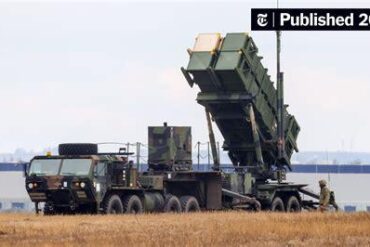
This controversy is not simply about numbers. It reveals the global strain on one of the world’s most advanced air defense systems, the MIM-104 Patriot, and highlights the geopolitical balancing act facing the United States and its allies.
800 Patriot missiles were used for air defense in just 3 days in the Middle East. Ukraine received 600 in 4 years of full-scale war.
Russia, Iran and North Korea form a new Axis of Evil. Ukraine was the first to confront this Axis. We continue to fight, but we need support.
The… pic.twitter.com/wUQVn9gSVK
— Defense of Ukraine (@DefenceU) March 10, 2026
A Massive Middle East Missile Barrage
The extraordinary consumption of Patriot missiles occurred during joint U.S.–Israeli military operations beginning February 28, 2026, targeting Iran’s strategic military infrastructure. The strikes reportedly focused on nuclear facilities, ballistic missile sites, naval forces, and key leadership targets, escalating tensions across the region almost instantly.
Iran’s response was swift and massive. Ballistic missiles and one-way attack drones surged toward U.S. military bases, Israeli infrastructure, and allied facilities across the Gulf region. Nations such as Saudi Arabia, the United Arab Emirates, Qatar, Kuwait, and Bahrain, all of which operate Patriot air defense systems, were suddenly facing a coordinated wave of incoming threats.
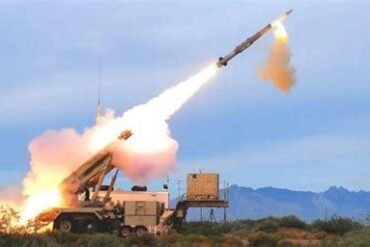
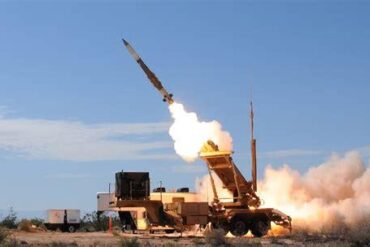
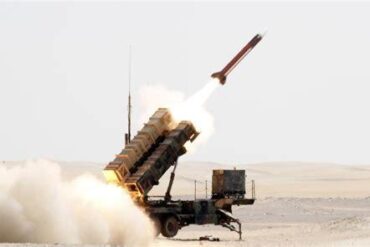
In this environment, Patriot systems became the backbone of regional defense. Radar networks detected high-speed ballistic threats traveling at several kilometers per second, leaving defenders with only minutes to respond. Interceptors launched in rapid succession across multiple locations, forming a dense protective shield over military bases, ports, and strategic infrastructure.
Within just 72 hours, roughly 800 interceptors were reportedly expended.
The scale of this defensive effort illustrates the brutal reality of missile warfare: defending against a determined missile barrage can require large numbers of interceptors for each incoming target. Even highly advanced air defense systems must account for tracking uncertainty, decoys, and the catastrophic consequences of a single missile slipping through.
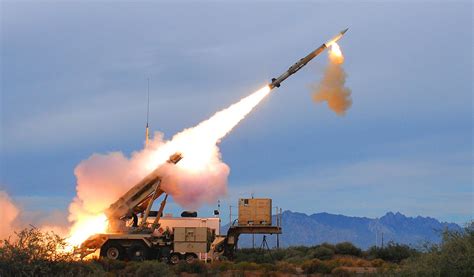
Interceptors launched from U.S. and Qatari Patriot missile batteries defending Al Udeid Air Base as Iran fired another wave of ballistic missiles at Qatar. pic.twitter.com/O2VdaUWNj3
— Clash Report (@clashreport) February 28, 2026
Why Ukraine Is Drawing Comparisons
Ukraine’s reaction stems from its own experience with sustained missile and drone attacks from Russia. Since the full-scale invasion began in 2022, Ukrainian cities have been frequent targets of ballistic missiles, cruise missiles, hypersonic weapons, and long-range drones.
Kyiv received its first Patriot systems only in April 2023, supplied by allies including the United States, Germany, and the Netherlands. While the systems quickly proved effective, the availability of interceptor missiles has remained limited.
Ukrainian officials argue that the contrast between Middle East missile consumption and Ukraine’s long-term supply demonstrates a gap in military support priorities. From Kyiv’s perspective, the country is confronting what it describes as a coalition of hostile powers — Russia, Iran, and North Korea — yet continues to face constraints on advanced air defense resources.
The argument is not merely rhetorical. Ukrainian cities depend heavily on Patriot batteries to defend against Russia’s most sophisticated missile threats, particularly ballistic and hypersonic weapons that few systems can reliably intercept.
The Global Shortage of Patriot Missiles
Behind the political messaging lies a very real logistical challenge: Patriot missiles are expensive, complex, and produced in limited quantities.
Each interceptor can cost over $3 million, depending on the variant. Production requires precision manufacturing, advanced guidance systems, and specialized propulsion components. As a result, global manufacturing capacity has struggled to keep pace with rising demand.
In 2025, manufacturers delivered approximately 620 advanced Patriot interceptors worldwide, the highest annual production level on record. Yet the pace of global conflicts — from Eastern Europe to the Middle East and the Indo-Pacific — has driven demand far beyond that output.
Countries operating Patriot systems include:
- The United States
- Germany
- Japan
- South Korea
- Saudi Arabia
- Israel
- Several Gulf states
- NATO allies across Europe
Each operator maintains stockpiles designed to defend national infrastructure and military bases. Governments are often reluctant to transfer large portions of those inventories, especially when regional tensions remain unpredictable.
Ukraine’s situation differs from most operators. Unlike Gulf states or NATO members that have maintained Patriot arsenals for decades, Ukraine began the war without any Patriot systems at all, leaving it dependent entirely on allied deliveries.
Why So Many Missiles Were Fired in the Middle East
Military analysts emphasize that the 800-missile figure should not be interpreted simply as one interceptor per incoming threat. Missile defense doctrine frequently calls for multiple interceptors against a single target, especially when dealing with ballistic missiles.
Ballistic missiles travel at extremely high speeds during their terminal phase. Even a minor radar tracking error could allow a missile to slip through the defensive envelope. To reduce that risk, defenders often launch two or more interceptors per target, dramatically increasing the probability of a successful kill.
Evidence from recent footage supports this approach. In one video from Qatar, Patriot systems appeared to fire 15 to 16 interceptors against just three or four incoming ballistic missiles. The tactic reflects a defensive philosophy prioritizing certainty over conservation.
For nations protecting U.S. bases and critical infrastructure, allowing even a single missile to strike could have enormous political and military consequences. As a result, interceptors are expended aggressively during short, high-intensity crises.
Ukraine, by contrast, often adopts a far more conservative strategy due to limited supply.
Ukraine’s Careful Use of Patriot Missiles
Because interceptor stocks remain constrained, Ukrainian operators typically launch one Patriot missile per incoming ballistic target whenever possible. This approach conserves resources but carries a slightly higher risk of interception failure.
Ukraine prioritizes Patriot use against high-value targets, particularly:
- Ballistic missiles
- Hypersonic weapons
- High-speed cruise missiles
Less sophisticated threats, such as drones or slower cruise missiles, are often engaged by other systems including NASAMS, IRIS-T, or Soviet-era air defenses.
Despite these limitations, Patriot batteries have produced several remarkable successes in Ukrainian service. Among the most notable was the interception of Russia’s Kinzhal hypersonic missile, a weapon previously described by Moscow as virtually unstoppable.
The system has also been credited with destroying several advanced Russian aircraft, including Su-34 Fullback fighter-bombers, Su-35 Flanker-E fighters, and even the rare A-50 airborne early warning aircraft.
These victories reinforced the system’s reputation as one of the most capable missile defense platforms in the world.
The Technology Behind the Patriot System
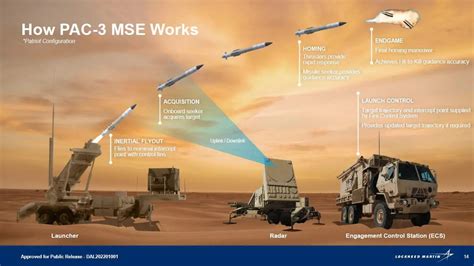
The Patriot system has evolved significantly since its introduction during the Cold War. Modern variants combine powerful radar tracking, advanced guidance algorithms, and highly specialized interceptor missiles.
Two primary interceptor types are widely used today.
The PAC-2 interceptor employs a blast-fragmentation warhead, detonating near its target and destroying it with a cloud of high-velocity shrapnel. This design remains effective against aircraft and certain missile threats.
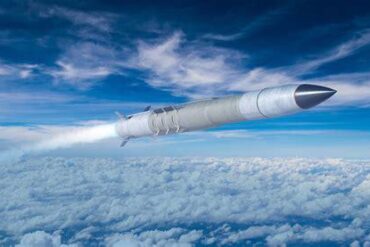
The newer PAC-3 MSE interceptor represents a technological leap. Instead of exploding near the target, it uses hit-to-kill technology, colliding directly with the incoming missile at extremely high speed. The kinetic energy generated by this impact is sufficient to destroy ballistic missiles without requiring a traditional explosive warhead.
This direct-impact approach dramatically improves interception reliability against modern high-speed threats, including maneuverable ballistic missiles.
Under U.S. Army testing conditions, the Patriot system has been evaluated in more than 2,500 controlled trials, demonstrating consistent effectiveness across multiple threat categories.
Europe’s Dilemma: Support Ukraine or Preserve Stockpiles
European governments now face a strategic dilemma. On one hand, Ukraine urgently needs more interceptor missiles to protect cities, energy infrastructure, and military facilities. On the other hand, European states must maintain sufficient stockpiles to defend their own territory.
The European Commissioner for Defence and Space, Andrius Kubilius, recently acknowledged that the European Union is evaluating mechanisms to mitigate risks associated with transferring Patriot missiles to Ukraine, particularly following the heavy use of interceptors in the Middle East.
Germany has reportedly begun assembling a package of more than 30 Patriot interceptors destined for Kyiv. While symbolically important, such deliveries represent only a fraction of what Ukrainian commanders believe is necessary.
Ukraine has repeatedly requested additional Patriot systems and missiles, arguing that expanded air defense coverage could significantly reduce the effectiveness of Russian missile campaigns.
A Growing Missile War Over Europe
Russia’s winter campaign during 2025–2026 demonstrated the scale of the challenge. Ukrainian Air Force data indicates that Russia launched approximately 250 ballistic, aero-ballistic, and hypersonic missiles during that period alone.
These attacks often targeted power stations, energy grids, and civilian infrastructure, seeking to weaken Ukraine’s economy and morale during the coldest months of the year.
Without sufficient interceptor supplies, even the most advanced air defense network can become vulnerable through sheer volume.
President Volodymyr Zelensky has previously discussed a potential agreement involving 25 Patriot air defense systems, but manufacturing timelines mean deliveries could take years. Production backlogs already exist due to orders from multiple countries seeking to strengthen their defenses.
For Kyiv, the priority is clear: more missiles for the systems already deployed.
The Strategic Reality of Missile Defense
The episode involving 800 Patriot missiles used in just three days illustrates a fundamental truth about modern warfare. Missile defense is not simply about technology; it is about supply, industrial capacity, and strategic prioritization.
Every interceptor fired represents millions of dollars and months of manufacturing effort. Yet when missiles begin falling toward cities or military bases, the calculus changes instantly. Defense planners will always favor certainty over conservation.
For Ukraine, the comparison with Middle East operations underscores its long-standing argument that sustained air defense requires sustained supply. For Western allies, the situation highlights an emerging global challenge: the world’s most advanced missile defense systems are increasingly in demand, but the factories producing them are struggling to keep up.
In the era of high-speed missiles and drone swarms, the real battlefield may ultimately be the industrial capacity behind the launchers.