The world of ultra-premium air travel has entered a fascinating new era. A $20,000 Air France La Première ticket is no longer simply a purchase of a larger seat, better champagne, or an elevated meal at 35,000 feet. In 2026, the value proposition behind Air France’s most exclusive cabin is built around something much broader: privacy, control, personalization, and a seamless luxury journey from departure to arrival.
At a time when many airlines have upgraded business class with fully flat beds, direct aisle access, private doors, and restaurant-style dining, traditional first class faces a difficult question. If business class already provides a comfortable sleep and premium experience, why would travelers spend several times more for first class?
The answer is that Air France La Première is no longer competing only as an aircraft cabin. Instead, it has evolved into a complete luxury ecosystem where the aircraft seat represents only one part of the experience. The real product begins long before boarding and continues through every stage of the journey.
Why Air France La Première Still Commands a $20,000 Fare in 2026
The survival of first class has become increasingly selective. Many airlines have reduced or eliminated their highest cabin because the difference between premium business class and first class became harder to justify. British Airways, for example, has adjusted its long-haul cabin strategy by reducing first-class capacity on some aircraft and removing the cabin completely from certain new aircraft configurations.
Air France has taken the opposite approach. Rather than shrinking La Première, the airline has invested heavily in making it more exclusive. The carrier’s strategy is based on the idea that the future of luxury aviation is not about adding more seats or simply creating larger suites. It is about removing inconvenience.
A modern La Première passenger is not paying $20,000 only for a seat. They are paying for a carefully controlled experience where waiting times are minimized, privacy is protected, and every transition feels effortless.
This philosophy explains why Air France continues operating La Première with only four suites on selected Boeing 777-300ER aircraft. The limited capacity creates scarcity, while allowing the airline to provide a level of service that would be impossible in a larger cabin.
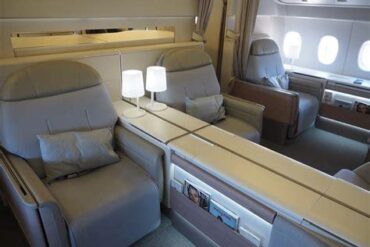
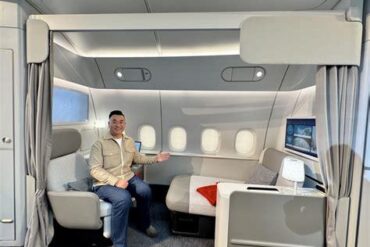
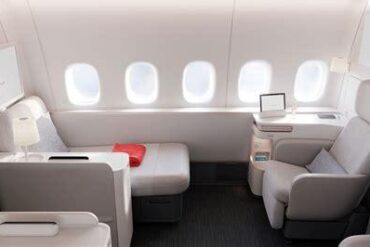
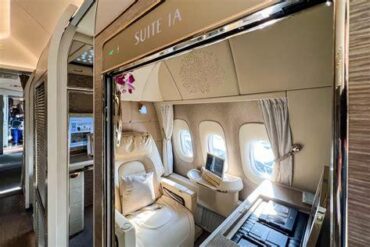
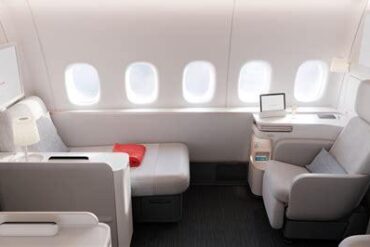
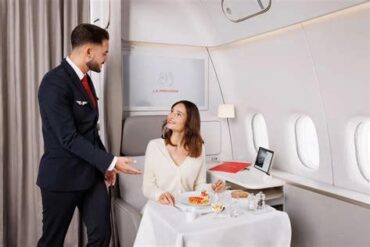
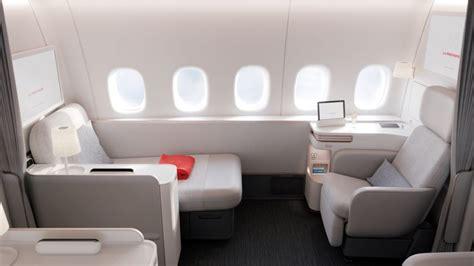
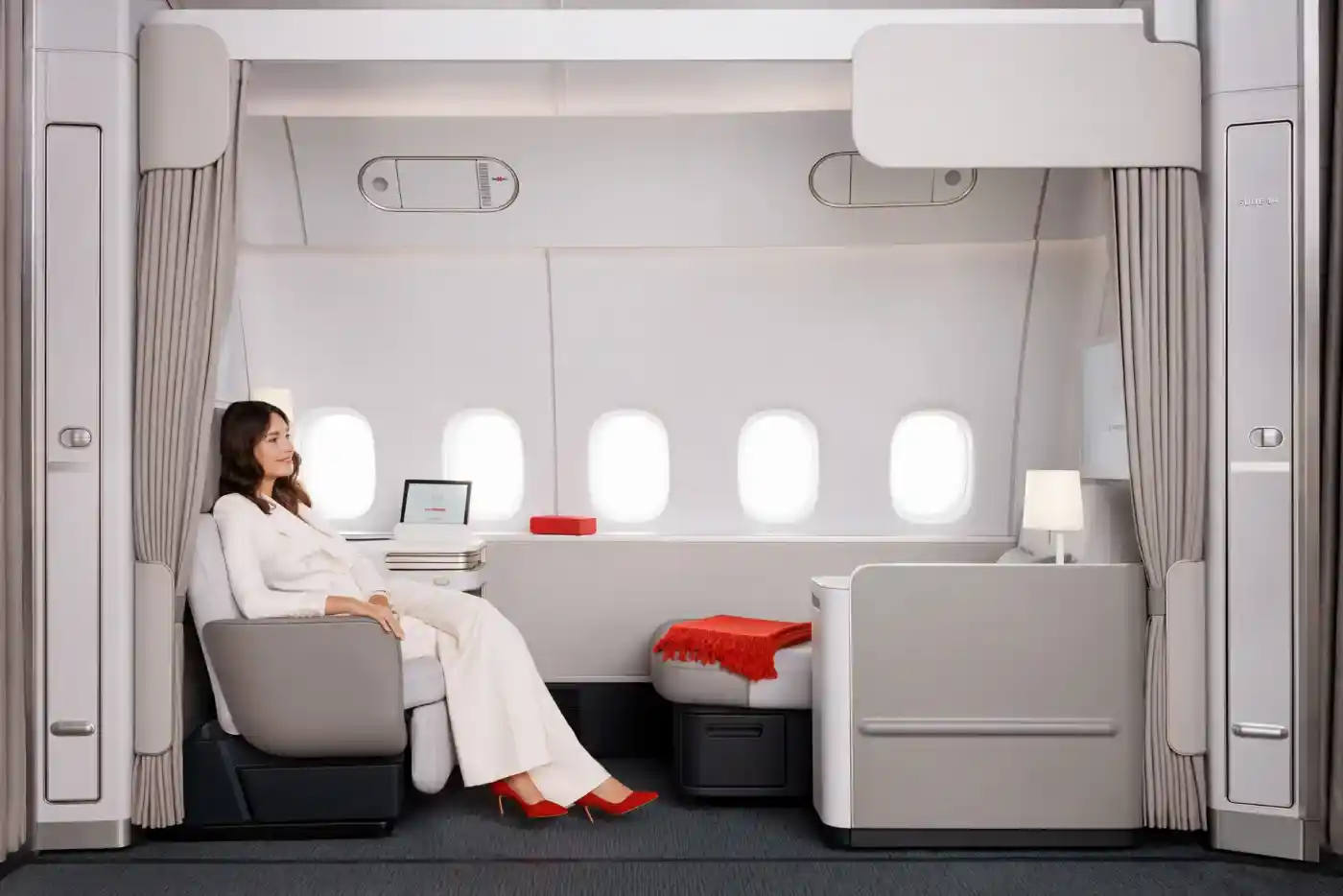
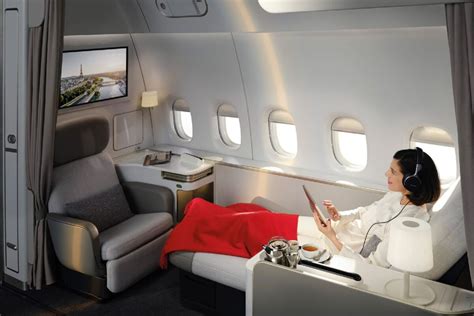
The redesigned La Première suite reflects this approach. Instead of functioning as only a seat that converts into a bed, the new design introduces a multi-zone living concept. Passengers receive separate areas for sitting, relaxing, dining, and sleeping, creating a private space that feels closer to a luxury hotel room than a traditional airplane seat.
The suite occupies a significant portion of the aircraft cabin, extending across five windows. It provides a bed approximately 78 inches (198 cm) long and a sleeping width of around 30 inches (76 cm). However, the physical dimensions alone are not what define the experience. The real difference is how the space is used.
The La Première Seat Is Only One Part of the Luxury Experience
For decades, first class competition focused heavily on hardware. Airlines competed through wider seats, premium materials, exclusive menus, and larger entertainment screens. But business class gradually adopted many of these features, making the traditional first-class formula less powerful.
Air France’s response has been to move beyond the seat itself.
The airline increasingly treats the entire travel journey as a premium product. This begins at the airport, where La Première passengers receive services designed to eliminate common sources of stress.
At Paris Charles de Gaulle Airport, eligible passengers can access a dedicated private arrival process that avoids many normal terminal procedures. Instead of navigating crowded check-in areas and general security queues, travelers experience a more discreet and personalized route through the airport.
The ground experience can include chauffeur transportation through selected services, private transfers to the aircraft, and direct vehicle access close to departure areas. These details may appear small compared with the aircraft itself, but they address one of the biggest frustrations in modern travel: unpredictability.
A luxury traveler often does not need another inch of seat space. They need fewer delays, fewer queues, fewer interruptions, and fewer moments where the journey feels complicated.
This is where La Première separates itself from premium business class. Business class improves comfort, but La Première focuses on complete travel management.
Inside the Air France La Première Lounge Experience
The airport lounge has become an increasingly important part of premium aviation. Airlines understand that the journey does not begin when passengers enter the aircraft door. The hours spent before departure influence the entire perception of luxury.
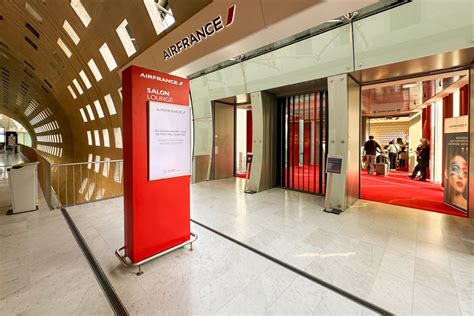
Air France’s dedicated La Première lounge reflects this philosophy by prioritizing exclusivity rather than capacity.
Instead of creating a large premium lounge designed for hundreds of passengers, Air France focuses on a quieter environment with personalized services. The lounge includes luxury dining, private relaxation areas, shower facilities, and wellness treatments provided through partnerships with premium brands.
One of the most distinctive features is the availability of private suites. These reserved spaces are designed for travelers who want complete separation from the airport environment. They include sleeping areas, bathrooms, workspaces, and private outdoor access, transforming a traditional airport waiting period into a hotel-style experience.
The significance of this investment is considerable. Building and operating such facilities for a very small number of passengers requires substantial resources. However, Air France is betting that the highest-value travelers are not simply purchasing transportation. They are purchasing time and convenience.
How Much Does It Cost to Build a Luxury System Around Four Passengers?
A question naturally follows: how can airlines justify creating such a complex service for only four passengers per aircraft?
Air France does not publicly reveal the complete financial structure behind La Première, but some pricing information provides insight into how valuable the airline considers these services.
The carrier has previously offered access to certain La Première ground experiences separately for qualifying passengers. These packages demonstrate that luxury airport services themselves have significant standalone value.
Private lounge access, dedicated assistance, premium dining, and personalized transfers are not simply complimentary extras. They represent a major operational investment involving specialized employees, facilities, vehicles, and coordination systems.
However, exclusivity is also part of the value. If an airline expanded La Première to dozens of seats, much of its appeal would disappear. Luxury products often depend on scarcity. A private experience becomes less private when it becomes widely available.
This is why Air France maintains a four-suite configuration. The airline sacrifices potential seat revenue in exchange for maintaining a premium identity that supports extremely high fares.
Why Air France Does Not Add More La Première Suites
From a purely mathematical perspective, adding more first-class suites could appear attractive. More suites mean more passengers paying premium fares. However, aircraft economics are far more complicated.
Every additional first-class suite requires valuable cabin space that could otherwise be used for business-class seats. On long-haul aircraft, business class remains the main premium revenue generator because it appeals to a much larger customer base.
Airlines must balance exclusivity with profitability. A first-class cabin that is too large can reduce overall aircraft revenue while weakening the sense of rarity.
Air France’s strategy depends on maintaining a carefully controlled product. The airline is not trying to make La Première available to everyone. Instead, it is creating a service aimed at travelers who value privacy and convenience enough to justify a five-figure ticket.
The limited availability is also reflected in award access. La Première redemption opportunities through loyalty programs are intentionally restricted, reinforcing the idea that the product occupies a different category from ordinary premium cabins.
First Class Has Become a Business of Removing Friction
The biggest change in luxury aviation is that first class is no longer simply about adding features. It is about removing problems.
A decade ago, airlines competed by asking: “How large is the seat?” Today, the question has changed to: “How effortless can we make the journey?”
Air France La Première represents this transformation. The airline is selling a complete experience that minimizes waiting, reduces uncertainty, and creates a feeling of personal attention.
This explains why some travelers continue paying extraordinary amounts even when business-class products are already impressive. The difference is not always visible in a photograph of the seat. It exists in the invisible moments between departure and arrival.
A passenger who spends less time waiting in lines, less time navigating airports, and less time dealing with travel complications may consider that convenience worth more than additional physical space.
The Future of Air France La Première Beyond 2026
Air France’s expansion plans indicate confidence in this approach. The airline has continued developing La Première routes while extending the redesigned product across more Boeing 777-300ER aircraft.
The coming years will reveal whether this model can remain financially successful. The challenge is not whether wealthy travelers exist. They clearly do. The challenge is whether airlines can profitably operate highly personalized services built around a very small number of passengers.
If Air France succeeds, it could influence how the entire premium aviation market develops. Future competition may focus less on who has the biggest seat and more on who can create the smoothest journey.
The true value of a $20,000 Air France La Première ticket in 2026 is therefore not contained within the suite itself. The seat is only the centerpiece of a much larger system built around privacy, hospitality, and time.
In the highest levels of commercial aviation, luxury is becoming less about owning more space and more about experiencing fewer obstacles. Air France is testing whether first class can survive not as a cabin category, but as a complete hospitality experience that happens to include an aircraft.