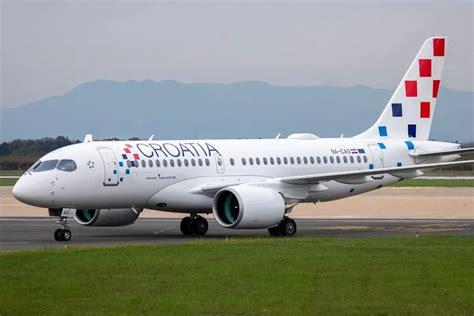
The Airbus A220 occupies a rare and valuable space in commercial aviation. It is neither a traditional regional jet nor a downsized version of a larger narrowbody. Instead, it was engineered from the ground up to prioritize human comfort, modern efficiency, and long-term operational flexibility. For passengers, this translates into an experience that feels more refined, quieter, and less constrained than aircraft of similar size. For airlines, it offers a platform that blends premium appeal with strong economics. The result is an aircraft that consistently surprises travelers who expect compromise and instead encounter comfort normally perceived on much larger jets.
Unlike legacy narrowbodies that evolved through decades of incremental modification, the A220 benefits from a clean-sheet design philosophy. Every structural choice, cabin dimension, and system layout was reconsidered with contemporary passenger expectations in mind. This mindset is what allows the A220 to feel spacious where others feel narrow, calm where others feel noisy, and modern where others feel dated.
The Airbus A220: A Clean-Sheet Aircraft Designed for the Modern Passenger
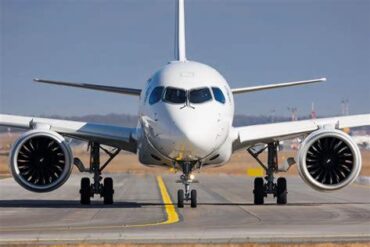
Originally developed by Bombardier as the CSeries, the aircraft now known as the A220-100 and A220-300 represents one of the most ambitious narrowbody programs of the last two decades. When Airbus acquired the program in 2017, it inherited an aircraft that had already been optimized for comfort, efficiency, and future growth, rather than short-term cost savings.
From the outset, the A220 was intended to bridge the gap between regional jets and mainline narrowbodies. That mission demanded more than performance metrics. It required an interior environment that passengers would actively prefer. With seating capacities typically ranging from 100 to 160 passengers, the aircraft needed to feel generous rather than compressed, especially on longer routes exceeding three hours.
The airframe’s advanced materials, including extensive use of carbon-fiber composites, enabled a wider fuselage without weight penalties. This structural freedom became the foundation for the A220’s distinctive cabin proportions and passenger-centric layout.
A Wider Cabin That Redefines Narrowbody Space
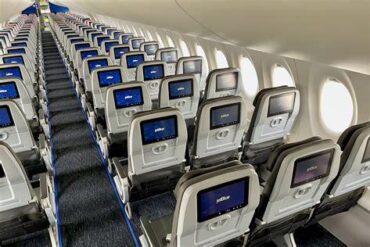
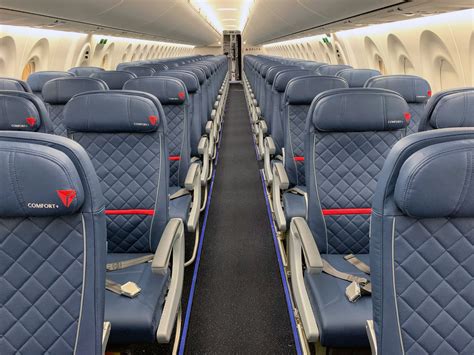
The most immediate contributor to the A220’s comfort advantage is its exceptionally wide cabin cross-section. Within the single-aisle category, the A220 offers one of the widest interiors, enabling seat widths that often reach 18 to 18.5 inches in economy class. This may sound incremental on paper, but in practice, it fundamentally changes how the cabin feels during boarding, cruising, and long periods of seated travel.
The standard 3-2 seating configuration is another decisive improvement. By eliminating one seat per row compared to the typical 3-3 layout, the A220 reduces the total number of middle seats by half. This is not a marketing gimmick. It directly impacts perceived comfort, boarding speed, and overall passenger satisfaction. Fewer middle seats mean fewer compromises, less crowding, and a more relaxed cabin atmosphere.
Cabin height further enhances this sense of openness. The A220 stands approximately four inches taller than comparable narrowbodies, while straighter sidewalls prevent the claustrophobic curvature often felt near the windows on older aircraft. Passengers can sit upright without feeling pressed inward by the fuselage, a subtle but meaningful improvement on flights lasting several hours.
Largest Windows in the Narrowbody Market
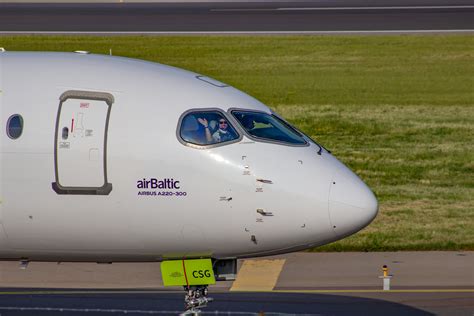
Natural light is one of the most powerful psychological comfort factors in aviation, and the A220 exploits this brilliantly. Its windows measure approximately 11 by 16 inches, making them the largest windows installed on any narrowbody aircraft currently in service.
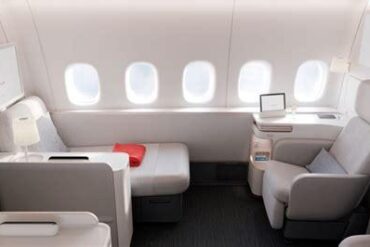
These oversized windows allow significantly more daylight to flood the cabin, reducing the closed-in sensation common on smaller jets. The result is a brighter, more welcoming environment that feels calmer and less fatiguing, particularly during daytime flights. While the windows are not as large as those on the Boeing 787, they dramatically outperform the standard apertures found on the Airbus A320 or Boeing 737 families.
The placement and spacing of the windows also contribute to the cabin’s visual rhythm. Passengers seated at the window enjoy a more expansive outside view, while those in aisle seats still benefit from the increased ambient light throughout the cabin.
Quieter Cabins Through Advanced Aerodynamics and Engines
Noise is one of the most underestimated contributors to passenger fatigue, and this is where the A220 quietly excels. Powered by Pratt & Whitney PW1500G geared turbofan engines, the aircraft achieves a significantly reduced noise footprint, both inside and outside the cabin.
The geared turbofan architecture allows the engine’s fan and turbine to rotate at optimal speeds, lowering vibration and reducing high-frequency noise. Inside the cabin, this translates into noticeably calmer sound levels, particularly during climb and cruise. Conversations are easier, cabin announcements are clearer, and overall stress levels are lower.
Aerodynamic refinements also play a role. The A220’s wings were designed with advanced airflow modeling, minimizing turbulence-induced noise and smoothing the ride through varying atmospheric conditions. Together, these factors create an onboard environment that feels more refined than many larger aircraft.
Airbus Airspace Cabin: Elevating Comfort Even Further
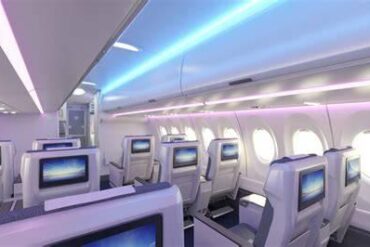
Starting with deliveries in 2026, the A220 will feature Airbus’s Airspace cabin, a design philosophy already proven on widebody aircraft such as the A350 and A330neo. This upgrade is not cosmetic. It builds directly on the A220’s existing strengths.
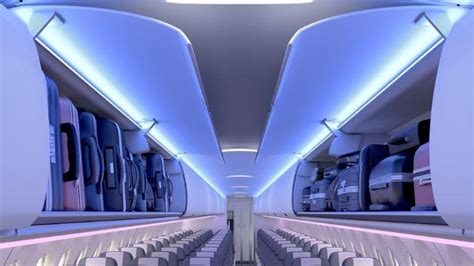
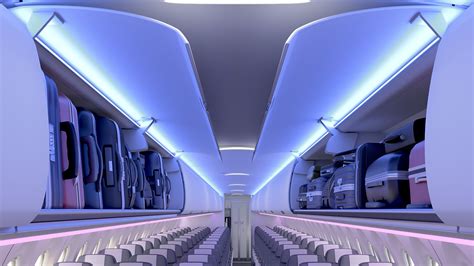
One of the most tangible improvements is the introduction of Airspace XL overhead bins. These bins are lighter, easier to operate, and capable of holding significantly more luggage. For passengers, this reduces boarding stress and virtually eliminates the anxiety of finding space for carry-on bags.
Lighting is another area of advancement. The Airspace cabin incorporates full-spectrum LED mood lighting, including under-bin illumination that enhances visibility without harsh glare. These lighting scenarios can be adjusted to support circadian rhythms, helping reduce fatigue and jet lag on longer flights.
A Cabin Designed Around Human Psychology
Beyond measurable dimensions, the A220 succeeds because it respects how humans perceive space. The combination of wider seats, higher ceilings, straighter sidewalls, and abundant light produces a psychological impression of openness that exceeds what raw numbers alone would suggest.
Passengers often describe the A220 as feeling “less like a small jet” and more like a downsized widebody. This perception matters. Comfort is not only physical; it is emotional. A cabin that feels calm, bright, and proportionate reduces travel anxiety and improves overall satisfaction, even before service quality or seating class enters the equation.
The design philosophy articulated by Airbus engineers focused explicitly on space, light, and relaxation. This intent is evident in every aspect of the cabin, from the curvature of the walls to the integration of lighting and storage.
Flight Performance That Enhances Passenger Experience
Comfort does not end with the cabin. The A220’s performance characteristics also improve the passenger journey in less obvious ways. Its ability to operate from shorter runways, including airports like London City, allows airlines to offer more direct routes and avoid congested hubs.
Steeper climb profiles mean less time spent in noisy, turbulent lower altitudes. Faster ascents to cruise altitude and smoother descent profiles contribute to a more comfortable ride, particularly for passengers sensitive to pressure changes or motion.
With ranges exceeding 3,000 nautical miles, the A220 comfortably handles longer sectors without feeling strained, maintaining stable cabin conditions throughout the flight.
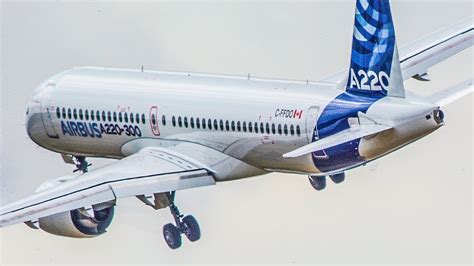
Pilot-Centric Design That Benefits Passengers
Pilots consistently rate the A220 highly, and this indirectly benefits passengers. A fully digital glass cockpit, advanced fly-by-wire controls, and intuitive flight management systems reduce workload and enhance situational awareness.
Lower pilot workload translates into smoother operations, more precise handling, and greater consistency in flight profiles. For passengers, this often manifests as gentler turns, more stable approaches, and fewer abrupt corrections during turbulence or challenging weather.
An aircraft that pilots enjoy flying is typically one that passengers enjoy riding.
Why Passengers Consistently Prefer the Airbus A220
Despite facing challenges related to engine maintenance, the A220’s reputation among travelers remains exceptionally strong. Airlines operating the type frequently highlight customer satisfaction scores, noting positive feedback on cabin comfort, noise levels, and overall ambiance.
Major operators such as Delta Air Lines, JetBlue, airBaltic, and Air France continue to expand their fleets, signaling confidence not only in the aircraft’s economics but also in its appeal to passengers. The A220 has become a strategic tool for airlines seeking to differentiate their product without the cost burden of widebody operations.
A New Benchmark for Narrowbody Comfort
The Airbus A220 proves that passenger comfort does not require size alone. Through thoughtful design, modern materials, and a clear focus on the human experience, it delivers a level of refinement that challenges long-standing assumptions about single-aisle aircraft.
By combining wider seating, larger windows, quieter cabins, and psychologically intelligent design, the A220 sets a new benchmark for what passengers can expect from short- and medium-haul travel. It is not merely comfortable for its class. It is comfortable by any reasonable standard, and that is precisely why it continues to earn loyalty from travelers around the world.