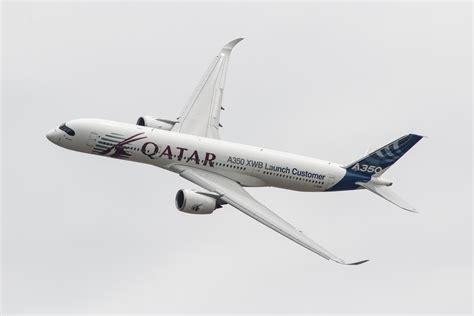
The Airbus A350 is a technological marvel, and its ability to soar up to 43,000 feet—a service ceiling shared only with a few elite aircraft—is no accident. This altitude advantage is not just a technical specification; it reflects a synergy of cutting-edge aerodynamics, advanced materials, and next-generation engine performance. As airlines compete to maximize efficiency, fuel savings, and passenger comfort, the A350’s high service ceiling is a quiet cornerstone of its operational excellence.
Developed as a direct response to Boeing’s 787 Dreamliner, the A350 has proven itself as more than just a competitor. Since its entry into service in January 2015 with Qatar Airways, the aircraft has steadily become a global favorite, with over 658 units delivered as of mid-2025. The high service ceiling is not just a feat of engineering—it is a strategic enabler of the aircraft’s long-range capabilities, fuel economy, and in-flight comfort.
Understanding the Concept of a Service Ceiling
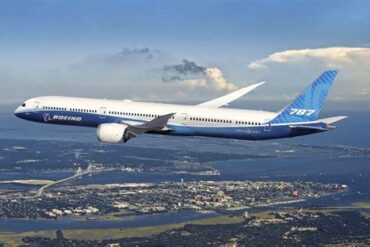
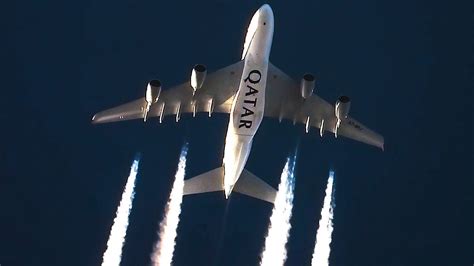
The service ceiling of an aircraft is the maximum altitude at which it can sustain a climb rate of at least 100 feet per minute under standard conditions. Beyond this point, an aircraft may still fly higher, but it cannot do so efficiently or safely under normal operational loads. While many narrow-body aircraft operate below 41,000 feet, the A350—alongside the Boeing 787 and Airbus A380—stands out with a certified service ceiling of 43,000 feet.
This altitude brings numerous advantages. Less atmospheric drag, reduced turbulence, and better fuel burn performance all combine to extend range and efficiency. However, achieving such a high ceiling is no small feat—it requires seamless integration of structural integrity, propulsion reliability, and passenger safety systems.
The Role of Composite Materials and Aerodynamics
One of the key enablers of the A350’s high service ceiling is its construction. Unlike older generation aircraft that rely heavily on aluminum alloys, the A350’s airframe is composed of over 50% carbon fiber-reinforced polymer (CFRP). This material offers exceptional strength-to-weight ratio, drastically reducing overall aircraft weight without compromising durability.
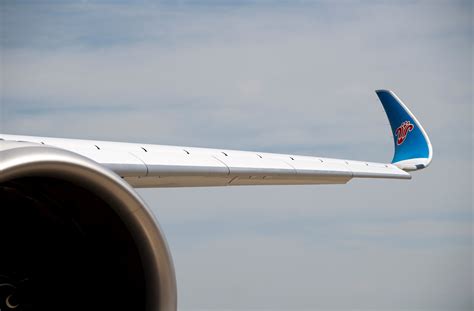
Weight reduction directly impacts how efficiently an aircraft can climb and cruise at high altitudes. But it’s not just about being lighter—the A350 also boasts a highly streamlined aerodynamic profile. From its swept-back wings with advanced winglets to the seamless fuselage shaping, every element has been optimized to minimize drag.
These aerodynamic enhancements play a critical role in the aircraft’s ability to maintain lift in thinner air and contribute to reduced fuel consumption, especially at altitudes above 35,000 feet, where performance differentials become most pronounced.
Advanced Powerplants: The Rolls-Royce Trent XWB Engines
Perhaps the most important contributor to the A350’s high-altitude capabilities is its engine—the Rolls-Royce Trent XWB. These twin high-bypass turbofan engines are among the most efficient ever built for widebody aircraft. Designed specifically for the A350 program, the Trent XWB delivers exceptional thrust and fuel efficiency even in the low-density atmosphere at high altitudes.
The engines’ ability to maintain performance in thin air is a major reason the A350 can cruise comfortably at 43,000 feet. Their low-emission, low-noise design also ensures environmental compliance while keeping operating costs manageable for airlines. High-altitude cruising minimizes headwinds and air traffic congestion, leading to smoother, more direct flight paths, which in turn increases aircraft range.
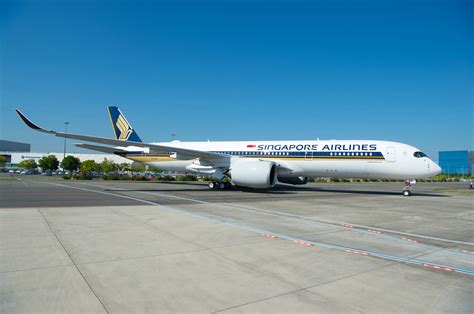
Beyond performance, the engine’s fuel efficiency enables longer non-stop flights, which aligns perfectly with the A350’s design intent—ultra-long-haul operations. It’s no surprise that Singapore Airlines uses the A350-900ULR for the world’s longest scheduled commercial flight: Singapore to New York JFK.
Pressurization Technology and Passenger Wellbeing
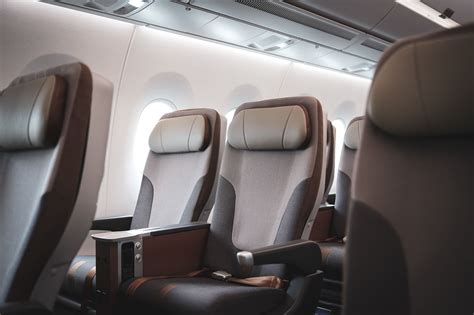
Flying at high altitudes introduces significant challenges in maintaining cabin pressure and passenger health. Airbus tackled this with a state-of-the-art pressurization system that keeps the cabin altitude at around 6,000 feet, compared to the industry standard of 8,000 feet.
Lower cabin altitudes result in less passenger fatigue, better hydration, and reduced risk of altitude-related discomfort. This is especially important on flights lasting 15 hours or more, like those operated by Qatar Airways, Qantas’ upcoming Project Sunrise routes, and Cathay Pacific’s transpacific services.
Advanced air filtration systems, larger cabin windows, and higher cabin humidity levels further enhance the onboard experience, making high-altitude cruising not just viable but desirable from a passenger standpoint.
Certification and Development: Built to Reach the Sky
The A350’s journey to becoming a high-altitude performer began with its initial design studies in 2004, followed by multiple redesigns to align with market demand and technological potential. It was finally certified in 2014 by both the FAA and EASA, clearing it for full-scale production and operational use.
Engineers tested the aircraft under extreme conditions, including high-altitude airports, decompression scenarios, and steep climbs. These tests validated not only the aircraft’s ability to reach 43,000 feet but to do so with full commercial payloads and consistent performance. Airbus clearly aimed to build a future-proof platform that could scale with the evolving needs of global air travel.
The certification wasn’t just a box-checking exercise—it was a rigorous validation of an aircraft engineered to push commercial limits. From the materials used to the fly-by-wire controls, every subsystem was optimized for safety and scalability.
Operational Benefits of High-Altitude Cruising
While it’s rare for commercial flights to operate at their full service ceiling for extended periods, the ability to reach higher altitudes offers tactical advantages in real-world operations. Airlines can:
- Avoid congested airways or weather systems by climbing higher
- Reduce fuel burn due to lower drag and optimal engine performance
- Take advantage of favorable wind patterns
- Enhance route flexibility, particularly for long-range ETOPS missions
For instance, the A350’s service ceiling is particularly useful during step climbs on ultra-long-haul sectors. As the aircraft burns fuel and becomes lighter, pilots can incrementally increase cruising altitude to stay in the most efficient flight band.
This flexibility is why the A350 has been a game changer for airlines like Delta, Air France, Japan Airlines, and Lufthansa, which regularly deploy the aircraft across intercontinental routes.
A Proven Performer in the Sky
More than 40 global airlines now operate the A350, and many have tailored their fleets around its capabilities. As of July 2025, Singapore Airlines remains the largest operator, with 65 A350s, including seven ULR variants. Qatar Airways, Cathay Pacific, and Air France also heavily rely on the aircraft for long-haul network optimization.
Airbus currently holds a backlog of over 700 A350 orders, reflecting sustained demand for an aircraft that can fly farther, higher, and more economically than many of its rivals. Its success is rooted not only in engineering innovation but in the clear operational advantages that high-altitude performance provides.
Why the Service Ceiling Still Matters in 2025 and Beyond
In an era increasingly focused on carbon efficiency, network flexibility, and passenger satisfaction, the ability to fly at higher altitudes is more than just a technical capability—it’s a strategic advantage. The Airbus A350 stands at the intersection of performance and innovation, with its 43,000-foot ceiling symbolizing how far commercial aviation has come.
While most passengers may never realize just how high they’re flying, they will feel the effects—less turbulence, smoother rides, fresher air, and more direct flights. For airlines, it means better fuel economy and more profitable operations.
As air travel continues to evolve, the A350’s high service ceiling ensures it will remain not just relevant, but indispensable to the fleets of the future. The sky is not the limit—it’s the beginning.