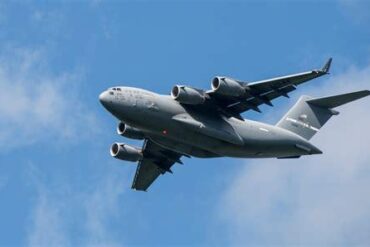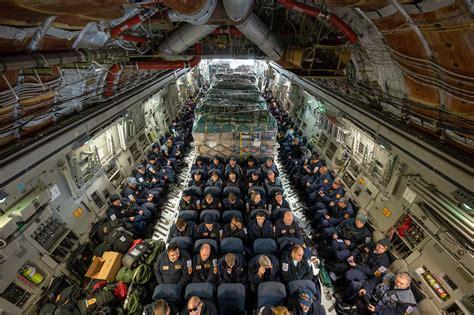
Modern military transport aircraft are expected to do much more than carry cargo from one runway to another. They must deliver troops, vehicles, and supplies directly into dangerous environments while minimizing their exposure to enemy weapons. Few aircraft embody that philosophy better than the Boeing C-17 Globemaster III, a strategic airlifter that combines intercontinental range with remarkable tactical agility. One of its most extraordinary capabilities is the ability to descend roughly 25,000 feet in just two minutes by deploying reverse thrust while still airborne, a maneuver almost unheard of in commercial aviation.
Unlike passenger jets, which typically descend gradually and avoid using thrust reversers until after touchdown, the C-17 can safely redirect engine airflow in flight, creating tremendous drag and allowing it to dive steeply toward a landing zone. This capability gives military crews a decisive advantage by keeping the aircraft above many threats until the very last moment.
The aircraft’s unique design, sophisticated aerodynamics, and powerful Pratt & Whitney engines transform what appears to be an impossible maneuver into a routine tactical procedure.
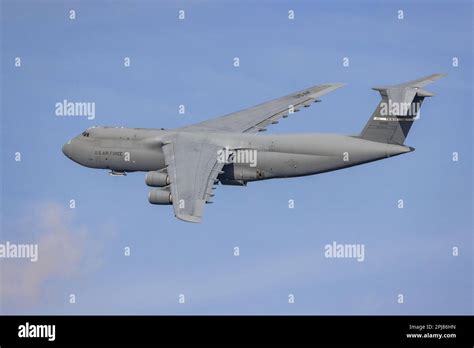
Why The C-17 Globemaster Uses Inflight Reverse Thrust
The ability to execute a rapid tactical descent was designed around one central goal: survival. Combat airlift operations often involve flying near hostile territory where anti-aircraft systems threaten low-flying aircraft. Rather than spending extended periods at vulnerable altitudes, the C-17 remains comfortably above most short-range threats during cruise and then rapidly descends toward the drop zone only moments before landing.
Man-portable air defense systems, commonly known as MANPADS, are highly effective against aircraft operating at lower altitudes. Weapons such as the Stinger missile become significantly less dangerous when aircraft remain above their engagement envelopes. By cruising above 25,000 feet, the C-17 stays out of range of many battlefield threats and reduces the time it spends exposed during approach.
The aircraft’s tactical descent profile allows crews to move almost vertically into contested areas. Instead of spending ten or fifteen minutes gradually descending like a commercial airliner, the Globemaster can plunge downward at rates approaching 15,000 feet per minute, reaching low altitude before hostile forces have time to react effectively.
This capability turns the dangerous approach phase into one of the aircraft’s greatest strengths.
The Rare Engineering Behind Airborne Reverse Thrust
On most airliners, thrust reversers are used exclusively after touchdown to slow the aircraft. Deploying them in flight would be unsafe because their airflow patterns could interfere with wing lift and aircraft stability. The C-17 was engineered differently from the beginning.
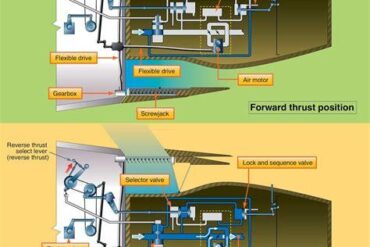
Its four Pratt & Whitney F117-PW-100 turbofan engines feature specially designed thrust reversers that direct airflow upward and forward at roughly forty-five degrees. Instead of simply pushing air sideways, the system creates tremendous aerodynamic drag while simultaneously helping pitch the aircraft downward.
When the reversers engage, sliding sleeves move aft to expose cascade vanes that redirect bypass airflow. This redirection transforms the engines into giant air brakes without causing the wings to stall. The result is a controlled but spectacular descent profile that allows pilots to lose altitude at a rate far beyond anything seen in commercial operations.
The maneuver looks dramatic from outside, yet it remains entirely within the aircraft’s intended operating envelope.
Powered By Boeing 757-Derived F117 Engines
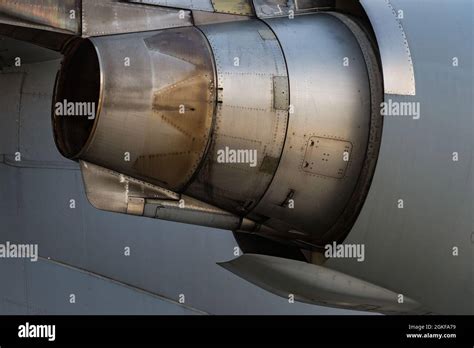
At the heart of the C-17’s extraordinary performance are four F117 engines producing approximately 40,440 pounds of thrust each. Although derived from the PW2000 family used on the Boeing 757, these military powerplants have been adapted for a completely different mission profile.
Commercial airliners prioritize efficiency and passenger comfort. The C-17 prioritizes tactical flexibility. The F117 engines deliver the power required to transport heavy armored vehicles while simultaneously providing exceptional short-field performance.
Their thrust reverser arrangement differs from conventional designs because both bypass airflow and core exhaust are managed carefully. The system creates enough drag to support steep tactical approaches while maintaining stable airflow over the wings.
These engines give the Globemaster a remarkable combination of strategic range and battlefield agility, allowing it to transport cargo across oceans before transitioning immediately into demanding combat operations.
Descending 25,000 Feet In Two Minutes
The famous rapid descent begins at cruising altitude. Pilots reduce thrust to idle and deploy the thrust reversers while maintaining careful control over pitch and speed.
As airflow redirects forward, drag increases dramatically. The nose naturally pitches downward, allowing the aircraft to assume a steep approach angle approaching twenty-two degrees. During this phase, descent rates can exceed four or five times those of civilian aircraft.
Commercial airliners generally descend at around 2,000 to 3,000 feet per minute. By comparison, the C-17 may exceed 15,000 feet per minute during tactical operations. That means a drop from 25,000 feet to near ground level can occur in approximately two minutes.
Despite the aggressive profile, the aircraft remains fully controllable throughout the maneuver. Pilots continuously monitor energy management and coordinate engine settings to ensure a smooth transition from high-speed descent into landing configuration.
The process resembles a carefully choreographed ballet between engines, wings, flight controls, and aerodynamics.
Externally Blown Flaps Make The Impossible Possible
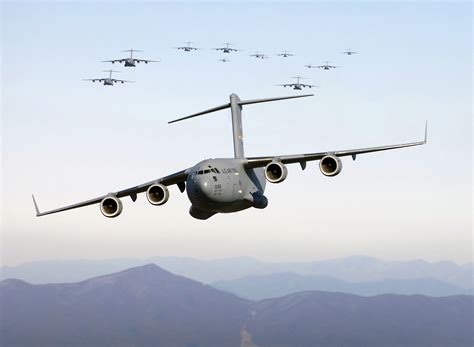
One of the least appreciated technologies on the C-17 is its system of externally blown flaps, often abbreviated EBF.
These large double-slotted flaps interact with engine exhaust in a way few aircraft can replicate. Positioned directly in the path of high-velocity airflow, they redirect exhaust downward and generate enormous amounts of lift. This system allows the giant transport aircraft to maintain stable flight at surprisingly low speeds.
The flaps perform another critical function during airborne reverse thrust operations. As reverse airflow attempts to alter the aircraft’s aerodynamic balance, the externally blown flaps help preserve smooth airflow over the wings. This prevents turbulence and stall conditions that might otherwise develop.
The interaction between engine exhaust and flap surfaces enables the aircraft to maintain control even while diving steeply toward the battlefield.
Without this feature, the famous tactical descent would not be possible.
Why Combat Landings Demand Speed
Landing itself is often the most dangerous stage of an airlift mission. Once an aircraft stops moving, it becomes a massive and valuable target vulnerable to artillery, rockets, mortars, drones, and small arms fire.
Speed is therefore essential.
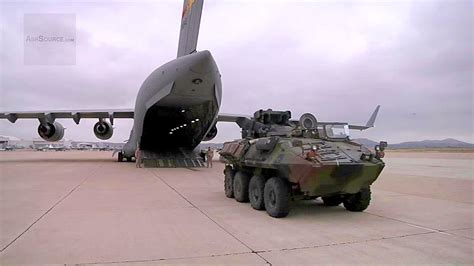
After touchdown, the C-17 keeps its engines running. Cargo can be unloaded immediately through the rear ramp, allowing vehicles, troops, or supplies to disembark within minutes. Once unloading is complete, the aircraft accelerates rapidly and departs before enemy forces can react.
The quick turnaround minimizes exposure and maximizes survivability. Every second spent on the ground increases risk, which is why the entire philosophy behind the C-17 emphasizes rapid entry and rapid exit.
This doctrine has proven invaluable during operations in Afghanistan, Iraq, humanitarian relief missions, and countless deployments around the world.
Operating From Primitive Airstrips
Another remarkable feature of the C-17 is its ability to function where conventional cargo aircraft would struggle.
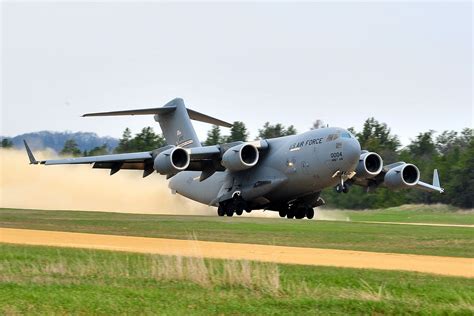
Many tactical operations occur on short, rough, or unimproved runways. Gravel strips and dirt airfields present enormous challenges for large aircraft, yet the Globemaster was built specifically to overcome them.
The upward-directed thrust reversers prevent debris from being sucked into the engines. This protects the turbofans and preserves pilot visibility while operating in dusty environments.
The aircraft’s heavy-duty landing gear distributes weight efficiently through six-wheel main bogies and robust nose gear. Combined with advanced steering systems, the C-17 can perform extremely tight turns and reposition itself even on primitive strips.
Its capability to back up under its own power and execute 180-degree star turns provides tactical flexibility unavailable to most large transports.
Star Turns And Remarkable Ground Agility
Despite weighing hundreds of thousands of pounds, the C-17 displays impressive maneuverability on the ground.
Pilots can place engines on one side into reverse thrust while maintaining forward thrust on the opposite side. Combined with nose wheel steering angles reaching approximately sixty-three degrees, this creates enough rotational force for rapid turns.
The aircraft requires only a relatively small area to reverse direction. This capability is invaluable when operating on narrow runways where conventional turning circles are unavailable.
Such agility allows crews to land, unload, reposition, and depart without requiring extensive taxi infrastructure. Forward operating bases rarely possess the luxuries of major airports, making self-sufficiency essential.
Massive Payload Capacity Meets Global Reach
The Globemaster’s tactical capabilities would mean little without strategic reach.
The aircraft can carry payloads weighing approximately 170,900 pounds, including armored vehicles such as the M1 Abrams main battle tank. At cruise speed, it travels around Mach 0.74 and can operate at altitudes up to 45,000 feet.
Long-distance missions are supported by fuel capacities exceeding 244,000 pounds in extended-range configurations. These characteristics enable the aircraft to transport enormous loads across oceans before immediately transitioning into demanding tactical approaches.
The same airplane that crosses continents with efficiency can land on austere airstrips and deliver combat forces directly where they are needed.
That combination remains one of the reasons the C-17 is regarded as one of the most versatile military aircraft ever produced.
Redundant Systems Built For Survival
Battlefield operations demand resilience. The C-17 incorporates multiple layers of redundancy to ensure the aircraft can continue functioning even after sustaining damage.
Four independent hydraulic systems operating at 4,000 psi power essential flight controls, landing gear, and thrust reversers. The airframe itself uses heavy-duty titanium reinforcement capable of absorbing severe stresses generated during tactical maneuvers.
This structural strength supports violent descent profiles, rough-field operations, and repeated combat missions without compromising reliability.
Every major system was designed with survivability in mind. Engineers understood that transport aircraft entering hostile environments could not rely solely on speed; they also needed durability.
Why The C-17’s Tactical Descent Remains Unique
Many military aircraft possess impressive capabilities, but few combine strategic range, massive payload capacity, rough-field performance, and extraordinary descent profiles in one package. The C-17 Globemaster III occupies a category almost entirely by itself.
Its ability to descend 25,000 feet in roughly two minutes using airborne reverse thrust demonstrates the ingenuity behind its design. Rather than avoiding danger through speed alone, the aircraft uses altitude, aerodynamics, engine technology, and tactical procedures to minimize exposure throughout the mission.
From transporting main battle tanks across oceans to touching down on dusty forward bases, the C-17 remains a masterpiece of military aviation engineering. Its unique inflight reverse thrust capability is more than a spectacular demonstration—it is a life-saving feature that allows crews to deliver critical cargo into some of the most dangerous places on Earth while keeping both aircraft and personnel one step ahead of the threats below.