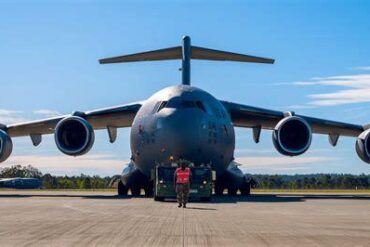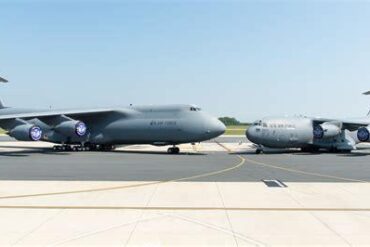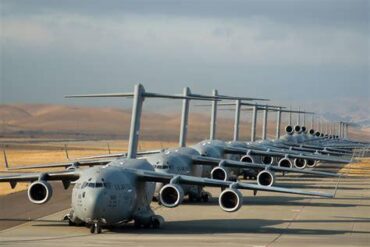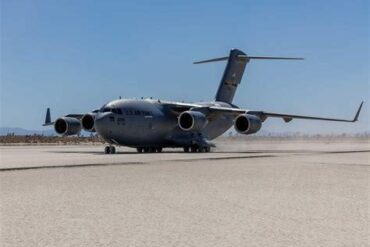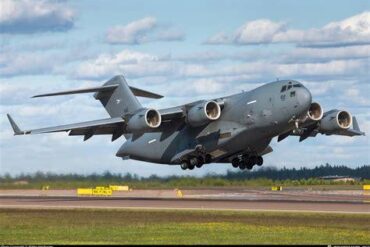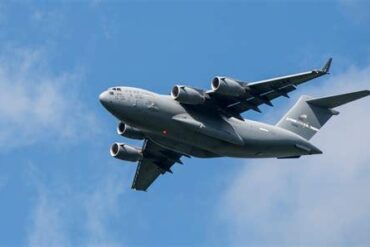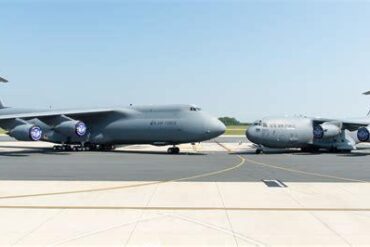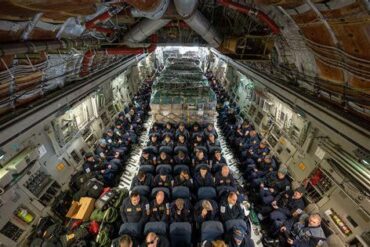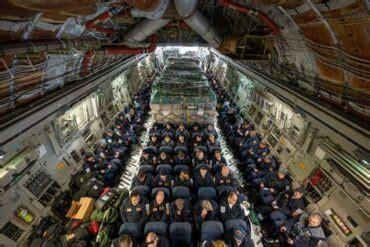
The Boeing C-17 Globemaster III occupies a rare place in military aviation history. Few aircraft have managed to redefine how armed forces move people, vehicles, medical teams, humanitarian aid, and oversized cargo across the planet with the same degree of flexibility. At the center of that capability is not merely the aircraft’s range or engine power, but the remarkably engineered cargo cabin that transformed the philosophy of modern airlift operations.
For decades, military planners faced a difficult compromise. Strategic transports could carry immense loads across oceans but required long, prepared runways and significant support infrastructure. Tactical transports could land closer to combat zones but lacked the internal space and payload to move heavy armor or large-scale logistics efficiently. The C-17 shattered that divide by combining both roles into a single platform. Its cabin design became the physical embodiment of that breakthrough.
Unlike earlier cargo aircraft that specialized in one mission profile, the Globemaster’s internal layout was created around adaptability from the very beginning. The aircraft can carry a battle tank one day, evacuate wounded civilians the next, and transport an entire mobile hospital shortly afterward without requiring extensive modifications. That level of mission flexibility has made the C-17 one of the most important military aircraft of the modern era.
The aircraft first entered United States Air Force service in 1995 after years of development aimed at replacing aging transport fleets and addressing Cold War-era logistical limitations. Since then, the Globemaster has participated in virtually every type of global operation imaginable, from combat deployments and humanitarian relief missions to polar resupply flights and pandemic medical evacuations. Every one of those missions depends heavily on the unique design of its cavernous interior.
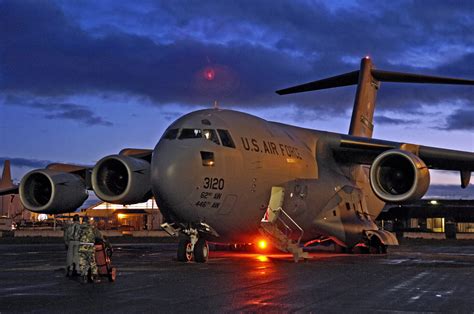
The C-17 Cargo Cabin Was Engineered Around Maximum Operational Flexibility
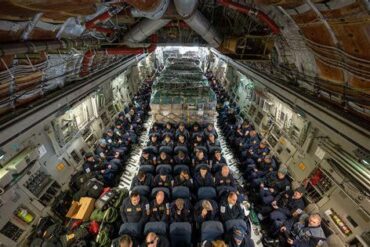
The defining feature of the C-17 Globemaster III is its enormous cargo compartment. Measuring approximately 88 feet in length, 18 feet in width, and more than 12 feet in height, the aircraft’s interior resembles a flying logistics warehouse designed to operate in hostile and infrastructure-poor environments. Yet the brilliance of the cabin lies not only in its size, but in how intelligently every section was optimized for rapid mission adaptation.
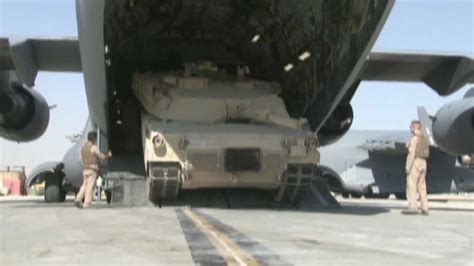
The cabin floor was engineered with reinforced structural strength capable of supporting some of the heaviest armored vehicles in active military service. Massive loads such as the M1 Abrams main battle tank, Bradley Fighting Vehicle, artillery systems, helicopters, engineering vehicles, and missile launch platforms can all be secured inside the aircraft without extensive preparation. Integrated tie-down points are distributed throughout the floor structure, enabling loadmasters to configure cargo layouts quickly while maintaining precise center-of-gravity control.
One of the most underrated aspects of the cabin design is the integrated roller system embedded into the floor. These rollers allow pallets and heavy cargo to move rapidly during loading and unloading operations, dramatically reducing turnaround times on the ground. Instead of relying on cranes or specialized loading infrastructure, the aircraft can perform roll-on and roll-off operations in austere locations where traditional airlift platforms would struggle.
The rear ramp system further enhances this capability. Vehicles can simply drive directly into the aircraft through the large aft cargo door while the Globemaster rests at a relatively low deck height compared with many heavy transports. This reduces dependency on external loading equipment and allows operations to continue even in remote combat zones or disaster-stricken regions where airport infrastructure has been damaged or destroyed.
The cabin also incorporates overhead rails, electrical power interfaces, cargo restraint systems, and environmental controls that support highly specialized payloads. From satellite communication modules to mobile command centers, the aircraft can be transformed into a flying operational hub within hours.
Strategic Airlift Meets Tactical Battlefield Access
The C-17’s cabin design becomes even more impressive when combined with the aircraft’s unique flight performance. Traditionally, heavy strategic transports required long concrete runways far from active combat zones. The Globemaster changed that expectation by enabling outsized cargo delivery directly into forward operating areas.
The aircraft can operate from runways as short as roughly 3,000 feet under certain conditions, including semi-prepared strips made of gravel, dirt, or compressed snow. That means the same aircraft capable of crossing oceans with heavy armor can also land close to frontline operations and unload cargo immediately where it is needed most.
This capability fundamentally altered military logistics doctrine. Instead of unloading equipment at major air bases and relying on vulnerable ground convoys for onward transport, commanders could move troops and vehicles far closer to operational zones. The cabin’s design plays a central role in this process because its loading configuration minimizes unloading times while maximizing cargo accessibility.
In expeditionary warfare, speed often determines operational success. The ability to land, unload armored vehicles, refuel, and depart quickly reduces aircraft exposure to enemy threats while maintaining continuous logistical momentum. The C-17’s spacious interior and efficient cargo handling systems were specifically built to support this high-tempo operational philosophy.
Transforming Into A Flying Hospital In Mid-Air
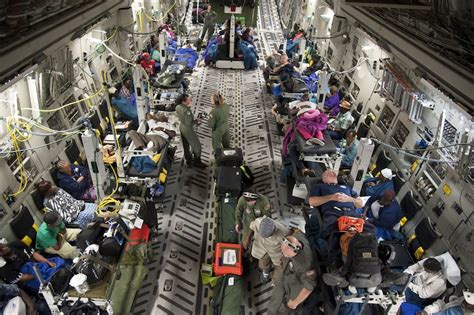
Perhaps the most remarkable aspect of the C-17 cabin is how rapidly it can shift from a cargo transport into a sophisticated aeromedical evacuation platform. Within hours, the aircraft’s interior can be converted into a fully functional airborne treatment center capable of transporting critically injured patients across continents.
Modular Aeromedical Evacuation kits allow crews to install rows of patient litters, oxygen systems, electrical power supplies, monitoring equipment, and treatment stations directly inside the cargo bay. Medical personnel gain enough room to move between patients while continuing treatment during flight, something that smaller aircraft struggle to accommodate.
The aircraft can carry dozens of litter patients alongside ambulatory casualties, medical attendants, and specialized care teams simultaneously. During combat operations in Iraq and Afghanistan, the Globemaster became one of the most important links in the chain of battlefield medicine. Faster transport times meant wounded personnel could reach advanced surgical facilities much more quickly than previous generations of airlift platforms allowed.
The cabin’s environmental systems also contribute significantly to its medical role. Stable cabin pressurization, temperature regulation, and onboard electrical power make it possible to support sophisticated life-saving equipment throughout long-distance missions. In many ways, the aircraft operates less like a transport plane and more like a flying intensive care unit.
Humanitarian crises further demonstrated the flexibility of this design. During the 2010 Haiti earthquake response, C-17 crews carried injured civilians, medical teams, emergency shelters, food supplies, and engineering equipment in rapid succession. The same cargo space that carried construction vehicles on one mission could become an emergency hospital on the next.
The COVID-19 Pandemic Proved The Cabin’s Adaptability Under Global Pressure
The COVID-19 pandemic created one of the most demanding logistical environments in modern history, and the C-17 emerged as one of the few aircraft capable of handling the unprecedented operational complexity. Commercial air travel networks collapsed, borders closed, and governments suddenly required rapid global movement of medical supplies and infectious patients.
The Globemaster’s large unobstructed cargo bay became invaluable during this period. In April 2020, a USAF C-17 conducted the first operational aeromedical evacuation mission using the Transport Isolation System. This system consisted of sealed containment units installed inside the aircraft cabin, allowing COVID-19-positive patients to receive in-flight treatment while remaining isolated from aircrew and medical personnel.
The aircraft’s internal dimensions proved critical because the Transport Isolation System occupied significant space while still requiring access routes for medical teams and support equipment. The cabin’s power systems and environmental controls enabled safe operation of advanced medical devices during intercontinental transport missions.
Royal Air Force C-17s also demonstrated extraordinary versatility during the pandemic response. Aircraft transported entire deployable field hospitals, ventilators, protective equipment, and humanitarian aid supplies across multiple continents at a time when civilian freight capacity had virtually disappeared.
The Globemaster’s cargo bay allowed oversized medical infrastructure to be loaded rapidly without complex reconfiguration. Entire modular hospital systems could be transported in a single sortie, drastically accelerating emergency response timelines.
Carrying Heavy Armor And Outsized Military Payloads
While humanitarian missions often capture public attention, the C-17 remains fundamentally a military transport aircraft designed to move enormous combat payloads. Its maximum payload capacity of approximately 170,900 pounds places it among the world’s most capable airlifters.
The aircraft’s reinforced cargo floor and restraint systems allow it to transport exceptionally heavy vehicles safely over long distances. Tanks, armored personnel carriers, missile systems, engineering machinery, and helicopters can all be loaded into the cabin in carefully balanced configurations.
Loadmasters use sophisticated cargo planning procedures to optimize weight distribution throughout the aircraft. Because the Globemaster may operate from short or rough runways, precise balance calculations are essential for safe takeoff and landing performance. The cabin’s flexible restraint system enables crews to adapt quickly to varying payload dimensions and operational requirements.
One of the more fascinating recent developments involving the C-17 cabin is the Rapid Dragon program. This concept transforms cargo aircraft into stand-off missile deployment platforms using palletized cruise missile systems launched directly from the cargo bay. Instead of permanently modifying the aircraft into a bomber, military planners use modular palletized launch systems that can be rapidly installed and removed.
The fact that such an unconventional mission is possible demonstrates the extraordinary flexibility of the Globemaster’s interior architecture. The cabin was originally designed for logistical adaptability, yet its spacious layout and integrated systems have allowed engineers to explore entirely new operational concepts decades after the aircraft entered service.
Polar Operations Push The Cabin To Its Limits
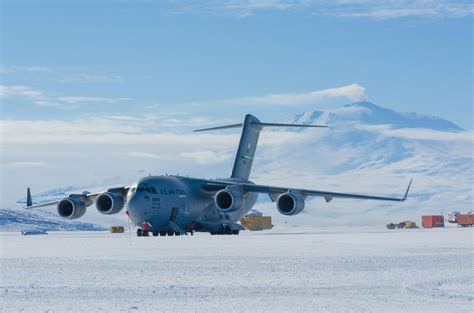
Some of the harshest environments on Earth have become proving grounds for the C-17’s airlift capabilities. Polar logistics missions in Antarctica and the Arctic require aircraft capable of carrying large amounts of cargo into regions with extreme cold, minimal infrastructure, and dangerous runway conditions.
Since the late 1990s, USAF C-17s have supported Operation Deep Freeze missions to Antarctica, transporting supplies and personnel between Christchurch, New Zealand, and McMurdo Station. These flights involve carrying everything from scientific equipment and construction materials to food, vehicles, and fuel containers.
The cabin’s enormous dimensions make it ideal for transporting oversized cargo used in remote scientific operations. Specialized snow vehicles, heavy machinery, and prefabricated structures can all fit within the aircraft’s cargo bay. Once the aircraft lands on ice or compacted snow runways, the rear ramp enables rapid unloading even in extreme weather conditions.
Canadian and Australian C-17 operators have similarly used the aircraft for Arctic and Antarctic logistics missions. The Royal Canadian Air Force regularly flies Globemasters into some of the coldest inhabited locations on Earth during Operation BOXTOP resupply missions to CFS Alert.
These missions highlight how the cabin’s rugged design supports operations far beyond traditional military combat roles. In many polar regions, the aircraft effectively functions as a strategic lifeline connecting isolated outposts to the outside world.
Humanitarian Relief Missions Showcase The Aircraft’s True Value
Although the C-17 was designed primarily for military operations, its cabin has repeatedly proven indispensable during humanitarian emergencies. Earthquakes, tsunamis, floods, famines, and refugee crises often destroy local transportation infrastructure precisely when large-scale aid becomes most urgently needed.
The Globemaster’s cargo bay allows emergency responders to move massive quantities of relief supplies directly into affected areas. Portable shelters, water purification systems, engineering equipment, ambulances, generators, and food pallets can all be carried simultaneously.
Because the aircraft requires relatively limited ground support, it can begin operations at damaged or austere airfields before civilian cargo networks are restored. The roll-on and roll-off loading system also accelerates aid delivery once the aircraft lands.
During evacuations, the cabin can accommodate large numbers of passengers under emergency conditions. Troops, civilians, medical teams, and displaced families have all been transported aboard C-17 aircraft during crisis response operations around the globe.
The aircraft’s versatility gives governments and humanitarian organizations a level of operational agility few other platforms can match. In disaster zones where time determines survival, the ability to deliver both heavy equipment and medical capabilities in a single aircraft becomes extraordinarily valuable.
The C-17 Cabin Continues To Influence Future Airlift Design
Even as aerospace companies study next-generation military transport aircraft, the C-17 Globemaster III remains the benchmark for cargo cabin design. Its combination of structural strength, rapid reconfiguration capability, oversized dimensions, and austere-field accessibility fundamentally reshaped expectations for strategic airlift.
Modern military planners increasingly prioritize flexibility rather than single-purpose specialization. The C-17 demonstrated that one aircraft can simultaneously support combat logistics, humanitarian response, medical evacuation, scientific operations, and experimental mission concepts without sacrificing operational effectiveness.
Future transport aircraft are likely to inherit many design philosophies pioneered by the Globemaster. Reinforced modular flooring systems, integrated cargo rollers, adaptable restraint networks, multi-role electrical interfaces, and rapid reconfiguration layouts are now considered essential features for advanced airlift platforms.
What makes the C-17 especially remarkable is that its cabin remains operationally relevant decades after its introduction. Despite rapid technological change in aerospace engineering, few aircraft interiors have matched the same balance of durability, versatility, and efficiency.
The Globemaster’s legacy ultimately extends far beyond raw payload statistics or runway performance figures. Its cabin design changed how nations think about mobility itself. Instead of separating strategic transport, tactical delivery, medical evacuation, and humanitarian logistics into isolated categories, the aircraft unified them inside one adaptable airborne platform.
That achievement explains why the C-17 remains one of the most respected airlifters ever built. Its cavernous interior is not simply a cargo compartment. It is a mobile logistics ecosystem capable of responding to war, disaster, medical emergencies, and scientific exploration with equal effectiveness. Few aircraft in aviation history have demonstrated such extraordinary versatility from a single cabin design.