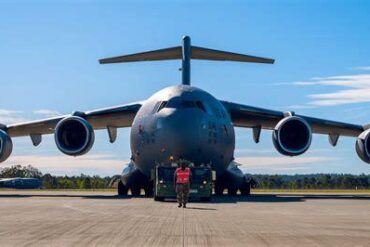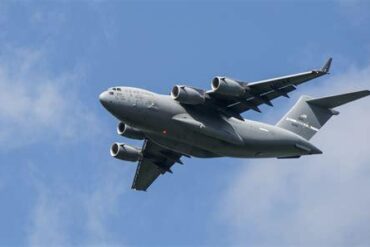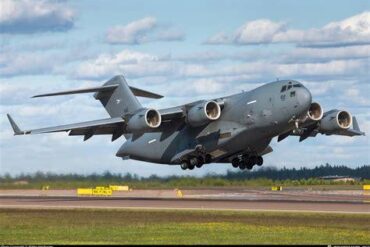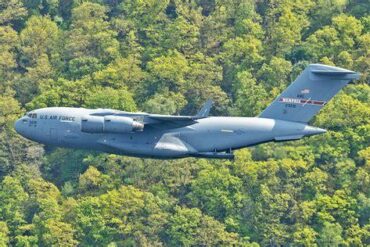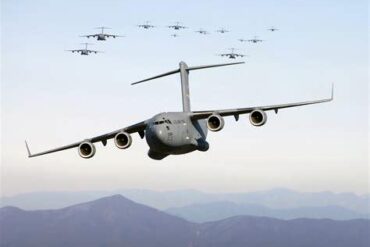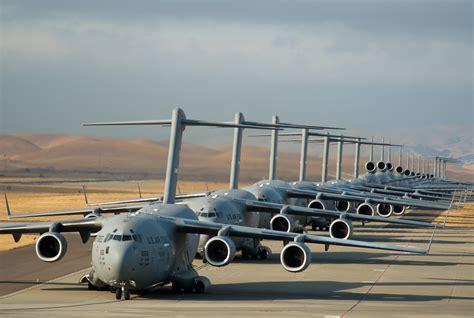
The Boeing C-17 Globemaster III has carved out a reputation as one of the most versatile and powerful military airlifters in the world. In the evolving aerospace arena of 2025, it stands as a formidable benchmark for military transport, even years after its production ceased. Designed from the outset for strategic and tactical operations in rugged and high-stress environments, the C-17 is more than just an aircraft—it’s a logistics enabler for global military dominance.
The Strategic Muscle of the C-17 Globemaster III
In terms of sheer operational capability, the C-17 was purpose-built to bridge the gap between tactical and strategic airlift. With a maximum payload capacity of 170,900 lbs, and a ferry range exceeding 6,200 nautical miles, it delivers not just cargo, but operational flexibility across continents.
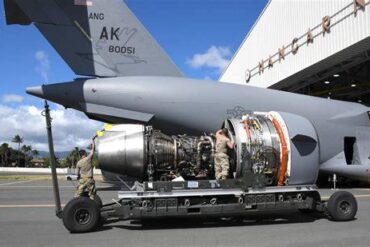
Its four Pratt & Whitney F117-PW-100 turbofan engines provide the thrust required for Short Takeoff and Landing (STOL) capability—a rare feat for an aircraft of its size. The C-17 can operate from runways as short as 3,500 feet, even if they are semi-prepared, gravelly, or austere.
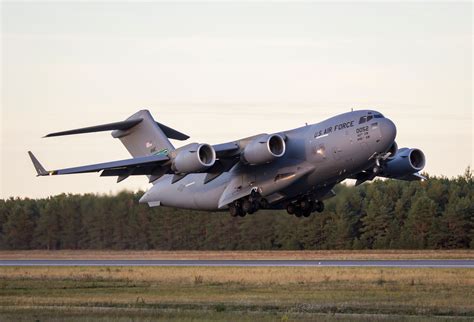
This rugged versatility ensures that the C-17 can insert heavy cargo, personnel, or armored vehicles deep into operational zones where civilian freighters would never dare land. This edge becomes particularly vital in conflict scenarios or disaster relief operations in underdeveloped regions.
Key Military Competitors: A Size and Role Analysis
The most relevant contemporary military airlifters vying for the same strategic space in 2025 include the Chinese Xi’an Y-20, the Russian Ilyushin Il-76MD-90A, and the European Airbus A400M Atlas. Each of these aircraft plays a unique role in their respective air forces, but none fully replicate the C-17’s operational breadth.
The Xi’an Y-20, despite clear design parallels to the Globemaster, lags behind in engine performance and payload. With a maximum payload of 145,000 lbs and ferry range slightly above 5,000 nautical miles, it offers robust capability but lacks the proven global reach and reliability of the C-17.

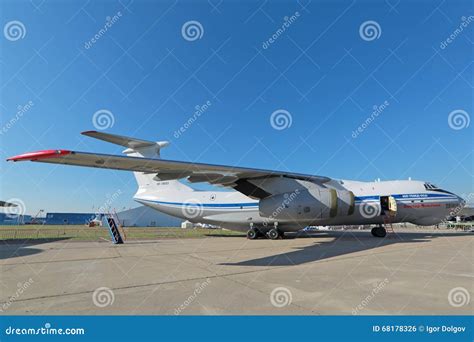
The Ilyushin Il-76MD-90A, meanwhile, is a legacy platform modernized for the 21st century. Though capable of hauling 132,000 lbs, its limited production and aging design language have constrained its export appeal. Reliability and survivability in modern electronic warfare environments also remain concerns.
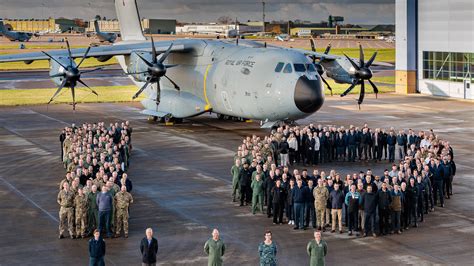
As for the Airbus A400M Atlas, it stands as a hybrid tactical/strategic lifter. Its payload tops at 81,600 lbs, significantly under the C-17’s capacity. However, its modern avionics and ongoing production give it an edge in availability and cost-efficiency for nations not aligned with U.S. defense procurement.
Super Heavy Airlift: C-5M Super Galaxy and Antonov An-124
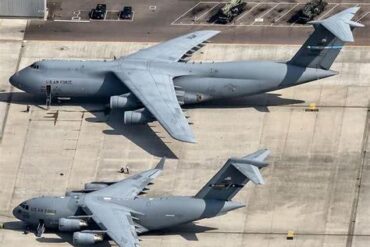
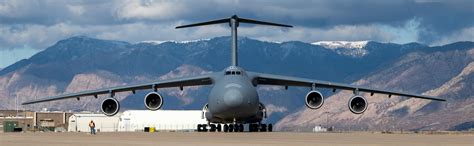
At the upper echelon of military transport lies the C-5M Super Galaxy, boasting an unparalleled 285,000 lbs payload and 7,000 nautical mile ferry range. However, its size makes it impractical for forward-deployed operations, limiting its role to high-volume inter-theater logistics.
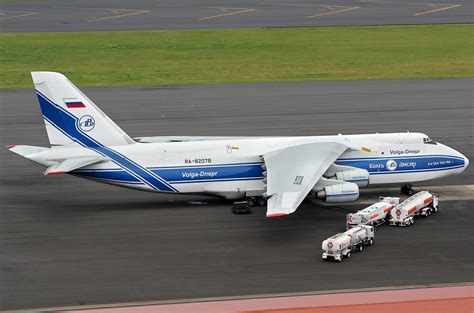
The Antonov An-124 Ruslan, the only other airlifter in the same class, remains in limited use due to production challenges and geopolitical constraints. Its future is uncertain, especially following the destruction of the An-225 Mriya.
The C-17, by comparison, hits the sweet spot: large enough for meaningful strategic operations, yet nimble enough for tactical missions.
The Tactical Titan: C-130J and Embraer C-390
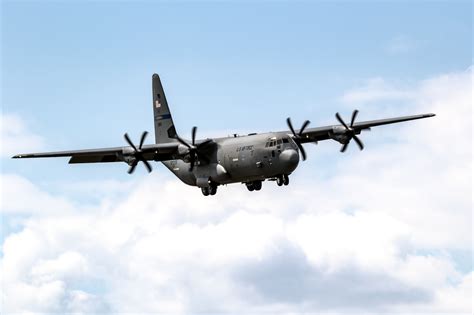
The Lockheed Martin C-130J Super Hercules is often viewed as the smaller cousin to the C-17. With a payload ceiling of 42,000 lbs, it’s optimized for intra-theater lift rather than intercontinental reach. Its strength lies in tactical versatility, not global logistics.
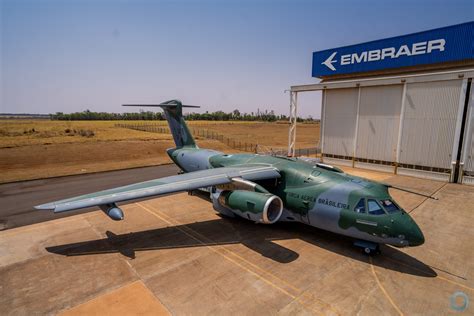
The Embraer C-390 Millennium, a newer player in the market, brings jet-speed performance to a class typically dominated by turboprops. Yet, its payload capacity of 57,300 lbs still limits it to tactical duties. It’s more a competitor to the C-130J than the C-17.
Civilian Freighters: Different Purpose, Different Priorities
Comparing the C-17 to civilian freighters like the Boeing 767-300F, 777F, or Airbus A350F is akin to contrasting an armored personnel carrier with a city delivery van. While both move goods, the context and requirements are worlds apart.
Civil freighters are engineered for efficiency, range, and airport compatibility. Their operational lifeblood is well-maintained runways and ground handling infrastructure. The Boeing 777F, with a payload of 224,000 lbs and range of nearly 6,000 nautical miles, delivers exceptional performance in ideal conditions—but only in ideal conditions.
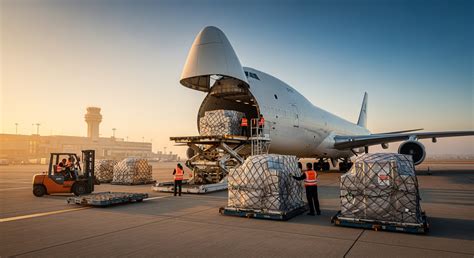
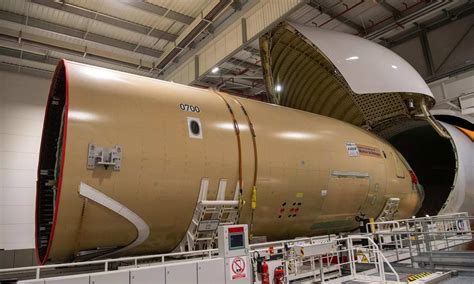
The upcoming Airbus A350F, promising a 240,000 lbs payload, will likely redefine fuel efficiency and capacity in its class. But like all civil freighters, it lacks battlefield survivability, STOL capabilities, and multi-role versatility.
Survivability and Ruggedness: A Military Prerogative
Where civilian aircraft are designed to avoid conflict zones, the C-17 is built to operate within them. Redundant flight control systems, infrared countermeasures, limited ballistic protection, and battlefield survivability make the C-17 uniquely suited for high-risk theaters.
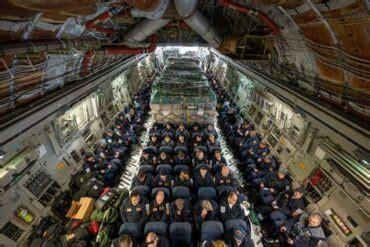
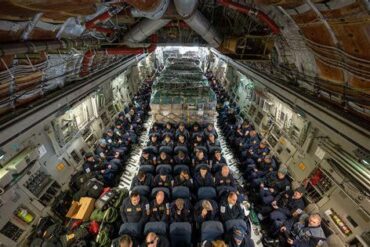
Its cargo hold is fortified to withstand point-load stresses, accommodating tanks, heavy engineering equipment, and up to 102 fully-equipped paratroopers. This load versatility enables mission profiles ranging from troop insertion to rapid disaster relief.
Mid-air refueling capability further boosts the C-17’s operational reach, offering true global mobility unmatched by civil variants or most peer military platforms.
The Role of Militarized Civilian Freighters
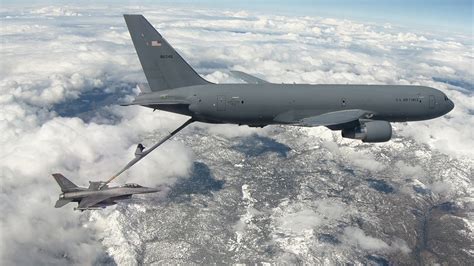
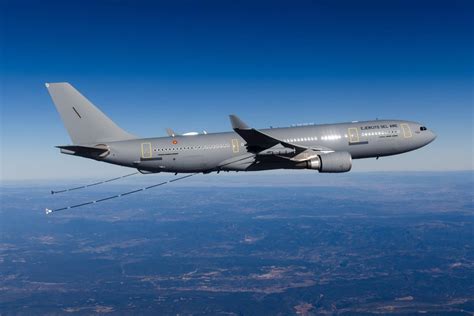
The KC-46A Pegasus (based on the 767) and Airbus A330 MRTT exemplify a different philosophy: repurposing commercial aircraft for military logistics. While primarily tankers, they carry troops and cargo in secondary roles. Reinforced floors, secure communication suites, and limited defensive features add military functionality.
Yet, these platforms are constrained by the fundamentals of their airliner heritage. Side cargo doors, dependency on long, paved runways, and an inability to perform combat airdrops place them in a separate operational category. While invaluable for long-haul logistics between secure air bases, they can’t match the frontline readiness of a dedicated military airlifter like the C-17.
Global Deployment Realities in 2025
In a world shaped by hybrid warfare, rapid deployment needs, and ever-evolving geopolitical flashpoints, airlift flexibility has never been more important. The U.S. Air Force’s global footprint, enabled by a robust C-17 fleet, allows near-instantaneous response to crises on any continent.
Export customers like India, Australia, the UK, and Qatar leverage their C-17 fleets for both military and humanitarian missions. From airlifting tanks during wartime to delivering medical supplies after earthquakes, the Globemaster continues to earn its place in diverse roles.
While nations like China expand Y-20 production and Russia seeks to modernize its Il-76 fleet, no platform yet replicates the unified blend of performance, flexibility, and survivability the C-17 offers. It remains a military airlift gold standard.
Beyond 2025: What Comes Next?
Though production ceased in 2015, continued interest in the C-17—alongside Boeing’s ongoing evaluation of restarting the line—suggests enduring demand. Yet, with the US Air Force eyeing next-generation airlifters targeting an early 2040s service entry, the focus is shifting toward platforms that blend AI integration, stealth logistics, and hybrid propulsion.
Still, until a worthy successor takes wing, the C-17 remains not just relevant, but indispensable.
Conclusion: The Enduring Reign of the C-17
Even in the rapidly modernizing aerospace landscape of 2025, the C-17 Globemaster III maintains a unique position. It is unmatched in its balance of capacity, survivability, and tactical agility, making it a linchpin in any high-readiness airlift capability.
It may not have the highest payload or the most modern avionics, but what it does have is a design forged in real-world necessity—one that continues to outperform, outlast, and outmaneuver nearly every aircraft in its weight class. As the world continues to change, the C-17 stands as a reminder that rugged reliability and versatile engineering never go out of style.