Modern warfare is sustained not only by combat aircraft and weapons but by the immense logistical networks that keep forces supplied across continents. Behind every armored brigade deployment, humanitarian relief mission, or emergency military response lies a fleet of heavy transport aircraft capable of moving enormous quantities of equipment and personnel across the globe.
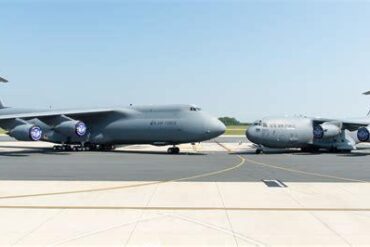
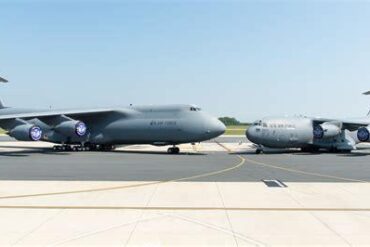
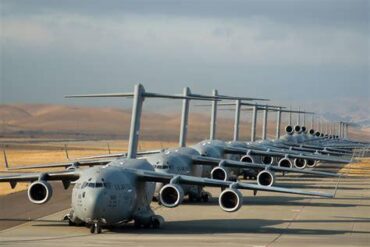
Among the most recognizable giants in military aviation are the Lockheed C-5 Galaxy and the Boeing C-17 Globemaster III. Both aircraft form the backbone of the United States Air Force’s strategic airlift capability, yet they embody very different philosophies in aircraft design and mission execution. At first glance, they may appear to serve identical purposes: transporting cargo over long distances. In practice, each aircraft fulfills a unique and complementary role within global military logistics.
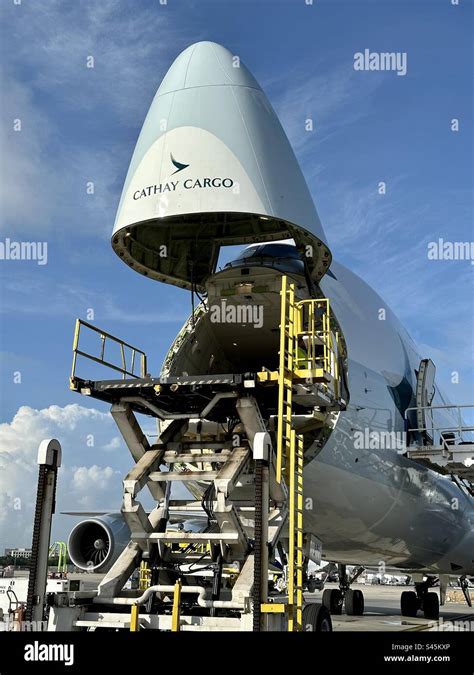
The C-5 Galaxy, introduced during the Cold War, was engineered to move immense payloads between continents in as few flights as possible.
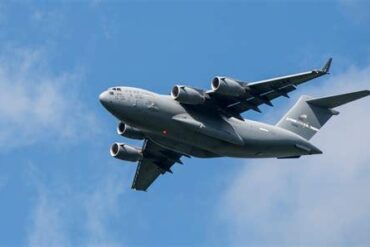
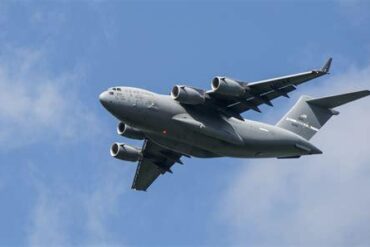
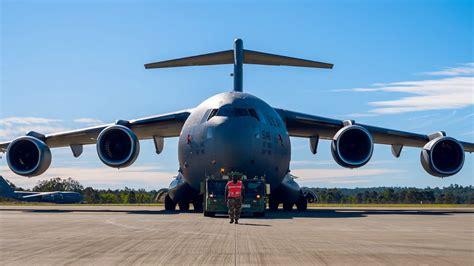
The C-17 Globemaster III, which entered service decades later, emphasizes flexibility, speed of deployment, and the ability to operate closer to operational zones. Together they form a powerful logistical partnership that enables rapid military response anywhere on Earth.
Strategic Purpose: Two Aircraft Designed for Different Eras
The origins of the C-5 Galaxy trace back to the late 1960s, a period when military planners were preparing for the possibility of large-scale global conflict. During the Cold War, the United States required an aircraft capable of transporting heavy armored vehicles, helicopters, and oversized equipment directly from American bases to distant theaters of operation. The solution was an enormous strategic airlifter designed to move the largest loads ever carried by military aircraft.
The C-5’s mission profile focuses on intercontinental logistics. It typically flies between major air bases equipped with long runways, extensive maintenance infrastructure, and large cargo handling facilities. When large quantities of equipment must be delivered across oceans quickly, the Galaxy becomes the aircraft of choice.
The C-17 Globemaster III, by contrast, emerged in the 1990s during a period when military operations were shifting away from massive conventional conflicts toward regional crises, peacekeeping operations, and humanitarian missions. Military planners needed an aircraft that could perform both strategic and tactical airlift—capable of flying long distances while also operating from smaller airfields closer to the action.
Rather than replacing the C-5, the C-17 filled an operational gap. It could deliver supplies directly into forward operating locations where massive aircraft like the Galaxy would struggle to operate.
Cargo Capacity: The Galaxy’s Unmatched Payload Power
The most striking difference between the two aircraft lies in their sheer cargo capacity. The Lockheed C-5 Galaxy remains one of the largest military transport aircraft ever built, and its internal cargo bay reflects that ambition.
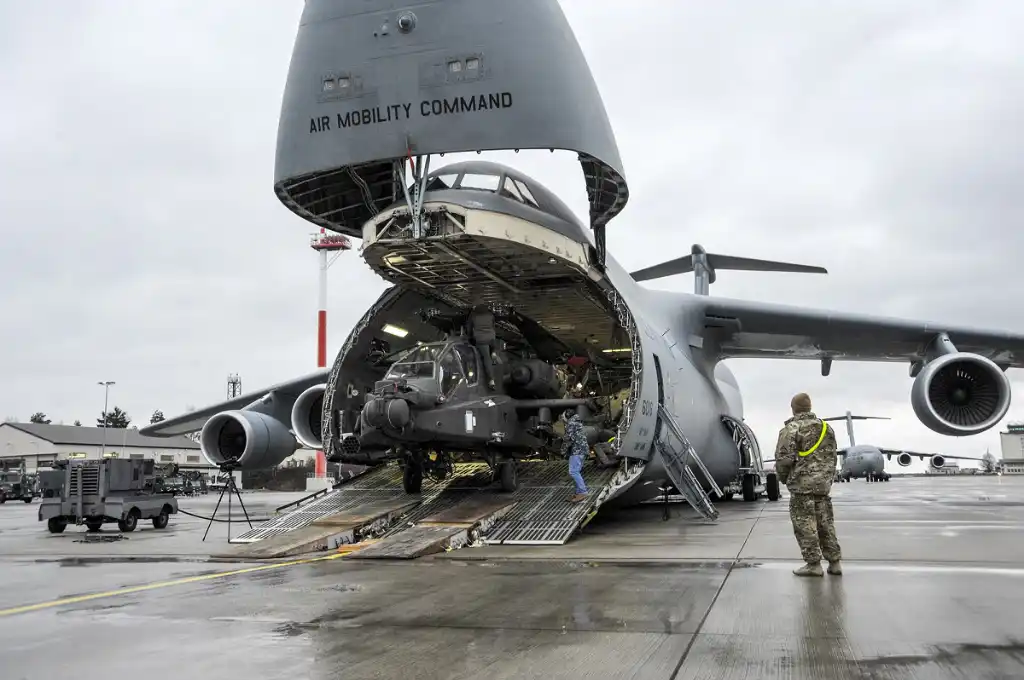
With a maximum payload exceeding 270,000 pounds (122,500 kilograms), the C-5 can transport equipment that would overwhelm nearly every other aircraft in service. The cargo compartment stretches through most of the fuselage and includes both upper and lower decks, providing enormous usable space.
Large equipment commonly transported by the C-5 includes:
- M1 Abrams main battle tanks
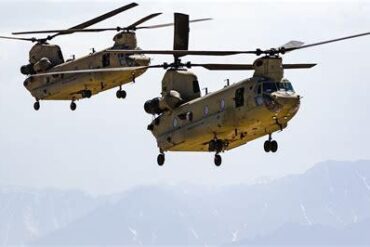
- CH-47 Chinook helicopters
- Armored vehicles and artillery systems
- Large aircraft components
- Military engineering equipment
The aircraft’s distinctive nose-opening cargo door allows vehicles to drive directly into the cargo bay, while the rear ramp enables simultaneous loading from both ends. This “drive-through” loading configuration significantly accelerates the process of preparing massive shipments for long-distance transport.
Although the C-17 Globemaster III carries less cargo overall, its capacity remains extremely impressive. With a maximum payload of roughly 170,000 pounds (77,500 kilograms), it can transport a wide variety of military assets including tanks, helicopters, vehicles, and troops.
A single C-17 can carry:
- One M1 Abrams tank
- One M3 Bradley armored vehicle
- Up to three UH-60 Black Hawk helicopters
- Four Bushmaster armored vehicles
- More than 100 fully equipped paratroopers
Where the Globemaster truly shines is in its ability to rapidly reconfigure between cargo transport, troop deployment, and medical evacuation missions.
Physical Size: The C-5 Galaxy Is a True Giant
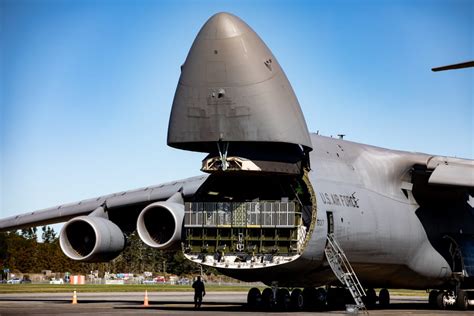
Standing next to a C-5 Galaxy on the flight line feels like standing beside a small building. Its enormous size remains one of the defining features of the aircraft.
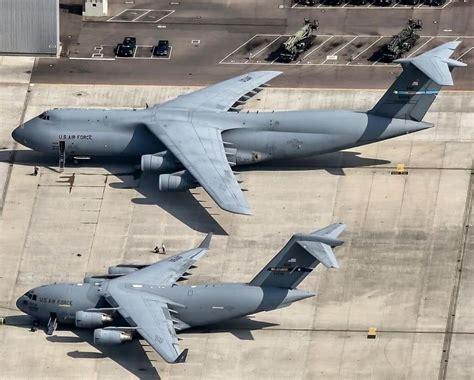
The Galaxy measures approximately 247 feet (75 meters) in length, with a massive wingspan of over 222 feet (67 meters). Its vertical tail rises roughly 65 feet above the ground, towering over most other aircraft on a military base.
Inside the fuselage lies a cargo hold large enough to accommodate oversized vehicles that cannot fit inside most other aircraft. The upper deck runs nearly the full length of the aircraft and contains the cockpit, crew stations, and troop seating areas.
The Boeing C-17 Globemaster III is noticeably smaller but still qualifies as a large transport aircraft by any standard. The aircraft measures about 174 feet (53 meters) long with a wingspan of 169 feet (52 meters).
Despite its smaller footprint, the C-17’s cargo bay is highly optimized for operational efficiency. Engineers minimized structural obstructions within the compartment so cargo handlers can maximize usable space and load equipment more quickly.
The difference in scale affects more than visual appearance. It also determines where each aircraft can realistically operate.
Runway Requirements and Tactical Access
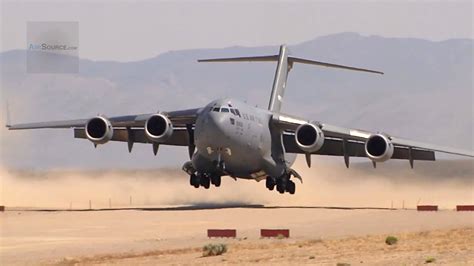
One of the most significant operational advantages of the C-17 Globemaster III lies in its ability to use shorter and less developed runways. Military operations frequently require aircraft to land at austere locations with limited infrastructure, including temporary airstrips near combat zones or disaster areas.
The C-17 was specifically engineered to handle these conditions.
It can take off in approximately 7,600 feet of runway and land in about 3,500 feet, sometimes even less depending on cargo weight and environmental conditions. The aircraft’s high-lift wing design, powerful engines, and advanced thrust-reverser system allow it to operate from airfields that would be impractical for larger aircraft.
The C-5 Galaxy, while capable of landing at many military airfields, typically requires longer runways and more developed infrastructure to operate safely when carrying heavy loads. A fully loaded C-5 often needs around 8,300 feet of runway for takeoff.
Once the Galaxy lands at a destination base, it may not always be able to depart again with a full payload if the runway is too short or the pavement strength is insufficient.
For that reason, the C-5 generally operates between major logistics hubs, while the C-17 carries equipment forward to smaller tactical airfields.
Speed, Range, and Operational Performance
Despite their differences in size and mission philosophy, both aircraft share surprisingly similar cruising speeds. Each typically cruises at around 450 knots, which translates to roughly 520 miles per hour (830 km/h).
This performance allows both aircraft to move large quantities of cargo across continents in relatively short periods.
The C-17 Globemaster III has a slightly higher operational ceiling, reaching approximately 45,000 feet under certain configurations. The C-5 Galaxy usually operates up to around 35,000 feet, though both aircraft typically cruise between 28,000 and 33,000 feet during heavy transport missions.
Where the aircraft diverge more noticeably is in crew requirements. The C-5 generally requires a seven-person crew, including two pilots, two flight engineers, and three loadmasters responsible for managing complex cargo operations.
The C-17 benefits from modern automation and streamlined systems, allowing it to operate with only three crew members: two pilots and one loadmaster. This smaller crew requirement improves operational efficiency and allows faster mission turnaround.
Cargo Handling and Mission Flexibility
Another defining characteristic of the C-17 Globemaster III is its emphasis on mission adaptability. Military planners often require aircraft that can quickly shift roles depending on operational needs.
Within hours, a C-17 can transition between multiple mission configurations:
- Heavy cargo transport
- Troop deployment missions
- Aeromedical evacuation operations
- Paratrooper drop missions
- Humanitarian relief supply delivery
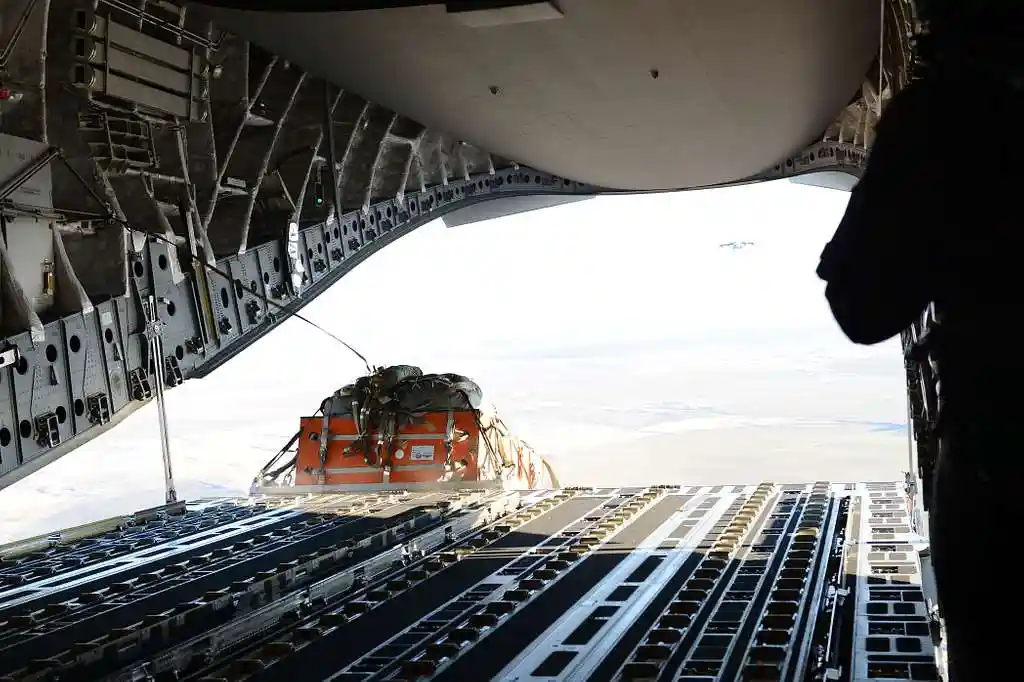
Its rear cargo ramp supports airdrop operations, allowing equipment and humanitarian aid pallets to be released by parachute directly over remote locations.
The C-5 Galaxy focuses more heavily on transporting outsized cargo that other aircraft cannot carry. While it can perform many types of missions, its greatest value lies in moving extremely large equipment across intercontinental distances.
When massive loads must be transported efficiently, the Galaxy’s enormous cargo volume becomes indispensable.
A Strategic Partnership in Global Mobility
Although the C-5 Galaxy and C-17 Globemaster III are often compared, they are not rivals in a traditional sense. Instead, they function as complementary components of a carefully structured logistics system.
The typical deployment pattern illustrates this partnership clearly. A C-5 Galaxy may carry heavy armored vehicles, helicopters, or engineering equipment from the United States to a large overseas air base. Once the equipment arrives, C-17 aircraft distribute the cargo forward to smaller airfields closer to operational areas.
This layered approach allows military planners to combine maximum payload capacity with maximum deployment flexibility.
The Galaxy delivers the massive initial shipment.
The Globemaster spreads those resources wherever they are needed most.
Why Both Aircraft Remain Essential Today
In an era defined by rapid response requirements, disaster relief operations, and global military commitments, logistics has become as strategically important as combat capability.
The Lockheed C-5 Galaxy continues to provide unparalleled heavy-lift capacity, enabling the movement of equipment that would otherwise require multiple aircraft or sea transport. Its ability to carry enormous loads across oceans ensures that major military deployments can begin within days rather than weeks.
Meanwhile, the Boeing C-17 Globemaster III offers the versatility needed for modern operations. Its ability to land at smaller airfields, deploy troops rapidly, and support humanitarian missions makes it one of the most adaptable transport aircraft ever built.
Together, these aircraft represent two different engineering philosophies united by a common goal: global mobility.
One is a colossal strategic lifter capable of moving the heaviest cargo on Earth.
The other is a flexible tactical transporter able to bring that cargo wherever it must go.
In the complex machinery of modern military logistics, both giants are indispensable—and the skies remain large enough for them both.