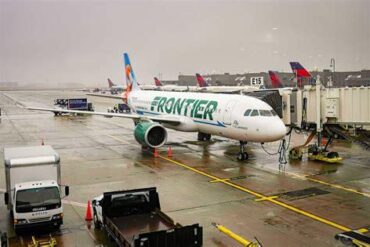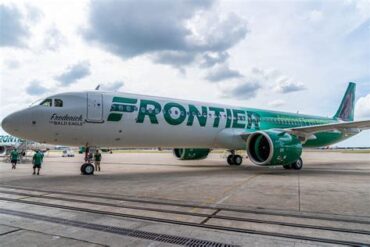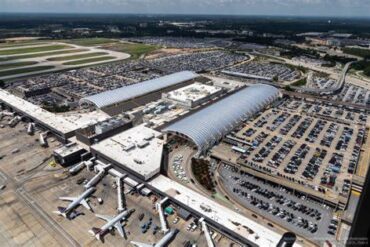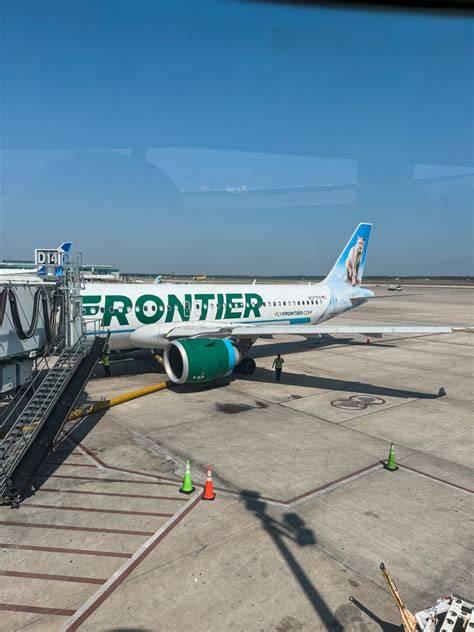
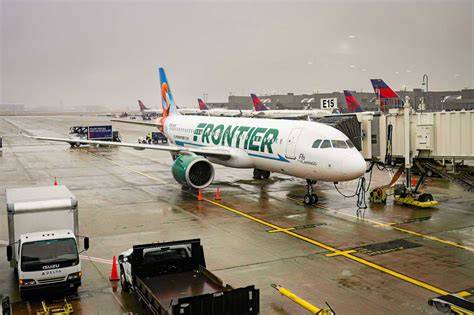
Frontier Airlines is making a dramatic adjustment to its strategy at Hartsfield-Jackson Atlanta International Airport (ATL) after rapidly expanding its presence there in 2025. The ultra-low-cost carrier has now removed 21 routes from Atlanta, reversing a significant portion of the network growth that turned the airport into Frontier’s busiest operation.
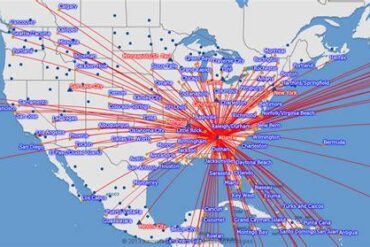
The scale of the route cuts initially makes the move look like a major retreat. Frontier had built an unusually ambitious Atlanta network, reaching 61 advertised nonstop destinations by December 2025. Yet the underlying capacity figures tell a more nuanced story. Although roughly one-third of Frontier’s Atlanta routes have disappeared, the canceled services represented only about 5% of the airline’s total seats at ATL.
That distinction matters. Frontier is not abandoning Atlanta. Instead, the airline appears to be using the current restructuring to remove weaker markets, reduce excess capacity and concentrate aircraft on routes with stronger demand. In an industry where aircraft utilization and profitability can matter more than the number of destinations displayed on a route map, the cuts represent a significant change in strategy.
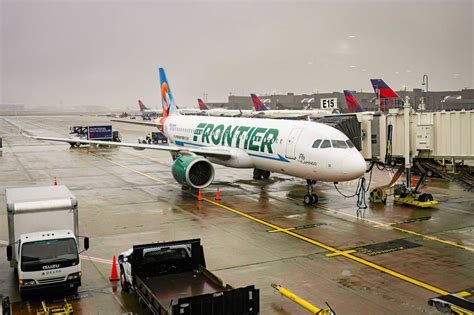
Frontier Airlines Went All-In on Atlanta in 2025
Frontier’s Atlanta expansion accelerated rapidly during 2025. In February, the airline announced plans to increase departures by approximately 40% year over year and serve 52 destinations from ATL by the summer. By December, its advertised network had expanded again, reaching 61 destinations across the United States, Caribbean, Mexico and Central America.
The growth was supported by Frontier’s existing presence in Atlanta. The airline already had a substantial crew base with more than 1,200 employees, while newly constructed gates on Concourse E gave it additional infrastructure for expansion. That combination allowed Frontier to add routes without building an entirely new operational foundation.
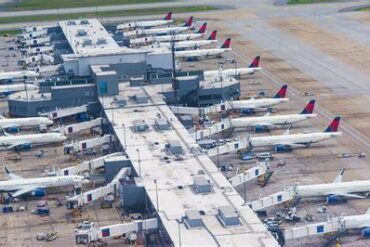
Atlanta was also strategically attractive because of the enormous local market and the dominance of Delta Air Lines. Frontier could position itself as a low-cost alternative in a city where Delta has an exceptionally powerful network. The carrier said its average fares were about 60% lower than those of other airlines at ATL, giving it a straightforward competitive message aimed particularly at price-sensitive travelers.
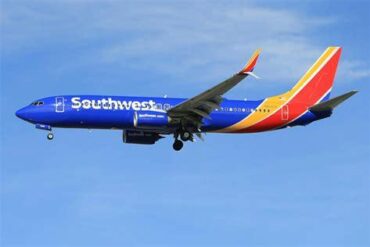
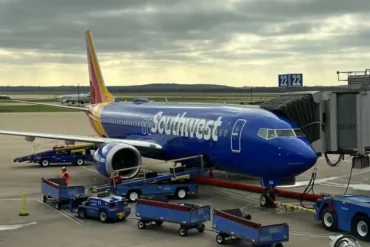
The broader competitive environment also appeared favorable. Southwest Airlines announced plans to reduce its Atlanta operation by roughly one-third, while Spirit Airlines was retreating from the market. Frontier therefore saw an opportunity to occupy some of the space being left behind by other low-fare competitors.
The company’s ambition extended beyond simply adding leisure destinations. Then-president James Dempsey said Frontier wanted to become Atlanta’s second-largest carrier, while acknowledging that Delta’s position at the airport was unlikely to be challenged for first place. The objective was to build a large but complementary network capable of attracting travelers who cared more about fares than extensive connectivity.
Why Frontier Could Experiment With So Many Routes
One of Frontier’s advantages during the Atlanta expansion was its ability to test markets with relatively little frequency. Rather than immediately committing substantial daily capacity to every destination, the airline could operate certain routes once, twice or three times per week.
That approach reduced the risk associated with experimenting with unfamiliar markets. Frontier could determine whether passengers responded to a new route before committing additional aircraft and seats. In theory, successful markets could receive more capacity while weaker services could be withdrawn with relatively limited disruption to the overall network.
The strategy produced a remarkable sequence of launches. Frontier added six more Atlanta routes in June 2025 and continued expanding during the fall. December brought another wave, including St. Maarten, Nassau, Milwaukee, Providenciales, Puerto Vallarta and San José del Cabo.
The problem was that several of these routes did not have enough time to mature before they were removed. Five of those six December launches would survive for only a few months, highlighting how aggressively Frontier had been testing demand.
Full List of Frontier Airlines Routes Cut From Atlanta
Frontier has now removed 21 Atlanta routes, with cancellations occurring between late 2025 and July 2026. The affected destinations include a mixture of domestic markets and international leisure destinations.
| Destination | Most Recent Start/Restart | End Date |
|---|---|---|
| Trenton | April 2013 | November 2025 |
| Syracuse | October 2024 | December 2025 |
| Fort Myers | June 2025 | April 2026 |
| San Antonio | May 2025 | April 2026 |
| West Palm Beach | June 2025 | April 2026 |
| Santo Domingo | May 2023 | April 2026 |
| Grand Rapids | October 2024 | April 2026 |
| Omaha | October 2025 | April 2026 |
| San Pedro Sula | June 2025 | April 2026 |
| Aruba | May 2025 | April 2026 |
| Puerto Vallarta | December 2025 | April 2026 |
| Nassau | December 2025 | April 2026 |
| San José del Cabo | December 2025 | April 2026 |
| Providenciales | December 2025 | April 2026 |
| St. Maarten | December 2025 | April 2026 |
| Salt Lake City | May 2023 | April 2026 |
| Hartford | February 2025 | May 2026 |
| Richmond | October 2025 | May 2026 |
| Oklahoma City | May 2025 | June 2026 |
| Milwaukee | December 2025 | June 2026 |
| Memphis | November 2025 | July 2026 |
The timing of several cancellations is particularly revealing. Nassau, Providenciales, Puerto Vallarta, San José del Cabo and St. Maarten were all launched in December 2025 but disappeared from the planned summer schedule by April 2026.
Those five routes effectively became short-term experiments rather than permanent additions to the Atlanta network. According to DOT-derived figures cited in the reference data, Providenciales recorded a load factor of only 17.6%, while Nassau managed just 22.2%. Such numbers make it difficult for an airline with a low-cost business model to justify continued capacity.
Weak Load Factors Explain Much of the Atlanta Pruning
Domestic routes also showed considerable differences in performance. Through May, Richmond averaged a 40.7% load factor, followed by Milwaukee at 42.9%, Fort Myers at 46.0%, Grand Rapids at 46.1% and Omaha at 46.8%.
A load factor alone does not determine whether a flight makes money. Average fares, baggage purchases, seat assignments, onboard sales and other ancillary revenues all influence profitability. Frontier can potentially make money on a flight with a lower load factor if yields are strong enough.
Nevertheless, consistently operating aircraft with large numbers of empty seats creates a serious opportunity cost. Frontier has a finite fleet, and every aircraft assigned to a weak route is an aircraft that cannot serve a stronger market elsewhere.
The overall Atlanta figures make the rationale behind the cuts even clearer. From January through May, the domestic routes that Frontier subsequently eliminated carried 85,372 passengers on 168,238 seats, producing a load factor of just 50.7%.
By comparison, the domestic routes Frontier kept carried approximately 2.68 million passengers on 3.54 million seats, producing a 75.7% load factor. Across all Frontier domestic Atlanta flying, the average was 74.6%.
In other words, the routes being removed were dramatically weaker than the routes remaining in the network. The difference supports the argument that Frontier is not simply shrinking Atlanta indiscriminately. It is attempting to right-size its network around demand.
Frontier’s Atlanta Cuts Are Part of a Much Larger Financial Reset
The route changes also need to be viewed alongside Frontier’s broader financial restructuring. The airline recorded a $137 million loss in 2025, a sharp reversal from its $85 million profit in 2024.
That financial pressure has encouraged Frontier to become more disciplined about fleet size and capacity. The airline announced plans to return 24 Airbus A320neos early and defer 69 future A320neo-family deliveries. Frontier estimated that these changes could generate approximately $200 million in annual run-rate savings by 2027.
CEO James Dempsey described right-sizing the fleet as central to returning Frontier to profitability. That philosophy naturally affects route planning. When fewer aircraft are available, airlines have to become more selective about where those aircraft fly.
Frontier’s second-quarter results showed some signs that the strategy is beginning to produce improvements. Revenue reached a company-record $1.28 billion, representing a 38% year-over-year increase, while revenue per available seat mile rose 28%. The airline also reported an 80.3% load factor.
Frontier still recorded a $90 million GAAP net loss for the quarter, although one-time expenses connected with returning aircraft contributed significantly to the result. The airline ended June with a fleet of 165 aircraft, reinforcing the significance of its capacity reduction.
Frontier Airlines Is Pruning Atlanta, Not Abandoning It
The most important takeaway from the 21 route cuts is that Frontier Airlines is not leaving Atlanta. Instead, the carrier appears to be moving away from the rapid experimentation that characterized 2025 and toward a more selective network strategy.
That shift makes sense given the performance gap between canceled and retained routes. Frontier can still maintain a meaningful presence in one of the largest aviation markets in the United States without keeping every experimental destination alive.
Atlanta remains strategically valuable. Its huge population base, enormous leisure market and Delta dominance give Frontier an opportunity to build a recognizable low-fare alternative. The reduction in Southwest capacity and the weakened position of Spirit also remain favorable factors.
However, Frontier’s earlier goal of becoming Atlanta’s second-largest airline now looks less dependent on the sheer number of destinations it serves. Network quality, aircraft utilization and profitability are becoming more important than headline route counts.
The 21 cancellations therefore represent a correction rather than a collapse. Frontier expanded aggressively, tested dozens of markets and discovered which services could not support the available capacity. Now it is reallocating resources toward the routes that have demonstrated stronger demand.
What Happens to Frontier’s Atlanta Network Next?
The immediate outlook is likely to be one of consolidation rather than another explosive round of expansion. With the fleet being reduced and profitability taking priority, Frontier has less reason to launch dozens of additional Atlanta routes in the short term.
That does not mean Atlanta has lost its importance. If the surviving routes continue producing stronger load factors and better financial returns, Frontier could eventually resume measured growth. The difference is that future expansion is likely to be more carefully targeted.
The airline’s experience in 2025 provides a useful lesson. Adding destinations is relatively easy; making those destinations consistently profitable is much harder. Frontier now has a clearer picture of which Atlanta markets generate meaningful demand and which ones do not.
For passengers, the changes will mean fewer choices on some routes, particularly among leisure destinations that were launched only recently. But for Frontier itself, concentrating aircraft on stronger markets could improve reliability, utilization and financial performance.
The world’s busiest airport remains too strategically important for Frontier to ignore. The airline simply appears to have decided that its next phase in Atlanta will be built around fewer, stronger routes rather than rapid network expansion. That could ultimately make its Atlanta operation smaller on a route map while making it healthier as a business.
A closer look at Frontier’s remaining Atlanta destinations and the routes gaining capacity would be the natural next step in understanding where the airline is placing its bets.