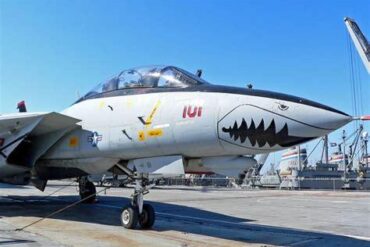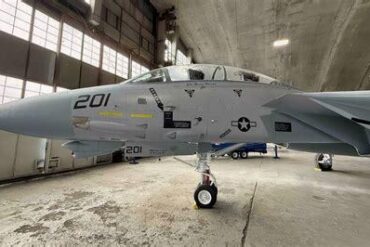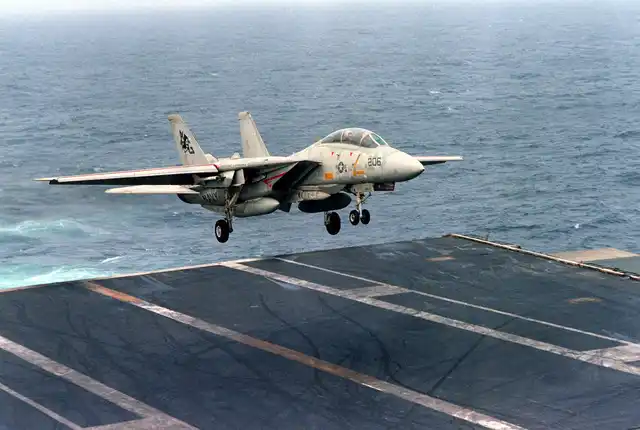
The Grumman F-14 Tomcat is best remembered for its enormous twin tails, Phoenix missiles, powerful engines, and distinctive variable-sweep wings. Those wings were more than a visual signature, however. They were central to the aircraft’s ability to combine Mach 2.4 performance with the low-speed handling required for aircraft carrier operations. The unusual part is that, when the Tomcat slowed down for a carrier approach, its wings did not simply remain swept back. They moved forward, creating a much broader and more lift-efficient wing.
The reason becomes clear when the Tomcat’s design objectives are considered together. A carrier fighter needed to approach the deck at relatively low speeds, maintain precise control close to the stall, and generate enough lift to remain airborne while carrying fuel and weapons. At the other end of the mission, the same aircraft was expected to intercept Soviet bombers at very high altitude and speed. Those requirements pulled the aerodynamic design in opposite directions. A wing that was excellent for one regime could be badly compromised in the other.
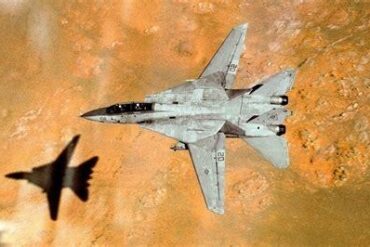
The F-14 therefore used a variable-geometry wing, allowing the aircraft to change its aerodynamic characteristics during flight. At high speed, the wings swept rearward to reduce drag and delay the effects of compressibility and shock waves. As the aircraft slowed, the wings moved forward, increasing the effective lifting area and making the Tomcat substantially better suited to the demanding final approach to a carrier.
The F-14 Tomcat Was Designed Around Two Very Different Flight Regimes
The fundamental problem facing Grumman engineers was not unique to the F-14. Aircraft designers have long faced a compromise between low-speed lift and high-speed drag. A relatively straight, broad wing is highly effective when an aircraft needs to fly slowly because it can generate substantial lift without requiring an extreme angle of attack. But the same geometry becomes increasingly inefficient as speed rises.
At transonic and supersonic speeds, the situation changes dramatically. Airflow around the aircraft begins producing compression effects and shock waves, increasing drag. A highly swept wing helps reduce the component of airflow acting directly across the wing and delays some of these high-speed aerodynamic penalties. This is why fast aircraft generally have wings that appear much narrower and more sharply angled than those of slower aircraft.
The F-14 had to perform both jobs. It needed to be a high-speed interceptor capable of reaching Mach 2.4, yet it also had to operate from aircraft carriers where takeoff and landing speeds were dictated by the limitations of the ship, the arresting system, and the need for precise control. The Navy could not simply design the Tomcat around its maximum speed and accept poor low-speed characteristics.
The variable-sweep wing provided a way around this contradiction. Instead of forcing one fixed wing to perform adequately across the entire flight envelope, the Tomcat could physically change its wing sweep according to the conditions.
Why Swept-Back Wings Were Poor for Carrier Landings
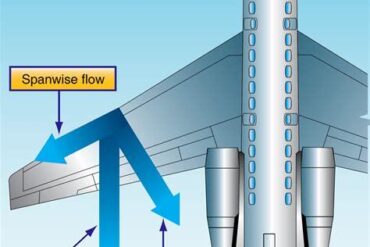
A wing swept far backward is excellent for high-speed flight, but it is not naturally ideal for slow flight. As sweep increases, the wing becomes less effective at generating lift at low speeds. The aircraft consequently needs to fly at a higher angle of attack or use additional high-lift devices to maintain lift.
That creates a serious problem during a carrier landing. A fighter approaching a carrier is already operating within a narrow performance window. The aircraft must maintain a carefully controlled airspeed and angle of attack while descending toward a relatively short moving runway. Once over the deck, the pilot has only a brief opportunity to catch the arresting wire.
The carrier itself adds another complication. A runway on land can be several thousand feet long, while a carrier landing area is only a fraction of that length. The aircraft therefore cannot simply touch down and use a long runway to dissipate its speed. It must arrive in the correct configuration and engage the arresting system.
For the F-14, keeping the wings heavily swept during this phase would have increased the aircraft’s stall speed and reduced its low-speed handling margin. The solution was to move the wings forward.
Why the F-14 Wings Swept Forward
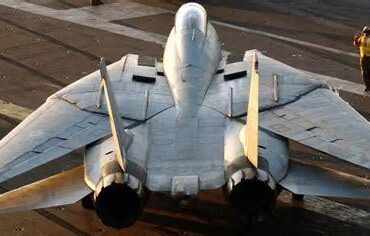
When the Tomcat slowed for landing, its wings could move forward to as much as 20 degrees of sweep. This configuration effectively transformed the aircraft’s aerodynamic character from a high-speed interceptor into a machine much better suited to slow, controlled flight.
Moving the wings forward increased the effective wing area and improved the wing’s ability to produce lift at low speeds. The Tomcat could therefore approach the carrier without relying on the extremely high angle of attack that would have been necessary with the wings fully swept back.
This is the key to understanding why the F-14’s wings appeared to move in the “wrong” direction during landing. The wings were not moving forward because forward sweep was inherently better. They were moving forward because the aerodynamic requirements had changed.
At high speed, the priority was minimizing drag. At low speed, the priority became generating lift and maintaining controllability. The variable-sweep mechanism allowed the F-14 to use a different wing geometry for each situation.
The Tomcat’s Wing Sweep Was Controlled Throughout the Flight
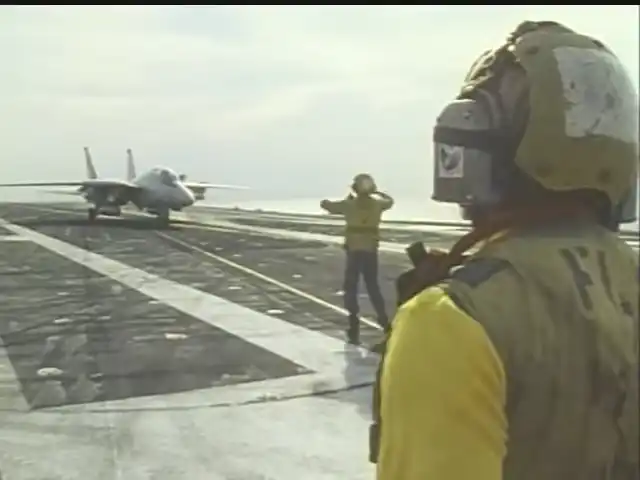
The F-14 did not have simply two wing positions. Its variable-geometry system allowed the wings to occupy different positions depending on speed and flight conditions. An onboard system automatically adjusted the sweep, while the pilot could also control the wings manually when required.
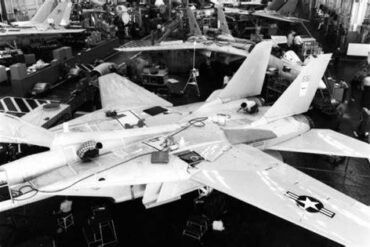
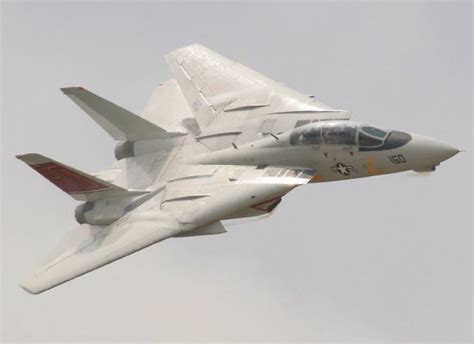
During normal flight, the wings could move from their forward position toward approximately 68 degrees of sweep. At the extreme rearward position, they could be moved farther, to about 75 degrees, for carrier deck parking. This compact configuration was useful because the Tomcat was a large fighter, and reducing its wingspan was important when aircraft had to be arranged closely on a carrier.
The mechanism itself was built around substantial pivot structures, including titanium components, because the wings had to withstand enormous aerodynamic loads. Unlike a simple flap system, the entire main wing structure was being repositioned while the aircraft was flying.
This gave the F-14 a remarkable degree of aerodynamic flexibility, but it also introduced considerable mechanical complexity. Every additional moving component adds potential maintenance requirements, and the Tomcat’s variable-sweep system was no exception.
Why the F-14 Needed Better Low-Speed Handling Than a Pure Interceptor
The carrier-landing requirement was particularly important because of what the F-14 was expected to replace. The earlier McDonnell Douglas F-4 Phantom II had been an extremely successful fighter, but its large size, weight, and emphasis on missiles reflected a period when air combat doctrine increasingly focused on long-range interception.
The F-14 was designed around a different combination of requirements. It needed the range and missile-carrying capability necessary to defend the carrier battle group against long-range threats, but it also needed enough maneuverability to engage enemy fighters when necessary.
That made the low-speed characteristics of the aircraft important beyond the carrier approach itself. A fighter that could maintain control and generate lift efficiently at lower speeds had more flexibility in air combat.
The Tomcat’s large wing therefore served two purposes. It helped the aircraft operate safely from a carrier, and it contributed to the fighter’s ability to maneuver across a broad range of speeds.
Why the Wings Swept Back Again After Takeoff
Once the Tomcat accelerated, the aerodynamic balance changed. The extra lift-generating characteristics that were valuable during low-speed flight became less important, while drag became increasingly significant.
The wings consequently swept rearward as speed increased. At high speeds, the sharply swept configuration reduced aerodynamic drag and allowed the F-14 to exploit the enormous thrust available from its twin afterburning engines.
The result was an aircraft capable of moving between dramatically different aerodynamic configurations during a single mission. A Tomcat could launch from a carrier with its wings configured for low-speed performance, accelerate into high-speed flight with the wings moving rearward, and later return to the forward-swept configuration for recovery.
That ability was the entire point of variable geometry.
Why the F-14 Did Not Simply Use a Delta Wing
One obvious alternative would have been a delta wing. Delta-wing aircraft can provide useful performance across a broad range of speeds, and later supersonic aircraft demonstrated how different aerodynamic solutions could avoid the complexity of a variable-sweep mechanism.
But the F-14’s requirements were unusually demanding. It was not simply a land-based supersonic aircraft that needed to fly efficiently at high speed and occasionally slow down. It was a large carrier-based fighter that had to land repeatedly on a moving ship while also serving as a long-range interceptor.
The Tomcat’s designers therefore accepted the complexity of variable geometry because it offered a way to obtain the low-speed characteristics they wanted without sacrificing the high-speed performance required for its interceptor mission.
The result was a compromise, but a highly sophisticated one. Rather than asking one fixed wing to perform every task equally well, the F-14 changed its wing geometry as the mission changed.
The F-14 Could Land With Its Wings Swept Back, But It Was Not Ideal
The forward-swept configuration was the normal landing arrangement, but the aircraft was not absolutely incapable of landing with its wings farther back. The Tomcat could theoretically remain airborne with a more rearward wing configuration, but doing so would raise the stall speed and reduce the margin available during the approach.
That distinction matters. The variable-sweep system did not make forward sweep a mandatory physical requirement for flight. Instead, it made forward sweep the appropriate aerodynamic configuration for low-speed carrier operations.
The F-14 was also tested for unusual asymmetric wing configurations. Engineers considered what would happen if the variable-sweep system developed a malfunction that left the wings at different sweep angles. Such testing demonstrated the robustness of the overall design and gave the aircraft additional emergency capability.
Although the wing mechanism experienced maintenance issues during the Tomcat’s long career, the variable-sweep system itself did not result in an F-14 being lost in a crash.
The Price of the Tomcat’s Variable-Sweep Wings
The technology that made the F-14 so distinctive also contributed to its complexity. A conventional fixed wing has comparatively few large moving structural components. The Tomcat instead required a powerful mechanism capable of repeatedly moving heavy wings while dealing with substantial aerodynamic forces.
That meant additional maintenance, specialized components, and considerable manpower. The aircraft already had a demanding maintenance profile, and its original Pratt & Whitney TF30 engines were themselves associated with well-known operational challenges. Later F-14B and F-14D aircraft received General Electric F110 engines, addressing some of the shortcomings of the original powerplants.
Variable geometry gradually became less attractive as aircraft design evolved. Advances in aerodynamics, flight controls, materials, engines, and high-lift systems made it increasingly possible to achieve broad performance envelopes without physically moving an entire wing.
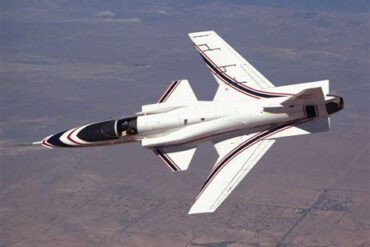
The Panavia Tornado and Rockwell B-1 Lancer were among the other major Western aircraft to use variable-sweep wings, but the technology never became a mainstream solution for modern fighter design.
Why the F-14’s Wings Remain an Engineering Icon
The F-14 Tomcat’s forward-sweeping wings during carrier landings are one of the clearest visual demonstrations of aerodynamic compromise being solved mechanically. The aircraft could not simultaneously have a wing optimized purely for Mach 2.4 flight and another optimized purely for low-speed carrier operations unless the geometry itself could change.
The solution was elegant in concept, even if complicated in practice. Sweep the wings backward when speed matters most, and move them forward when lift, control, and low-speed handling become the priority.
That is why the Tomcat’s wings did not simply remain swept back as the aircraft approached a carrier. Forward sweep reduced the aerodynamic penalties of the high-speed wing configuration at the very moment when the fighter needed maximum low-speed lift and controllability.
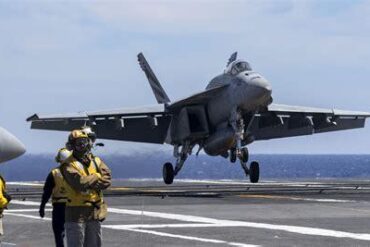
The F-14 ultimately left US Navy service in 2006, replaced by the F/A-18E/F Super Hornet, which represented a different philosophy of carrier aviation. The Navy no longer required a specialized Mach 2-class fleet interceptor in the same way it had during the Cold War, making a simpler and more versatile fighter increasingly attractive.
Yet the Tomcat’s variable geometry remains one of the defining examples of Cold War aircraft engineering. Every time an F-14’s wings moved forward on final approach, the motion represented far more than mechanical spectacle. It was the visible result of engineers solving one of aviation’s most difficult compromises: how to make one aircraft fly efficiently at supersonic speed while still being controllable enough to land on a carrier at low speed.