Airliner pilots are often seen pushing the yoke forward during the landing roll, a maneuver that might appear counterintuitive at first glance. After all, we tend to associate forward yoke pressure with a desire to lower the nose prematurely or to push the aircraft into the ground. Yet in the complex world of large jet operations, this input plays a crucial role in runway performance and aircraft control. To understand its purpose, and why it’s rarely used—or even discouraged—in general aviation (GA), we must delve into the aerodynamic and mechanical factors that govern aircraft behavior after touchdown.
The Physics Behind Forward Yoke Input in Airliners
When a large airliner lands, the sequence of aerodynamic events differs significantly from that of a small piston aircraft. On touchdown, the main landing gear makes initial contact with the runway while the nose gear remains airborne. Almost immediately, the spoilers deploy—large panels that extend upward from the wing’s surface, disrupting lift and transferring weight onto the wheels. However, the deployment of these spoilers induces a nose-up pitching moment because they act behind the aircraft’s center of gravity.
At this critical moment, the pilot applies forward pressure on the yoke to counteract the nose-up force and ensure the nose gear is lowered promptly and firmly onto the runway. This action is vital for multiple reasons. First, it maximizes the weight on all landing gear, particularly the nose wheel, thereby enhancing the effectiveness of nose-wheel steering and the aircraft’s directional control. Second, placing the nose gear firmly on the ground allows for the early activation of mechanical systems tied to weight-on-wheels sensors, including autobrakes and ground spoilers.
Additionally, large jets equipped with reverse thrust systems experience an extra layer of complexity. The application of reverse thrust generates forces that further amplify the nose-up moment. In aircraft like the Citation X, where the clamshell-type thrust reversers or an aft-loaded center of gravity come into play, pilots must proactively use forward yoke input to prevent unintentional aerodynamic lift that might reduce wheel braking efficiency.
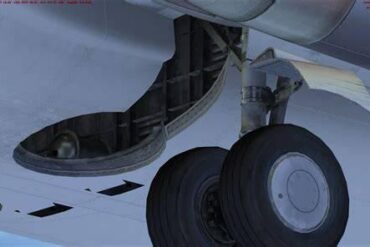
Modern wide-body jets introduce yet another factor: the “truck untilt” logic. Aircraft such as the 767, 777, or 747 are designed so their main gear must settle flat on the runway before spoilers and autobrakes fully engage. By applying forward pressure, pilots encourage the gear to tilt forward and trigger this sequence, reinforcing deceleration aids at the earliest moment.
Why Forward Yoke Input Does Not Translate to General Aviation
While the physics of nose-up pitching due to spoilers and reverse thrust are critical in jets, they are practically nonexistent in typical general aviation aircraft. Single-engine piston aircraft, such as Cessna 172s or Piper Archers, do not employ spoilers or thrust reversers, and their mass distribution keeps the center of gravity relatively forward. As a result, after touchdown, the aerodynamic forces naturally favor the nose settling down without pilot intervention.
In fact, GA pilots are trained to maintain back pressure on the yoke during the landing roll. This technique keeps the nose wheel lightly loaded or even off the runway momentarily, minimizing wear on the nose gear and maximizing braking performance through the main wheels. Any deliberate forward yoke pressure risks overloading the delicate nose gear and increases the likelihood of a propeller strike, especially on short-field or rough-surface landings.
Moreover, applying forward pressure can reduce the effectiveness of aerodynamic braking—a natural byproduct of holding the elevator up and maintaining a higher angle of attack, thereby generating drag to slow the aircraft without relying solely on mechanical brakes. In short, pushing the yoke forward in a GA airplane offers no braking benefit but introduces unnecessary risks.
Exceptions: Tailwheel and Specialized Operations
An important caveat arises when we consider tailwheel (conventional gear) aircraft or specialized landing techniques like three-point landings. In tailwheel planes, pilots do apply forward yoke or stick pressure after touchdown to keep the tail light and maintain positive steering control through the main gear. Without this input, the aircraft might become unstable or even ground loop under braking or crosswind forces.
However, outside of tailwheel operations and niche scenarios, forward yoke input is not advised for tricycle-gear GA aircraft. The standard approach remains back pressure during rollout, transitioning smoothly as speed decreases to bring the nose gear down gently while retaining directional control.
Key Operational Differences Between Airliners and GA Aircraft
The divergence in yoke input philosophy highlights broader operational differences between airliners and general aviation aircraft. Factors that necessitate forward yoke input in large jets include:
- Spoiler-induced nose-up pitching moments requiring elevator compensation.
- Reverse thrust generating additional pitch-up tendencies.
- Activation of weight-on-wheels systems tied to autobrakes and spoilers.
- Complex landing gear geometries requiring “truck untilt” for deceleration aids.
In contrast, general aviation aircraft operate without these systems, relying instead on simpler mechanical configurations where maintaining main gear loading and minimizing nose gear stress takes priority.
Training Implications and Pilot Awareness
Understanding why airliner pilots push the yoke forward during landing roll underscores the importance of aircraft-specific training. Transferring techniques from one category of aircraft to another without accounting for their underlying systems can lead to misapplication of control inputs. A GA pilot emulating forward yoke input seen in airline operations might inadvertently compromise their aircraft’s safety or braking performance.
Conversely, a transitioning pilot moving from GA to jets must recognize the necessity of proactively countering nose-up forces with forward yoke pressure to maintain directional control, optimize braking, and activate aircraft deceleration systems.
Conclusion: Context Matters in Yoke Inputs
The maneuver of pushing the yoke forward during landing rollout is a product of the complex interaction between aerodynamics, aircraft systems, and operational requirements unique to airliners. It serves to counteract spoiler and thrust reverser-induced pitch moments, maximize weight on the nose gear for steering and braking, and facilitate system activations necessary for safe deceleration.
However, in the realm of general aviation, the absence of these factors makes forward yoke input not only unnecessary but potentially detrimental. Instead, pilots are better served by maintaining gentle back pressure to preserve main gear loading and leverage aerodynamic braking, ensuring safe and efficient runway performance.
Understanding the rationale behind this difference enhances pilot competency across aircraft types and reinforces the critical principle that control inputs must always be tailored to the specific aircraft and operational context.