Despite their proven versatility and effectiveness in navies around the world, corvette-class warships are notably absent from the modern U.S. Navy fleet. While once vital during early American conflicts, the corvette has become increasingly marginalized due to shifts in strategic priorities, operational scope, and evolving maritime doctrine.
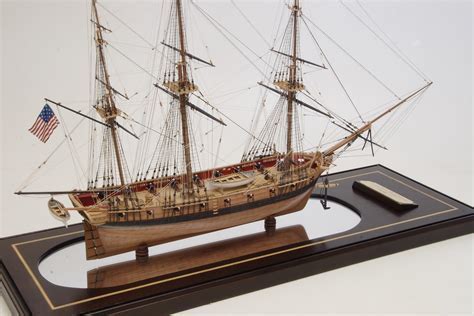
In the 19th century, vessels similar to today’s corvettes—such as sloops of war—played an integral role in asserting American naval power. During the War of 1812, for instance, the sloop USS Wasp defeated several British ships, including the brig Atlanta, marking corvettes as key players in early U.S. military maritime efforts. However, the strategic and technological demands of the 21st century have pushed the U.S. Navy away from these smaller ships.
The Modern Corvette: Formidable but Operationally Limited
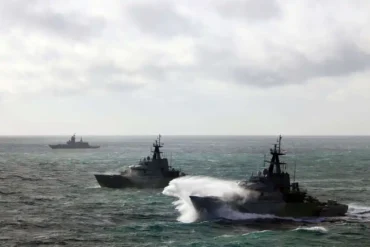
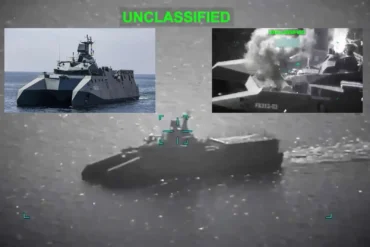
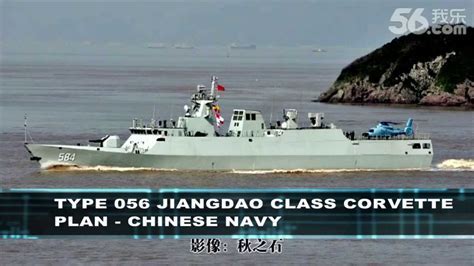
Contemporary corvettes are compact yet powerful, often ranging between 250 to 350 feet in length. They are built for speed, stealth, and coastal warfare, often referred to as “littoral combat”. According to U.S. Marine Corps Lt. Col. Colin D. Smith, corvettes can be “small, fast, stealthy, highly lethal missile boats” that thrive in littoral zones. Globally, countries like China have embraced this doctrine through ships such as the Jiangdao-class corvette, which features a 76mm H/PJ-26 gun, YJ-83 anti-ship missiles, and modern torpedo systems.
Despite these attributes, the U.S. Navy has never adopted a modern corvette-class ship for active duty. Though some were designed and built—such as the Tapi-class provided to Thailand in the 1970s—they were intended for foreign export, not domestic integration. This isn’t due to a lack of firepower but rather strategic mismatch with U.S. naval doctrine.
Strategic Reach: The Need for Global Projection
A critical disadvantage of corvettes lies in their limited operational range. These ships are not engineered for long-duration missions or blue-water dominance—two pillars of American naval strategy. Lt. Col. Smith summarizes the U.S. position succinctly: “Small missile boats don’t fit the typical ship profile to meet the needs of a maritime nation that projects power across the seven seas.” The Navy requires vessels capable of sustained deployment, fleet integration, and interoperability in multiple theaters.
The U.S. favors ships that can serve both strategic and tactical functions across vast oceans. For this reason, the Navy focuses its budget and resources on vessels like guided-missile destroyers, aircraft carriers, and nuclear-powered submarines, all of which support force projection, strike capability, and global presence.
Budget Priorities and Naval Doctrine
The FY 2025 Department of the Navy budget, released in February 2024, explicitly emphasized a commitment to maintaining “the most powerful Naval Force in the World.” That goal is being pursued through significant investments in:
- Virginia-class nuclear submarines
- Flight III Arleigh Burke-class guided missile destroyers
- F-35C Lightning II strike fighters
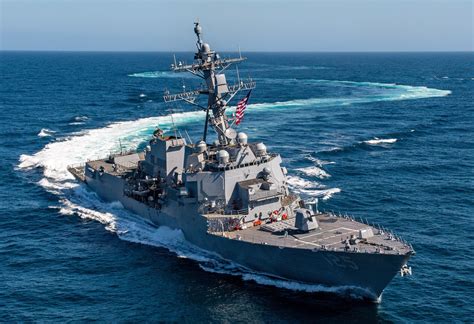
Such acquisitions are costly but align with a doctrine of global maritime dominance. Arleigh Burke-class destroyers, for example, measure 505 feet in length and can deploy with over 90 vertical launch system (VLS) cells capable of firing Tomahawk cruise missiles, SM-6 interceptors, and ASROC torpedoes. These warships offer unmatched versatility in anti-air, anti-submarine, and anti-surface roles—capabilities beyond the design scope of corvettes.
Littoral Combat Ship: A Partial Experiment
Though not a corvette by classification, the Littoral Combat Ship (LCS) program was partially intended to fill the small, agile combat role that corvettes often occupy. However, the LCS initiative faced significant criticism for being under-armed, under-protected, and maintenance-intensive, leading to early retirements and limited deployments.
This failure to execute a corvette-like concept in a U.S.-specific design reinforces skepticism within Navy circles about the viability of smaller warships in American doctrine. Despite the LCS’s modularity and potential for near-shore missions, it proved ill-suited for modern high-threat environments.
Global Usage: Why Other Navies Embrace Corvettes
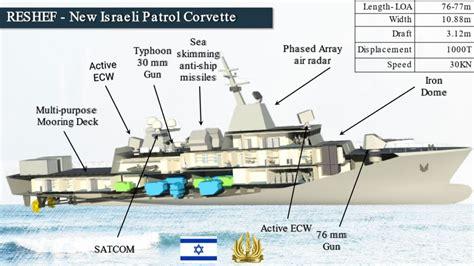
Other global powers take full advantage of corvettes due to their cost-efficiency and localized utility. Nations such as Russia, China, Israel, and India deploy dozens of these vessels for tasks ranging from maritime patrol and anti-piracy operations to coastal defense. In territorial waters or near adversarial coastlines, corvettes provide a strong mix of agility, lethality, and survivability, without the enormous investment required for destroyers or cruisers.
Countries with shorter coastline responsibilities or constrained budgets prioritize quantity over global reach, finding that multiple corvettes can fill coverage gaps, deter hostile actions, and perform regular enforcement of Exclusive Economic Zones (EEZs).
The American Naval Identity: A Preference for Power Projection
The American approach to naval power has always favored larger, multi-role ships capable of exerting presence on a global scale. This includes a lineage of nuclear-powered aircraft carriers, amphibious assault ships, and strategic missile submarines, which form the cornerstones of deterrence and rapid response.
Even the Navy’s smaller surface combatants, such as frigates, are significantly larger and more capable than most international corvettes. The forthcoming Constellation-class frigates, currently under development, will have anti-submarine and anti-air capabilities that align more closely with destroyer-class roles than with traditional corvette definitions.
This doctrinal focus reflects a belief that maritime supremacy lies in depth, durability, and versatility—not in swarms of smaller, cheaper vessels. Corvettes may offer value in specific scenarios, but the U.S. doesn’t face the kind of regional, near-shore conflict environments that would necessitate their deployment.
Operational Trade-offs: Cost vs. Capability
There’s no denying that corvettes offer some appealing traits:
- Lower procurement and operational costs
- Fast deployment and maneuverability
- Smaller crew requirements
- Stealth profiles in cluttered coastal waters
However, these are often outweighed by limitations that are particularly constraining to U.S. Navy objectives:
- Shorter operational range and endurance
- Lower survivability in high-threat environments
- Limited weapon payloads
- Incompatibility with carrier strike group doctrine
The Navy’s global role demands sustained operations far from home ports, with a logistics infrastructure that supports large-scale, multi-domain warfare. This necessitates ships that can integrate seamlessly into joint operations, handle complex missions, and operate independently when required—areas where corvettes struggle to keep pace.
Final Analysis: Why the Corvette Doesn’t Fit
The U.S. Navy’s omission of corvettes is not accidental but the result of a conscious alignment with strategic imperatives that emphasize global reach, heavy firepower, and sustained endurance. Corvettes, while useful for many nations, do not meet the unique scale or tempo of American maritime operations.
They remain effective for regional security, low-intensity conflict, and patrol missions, but in the U.S. context, these needs are better met through aerial surveillance, drones, and larger surface ships with superior operational versatility.
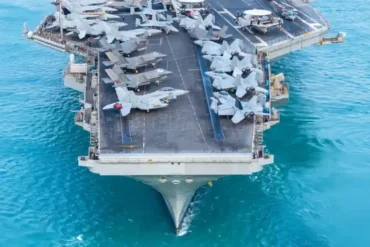
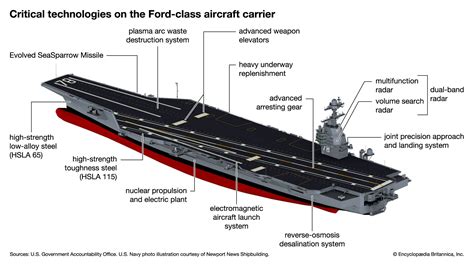
The U.S. Navy’s focus on large, high-capability platforms like the USS Gerald R. Ford, Virginia-class submarines, and Arleigh Burke destroyers demonstrates a continued commitment to global sea control—not near-shore defense.
Until or unless strategic circumstances change dramatically—such as a shift to swarm-based warfare or greater emphasis on asymmetric littoral conflict—corvettes will remain an intriguing but unlikely addition to the U.S. naval arsenal.