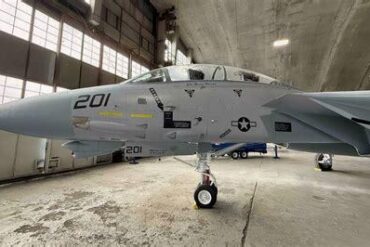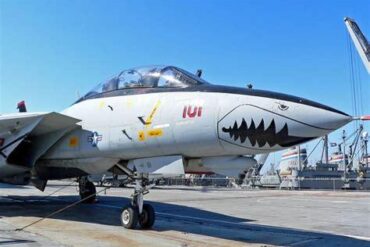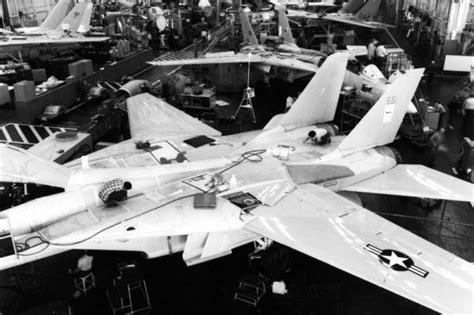
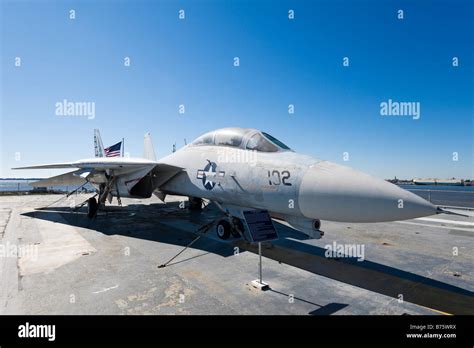
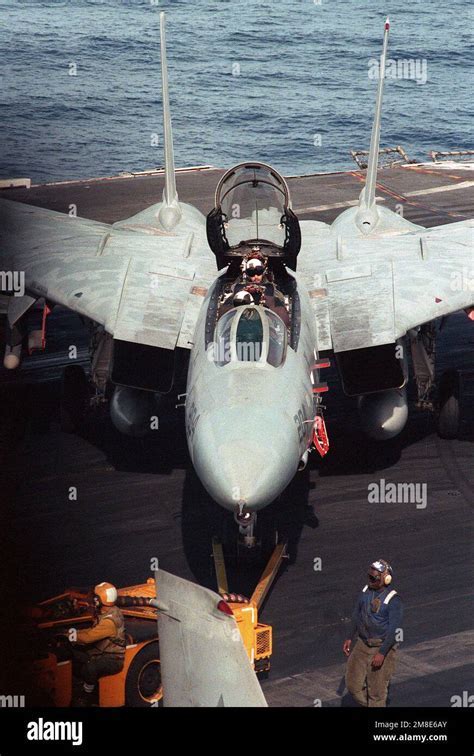
The story of modern naval aviation is often told as a triumph of software over steel, of algorithms replacing muscle memory, and of computers quietly correcting mistakes before a pilot even knows they were made. Yet buried inside that arc of progress is a machine that stubbornly refused to let go of physical reality. The Grumman F-14 Tomcat was not merely another Cold War fighter; it was the final US Navy jet that demanded pilots feel the air, wrestle the hydraulics, and fly the aircraft rather than manage it. Its retirement in 2006 closed a chapter that will never be reopened.
For decades, many assumed that later Navy fighters such as the F/A-18 Super Hornet still preserved some vestige of manual control. The truth is less sentimental. By the time the Hornet arrived, fly-by-wire had already won. Electrical signals had replaced cables, computers filtered every movement, and the jet became an interpreter between pilot intent and aerodynamic reality. The Tomcat stood alone at the edge of this transition, a technological hybrid where silicon brains coexisted with pulleys, pushrods, and hydraulic muscle.
This is why the F-14 occupies such a singular position in aviation history. It was not outdated when it was born, nor was it crude. It was sophisticated to the point of excess, yet it preserved a mechanical honesty that modern aircraft deliberately erase. The Tomcat demanded more from its crews, punished sloppy technique, and rewarded mastery with performance that still commands respect decades later.
The Meaning of “Manual” in a Supersonic Carrier Fighter
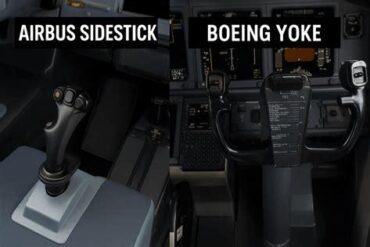
Calling the F-14 a manual-control aircraft does not mean it lacked automation. That misconception misses the point. Manual control in this context refers to direct mechanical linkage between the pilot’s controls and the flight surfaces. When a Tomcat pilot moved the stick or pressed the rudder pedals, that input traveled through cables, bellcranks, and pushrods to hydraulic valves that physically commanded the jet’s control surfaces.
This architecture gave pilots something modern fly-by-wire aircraft cannot naturally provide: tactile feedback. Aerodynamic loads transmitted themselves back through the system. The pilot could feel buffet, resistance, and onset of departure conditions through the controls. This sensory loop created an intimate dialogue between human and machine, one that required constant attention and physical engagement.
Later fighters intentionally removed this feedback. Fly-by-wire systems interpret pilot inputs as requests, not commands. The computer decides how, or even whether, to comply. That trade-off brings enormous safety and efficiency benefits, but it permanently severs the physical connection that defined earlier naval fighters. The F-14 was the last to preserve it at full scale.
A Hybrid Control System Built for Extremes
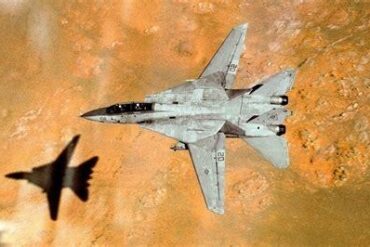
The Tomcat’s flight control system was neither primitive nor nostalgic. It was a hydro-mechanical hybrid, blending mechanical linkages with early digital computation in ways that were astonishing for the early 1970s. Its variable-geometry wings alone required levels of automation that most aircraft of the era could not approach.
Primary flight controls were moved hydraulically, powered by two independent hydraulic systems driven by the engines. Those hydraulic actuators were not computer-commanded; they were mechanically instructed by the pilot. The system was heavy, complex, and brutally effective. Redundancy was everywhere because carrier aviation tolerates no single points of failure.
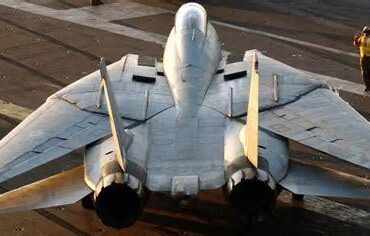
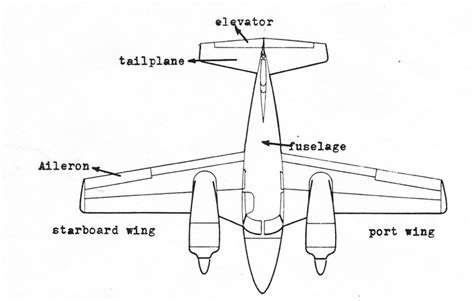
Despite its size, the Tomcat lacked traditional ailerons. Roll control came from differential movement of its all-moving horizontal stabilizers, assisted by spoilers at low speeds. Pitch control used synchronized stabilizer movement, while yaw relied on twin vertical tails and rudder authority optimized for high-angle-of-attack flight. The result was an aircraft that felt alive, sometimes temperamental, and always honest about its limits.
Feeling the Aircraft: Why Pilots Loved and Feared It
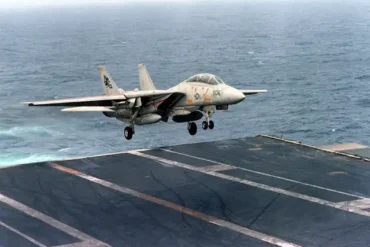
Pilots routinely described the F-14 as a jet that talked back. At slow speeds, especially during carrier approaches, it demanded constant correction. The aircraft did not hide its instability. Instead, it required pilots to actively manage energy, angle of attack, and lineup simultaneously. There was no software safety net smoothing inputs or trimming errors away.
To reduce workload without removing authority, the Navy added a Stability Augmentation System. This acted as a dampener, reducing oscillations in pitch, roll, and yaw. Importantly, it did not override the pilot. It simply calmed the jet’s natural tendencies, making it survivable during demanding phases of flight.
One of the most elegant features appeared during carrier landings. A thumbwheel allowed pilots to subtly deploy spoilers, adjusting descent rate without altering pitch or throttle. This gave extraordinary glide-slope precision, but only in skilled hands. The system rewarded finesse and punished impatience, a recurring theme in the Tomcat’s personality.
The MP944: A Classified Brain Ahead of Its Time
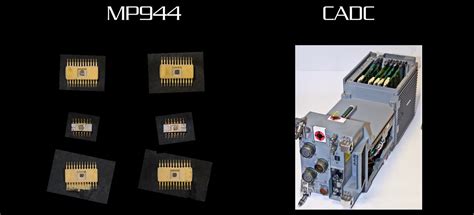
While the flight surfaces were mechanically controlled, the F-14’s wings were managed by something extraordinary. The MP944 microprocessor controlled the variable-sweep mechanism, making it one of the earliest examples of a true airborne digital flight computer. This chip was not adapted from civilian electronics; it was purpose-built to solve aerodynamic problems in real time.
The Central Air Data Computer used inputs from pressure sensors, temperature probes, Mach indicators, and pilot commands to calculate optimal wing sweep. At low speeds, the wings extended forward to maximize lift. At high Mach numbers, they swept aft to reduce drag and structural stress. The transition was seamless, silent, and largely invisible to the pilot.
The MP944 used a 20-bit architecture, astonishingly advanced compared to the 4-bit processors appearing in calculators at the same time. It integrated CPU functions, memory, and specialized processors across six semiconductor chips. Its performance was so sensitive that the Navy classified it, blocking public discussion for decades. Only in 1998 did its details finally emerge.
Manual Override in an Automated World
Even this digital sophistication bowed to pilot authority. Tomcat crews could manually command wing sweep beyond computer-calculated positions using throttle controls or a mechanical emergency handle. This was not a gimmick. It allowed pilots to adapt to combat damage, unusual configurations, or tactical requirements the computer could not anticipate.
The MP944 also controlled maneuvering flaps, slats, and glove vanes, small leading-edge surfaces that improved stability at high Mach numbers. These systems worked quietly in the background, supporting an aircraft whose primary identity remained firmly manual. The Tomcat trusted computers to assist, not to decide.
Why the F-14 Needed a Back Seat
The complexity of this aircraft demanded two humans. The Radar Intercept Officer managed the massive AWG-9 radar, weapons systems, and tactical picture while the pilot focused on flying. This division of labor was essential because the aircraft itself required continuous attention.
Modern fighters integrate these roles into software. Sensor fusion replaces specialization. The F-14 represented the peak of human-machine teamwork before computers absorbed the burden. It was not inefficient; it was optimized for an era when processing power lived in people.
The Shift to Fly-By-Wire and the End of Muscle Flying
Every Navy fighter after the Tomcat abandoned mechanical control. The F/A-18 Hornet introduced digital flight control from the start, reshaping how pilots interacted with their aircraft. Inputs became suggestions, stability became automatic, and the computer handled constant micro-corrections.
This evolution reached maturity with systems like Magic Carpet, which transformed carrier landings from an art into a managed process. Instead of chasing glideslope with throttle and pitch, pilots could neutralize the stick and let the computer maintain a one-G flight path. Skill still mattered, but the nature of that skill changed.
The F-35C extended this philosophy completely. Its active side-stick provides artificial haptic feedback, simulating forces that no longer exist. The aircraft manages engines, flaps, sensors, and weapons through a single integrated brain. For pilots transitioning from the F-14, the contrast could not be sharper.
Legacy of the Last Manual Navy Fighter
The retirement of the F-14 did more than remove a jet from the flight deck. It erased a way of flying. The Navy deliberately destroyed most airframes to prevent parts reaching Iran, leaving only museum examples as silent witnesses. What remains is not just nostalgia, but a technical lineage that shaped everything that followed.
The Tomcat pioneered integrated avionics, variable geometry automation, and long-range fleet defense concepts that modern systems still echo. Its manual nature made carrier operations physically and mentally exhausting, yet it forged aviators of exceptional discipline.
Today’s F-35C operates as a networked sensor node, sharing targeting data with destroyers and autonomous drones. In that sense, it fulfills the Tomcat’s original mission by entirely different means. The two-seat missile battery has evolved into a distributed combat ecosystem.
Why the F-14 Will Never Have a Successor
No future US Navy fighter will return to fully manual controls. The reasons are not sentimental; they are mathematical. Digital systems reduce accidents, increase sortie rates, and allow pilots to manage complexity that would otherwise overwhelm them. Automation is not the enemy of skill, but its redefinition.
The F-14 remains the last because it existed at the precise moment when human capability still outpaced silicon in certain domains. That window closed forever. What survives is a legend grounded in steel cables, hydraulic pressure, and the unmistakable feeling of flying something that refused to hide the sky from its pilot.
The Tomcat did not merely end an era. It defined it, exhaust-stained, over-engineered, and gloriously manual, standing as the final reminder that once upon a time, naval aviation was flown as much with forearms and instinct as with code.