A transpacific departure from Los Angeles International Airport (LAX) to Tel Aviv was disrupted on February 16 after 140 checked bags were discovered vandalized with “Free Palestine” stickers, triggering a significant security response and delaying EL AL Flight LY6 for nearly two hours. What began as a routine afternoon departure quickly escalated into a high-sensitivity aviation security incident with geopolitical undertones.
The flight, scheduled to depart at 2:00 pm for Ben Gurion International Airport (TLV), ultimately pushed back at 3:39 pm after airport authorities initiated comprehensive re-screening procedures. The decision followed the discovery of politically charged stickers affixed to luggage already loaded onto the aircraft. In an industry where every anomaly is treated as a potential threat, the presence of unauthorized markings on such a large volume of baggage demanded immediate and exhaustive inspection.
Passengers were initially informed of a minor delay of approximately 25 minutes. A subsequent announcement clarified that a “serious issue” involving checked baggage required intervention. The aircraft’s cargo hold was unloaded entirely, and each of the 140 pieces of luggage was removed and subjected to individual security screening to rule out tampering or the placement of prohibited materials.
Security Protocols Activated After Politically Charged Baggage Vandalism
The scale of the disruption underscores how modern aviation security systems respond to irregularities. Although the stickers themselves were not hazardous, the unknown circumstances surrounding their placement created a legitimate security concern. Any unauthorized access to baggage areas—particularly on a flight bound for Israel—raises immediate red flags.
Airport security personnel treated the situation as a potential breach. The working assumption in such scenarios is simple: if someone had access to attach stickers without authorization, they may have had the opportunity to introduce more dangerous materials. As a result, the entire batch of luggage was rescanned using advanced detection systems designed to identify explosives and other threats.
Due to the time-intensive nature of the inspections, many of the bags did not make it back onto the aircraft before departure. The flight arrived in Tel Aviv at 2:45 am local time, roughly one hour behind its scheduled arrival of 1:45 am, according to flight tracking data. The affected baggage was subsequently screened to completion and forwarded on the next day’s flight to Israel.
Passenger Impact: Wedding Attire Left Behind and Mixed Reactions
For travelers onboard, the incident was more than a logistical inconvenience. Reports indicate that one passenger’s suitcase contained a dress intended for a daughter’s wedding in Israel, intensifying frustration over the delay. Others expressed relief that safety measures took priority, acknowledging that additional screening, while inconvenient, was preferable to any overlooked threat.
The psychological dimension of such disruptions should not be underestimated. Flights between the United States and Israel carry heightened symbolic and security weight. For many passengers, particularly those traveling for family events or religious purposes, the emotional stakes are high even under normal circumstances.
The airline notified affected travelers upon arrival in Tel Aviv that their baggage had not traveled with them. While standard operating procedure for delayed luggage involves tracking and expedited forwarding, the unusual cause of this disruption amplified concerns about trust and vulnerability within airport systems.
The Political Context Behind “Free Palestine” Messaging
The “Free Palestine” slogan is widely recognized as an expression of solidarity with Palestinian self-determination and opposition to Israeli policies in disputed territories. For many advocates, it symbolizes a call for equality, justice, and human rights. For critics, it represents a demand for fundamental geopolitical change, including the redefinition or removal of the Israeli state.
Airlines, particularly those operating international routes, maintain strict neutrality policies prohibiting overt political displays by staff. The placement of such stickers on passenger baggage therefore raises critical questions. Was the act conducted by an insider with access to secure baggage areas, or did it occur during a vulnerability in handling procedures?
While investigations continue, the incident arrives amid intensified global tensions related to the Israel–Gaza conflict. In that climate, even symbolic gestures can carry amplified security implications.
EL AL’s Reputation for Multi-Layered Aviation Security
EL AL is frequently described as one of the world’s most security-focused airlines. The carrier employs a multi-layered security model that integrates intelligence analysis, behavioral assessment, and physical safeguards. Passengers on EL AL flights often undergo one-on-one pre-flight interviews designed to identify inconsistencies or risk indicators. Onboard security measures include reinforced cockpit doors and, according to longstanding reports, the presence of undercover armed air marshals.
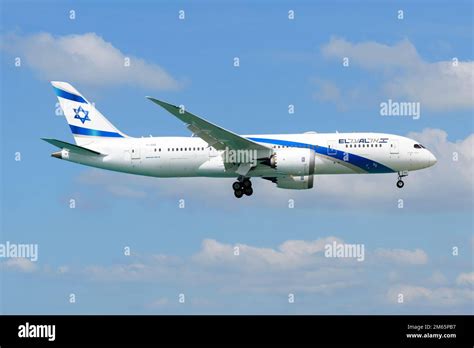
The airline operates an all-Boeing fleet for its U.S. routes, including the Boeing 777-200ER, 787-8, and 787-9 Dreamliner aircraft. From Tel Aviv, EL AL connects to major American cities including Los Angeles, New York JFK, Newark, Miami, and Fort Lauderdale.
The LAX incident highlights an important distinction: even the most secure airline depends on the integrity of airport ground operations. Security is an ecosystem. A single weak link—whether procedural or human—can trigger cascading consequences.
Broader Implications for Airport Security and Oversight
Airports function as highly controlled environments, yet they involve thousands of personnel across airlines, contractors, and federal agencies. Access to baggage handling areas is restricted, monitored, and documented. If the stickers were applied after check-in but before loading, it suggests either unauthorized entry or insider involvement—both scenarios that demand scrutiny.
While there is no evidence that the vandalized luggage posed an actual physical threat, the operational response reflects aviation’s uncompromising posture toward uncertainty. In security doctrine, ambiguity equals risk.
The episode at LAX serves as a reminder that aviation security extends beyond detecting explosives or weapons. It includes safeguarding passenger trust, maintaining operational integrity, and preventing political symbolism from compromising safety protocols.
For the 140 passengers whose baggage became central to a geopolitical statement, the experience blurred the line between global conflict and personal travel. In today’s interconnected world, that boundary is increasingly fragile.