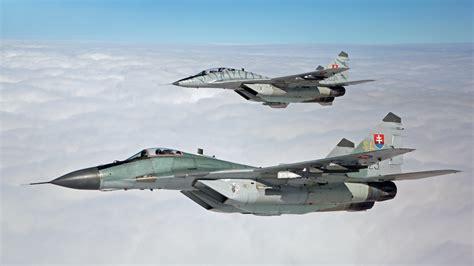
The Mikoyan MiG-29 Fulcrum is often remembered for its powerful engines, exceptional maneuverability, and distinctive twin-tail design. Developed during the Cold War, the Soviet fighter was created for a battlefield where airfields could be attacked, damaged, and covered in debris. Yet one of its most remarkable features is rarely discussed today: a dedicated foreign object debris (FOD) protection system that allows the aircraft to operate from contaminated runways.
That capability sounds surprisingly basic beside the sophisticated sensors, stealth shaping, and networking found on modern fifth-generation fighters. However, it addresses a fundamental problem that has not disappeared. Jet engines need enormous quantities of air, and anything accidentally entering that airflow can potentially cause catastrophic damage.
Why Jet Engines Need Clean Air
A modern fighter engine depends on a continuous supply of air. The engine compresses incoming air, mixes it with fuel, burns the mixture, and uses the resulting high-energy gases to generate thrust. At maximum power, a fighter engine can ingest hundreds of pounds of air every second.
That makes the engine’s intake system much more than an opening in the fuselage. It must deliver airflow that is fast, stable, and sufficiently uniform for the compressor to operate efficiently. Foreign object debris, meanwhile, represents an entirely different threat. Rocks, concrete fragments, metal pieces, loose hardware, and other material can be accelerated into the engine at tremendous speed.
When debris strikes compressor blades or guide vanes, the consequences can range from minor damage to severe mechanical failure. A damaged blade can disturb the balance of the rotating assembly, reduce engine efficiency, or contribute to compressor problems. In an extreme situation, one piece of debris can initiate a chain of failures throughout the engine.
For most aircraft, preventing this problem depends heavily on keeping runways clean. The MiG-29 took a more aggressive approach by designing the aircraft itself to protect its engines when operating close to the ground.
The MiG-29’s Ingenious Anti-FOD Intake System
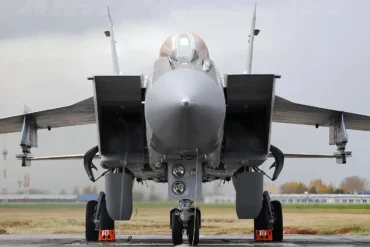
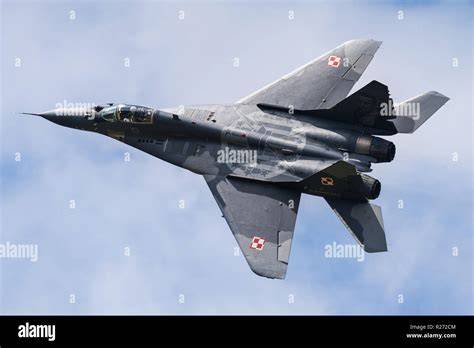
The MiG-29’s anti-FOD system is one of the fighter’s most unusual engineering solutions. Its primary engine intakes are positioned beneath the aircraft, where they would normally be exposed to debris thrown upward by the nose wheel, main landing gear, or exhaust and airflow around the runway.
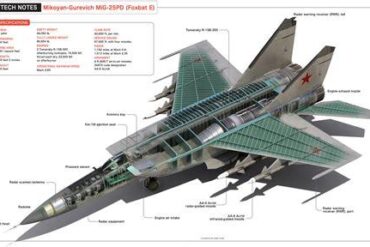
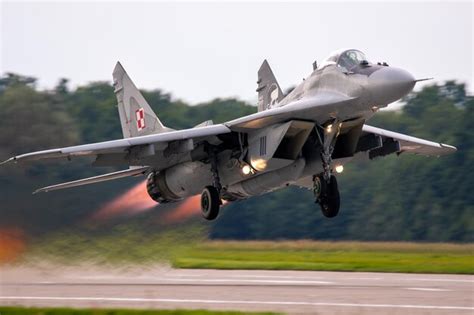
During takeoff and landing, doors can close over these main intakes when the aircraft is on its landing gear. Instead of breathing through the large lower openings, the engines receive air through auxiliary intakes mounted on the upper surfaces of the wing-root extensions.
This arrangement effectively moves the engine’s air supply away from the immediate debris field beneath the aircraft. Gravel, broken concrete, metal fragments, and other runway material therefore have a much harder time reaching the engine during the most vulnerable phases of flight.
Once the aircraft becomes airborne, the main intakes open and resume their normal role. The system is deceptively simple compared with modern electronically managed propulsion systems, but its simplicity was part of its appeal. The Soviet Union needed fighters that could continue operating even when the battlefield was far from pristine.
A Fighter Designed for Damaged Soviet Airfields
The MiG-29 emerged from a Cold War environment in which Soviet planners expected major airfields to become targets during a large-scale conflict in Europe. A conventional war between peer military powers would not necessarily leave runways smooth, clean, and fully operational.
Instead, attacks could crater concrete surfaces, damage taxiways, destroy parked aircraft, and scatter debris across operating areas. A fighter might need to launch from a hastily repaired base rather than a carefully maintained modern airport.
That strategic reality influenced the MiG-29’s design. The aircraft was intended to operate relatively close to the front line and was expected to survive in an environment where logistics and infrastructure could be under constant attack.
The anti-FOD doors therefore represented more than an unusual aerodynamic feature. They reflected an entire philosophy of military aviation: the aircraft had to remain useful even when the infrastructure supporting it was damaged.
The Auxiliary Intakes Offer Another Advantage
The upper auxiliary intakes were not exclusively about runway debris. They could also contribute to airflow management under demanding flight conditions.
During certain high-angle-of-attack maneuvers, airflow entering the primary intakes can become disturbed. When an aircraft pitches aggressively, the air approaching an intake may no longer arrive from the ideal direction. Flow separation and turbulence can make it more difficult for an engine to receive the stable airflow it needs.
The MiG-29’s auxiliary intake arrangement provided another potential path for air. Its louvers could respond to pressure differences, allowing additional airflow under conditions where the primary intake system faced unfavorable flow characteristics.
That means the same feature created for a very practical battlefield problem could also provide aerodynamic benefits during demanding flight regimes. It is an excellent example of how Soviet aircraft designers often sought multiple uses from a single mechanical solution.
Why Fifth-Generation Fighters Do Not Have the Same Feature
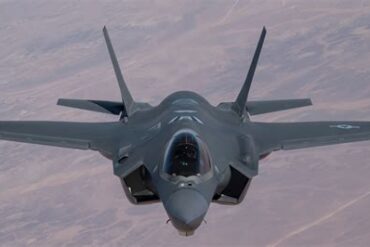
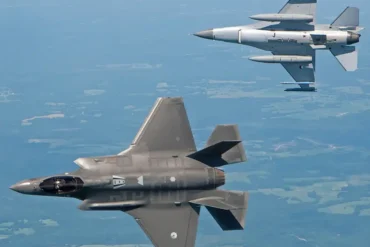
Modern fifth-generation fighters such as the F-22 Raptor, F-35 Lightning II, Su-57, and J-20 Mighty Dragon represent an entirely different design philosophy. Their intake systems are optimized around stealth, aerodynamics, sensor integration, engine performance, and highly controlled airflow.
Large conventional auxiliary intake doors would introduce engineering and potentially aerodynamic complications that designers of modern stealth aircraft generally have little reason to accept. Every external feature can affect radar signature, weight, maintenance requirements, and aerodynamic efficiency.
The difference is therefore not that modern fighters are incapable of dealing with airflow problems. Quite the opposite: their inlet systems are extraordinarily sophisticated. The issue is that dedicated runway FOD protection of the MiG-29’s type is largely absent from the design priorities of contemporary fifth-generation fighters.
That distinction matters because the strategic environment is changing.
Peer Conflict Could Make the MiG-29’s Old Trick Relevant Again
For decades, many Western air operations were conducted from highly developed bases with extensive maintenance infrastructure. Airfields were generally distant from opponents capable of repeatedly striking them with precision weapons.
A future conflict between technologically advanced adversaries could look very different. Long-range missiles and drones can attack air bases, crater runways, damage aircraft shelters, and scatter fragments across operating surfaces. Even a temporary disruption could force fighters to operate from less-than-ideal conditions.
In that environment, the threat posed by foreign object debris becomes much harder to dismiss. A runway does not need to resemble a battlefield wasteland for FOD to become dangerous. A single piece of concrete or metal in the wrong place can potentially damage an engine during takeoff.
The MiG-29’s solution suddenly looks less like an eccentric Cold War relic and more like an engineering response to a problem that may be returning.
The MiG-29’s Enduring Engineering Lesson
The MiG-29 is certainly not superior to a fifth-generation fighter simply because it possesses anti-FOD intake doors. Modern aircraft enjoy enormous advantages in stealth, sensors, electronic warfare, situational awareness, weapons integration, and networked operations.
But the MiG-29 Fulcrum’s anti-FOD system demonstrates something valuable about military aircraft design: the most important capability is sometimes the one that solves a mundane problem before it becomes a catastrophic one.
A fifth-generation fighter may dominate an engagement once airborne, but getting airborne remains the first requirement. If future wars again turn airfields into dangerous, debris-filled environments, the MiG-29’s unusual intake system could serve as a reminder that battlefield practicality never truly goes out of fashion.