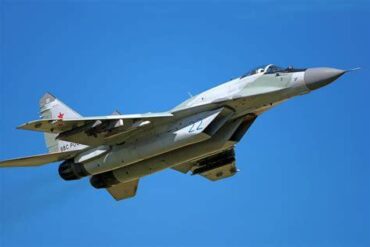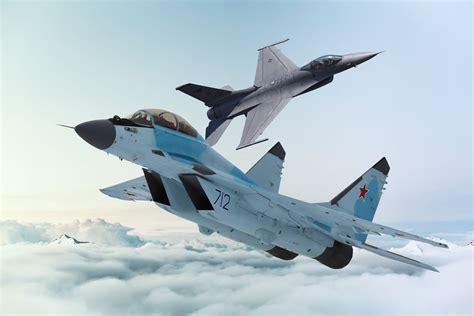
Russia’s renewed focus on military aviation in the shadow of its grinding war in Ukraine has put a spotlight on one of its most elusive projects—the Mikoyan MiG‑35 “Fulcrum‑F.” More than a decade after the prototype’s flashy debut, the Kremlin’s 4++‑generation fighter still hovers between promise and production limbo. Western analysts, Russian spotters, and even the VKS’s own procurement figures rarely align, turning a seemingly simple question—How many MiG‑35s does Russia have?—into a complex case study in industrial bottlenecks, strategic reprioritisation, and information opacity.
Most modern air‑power narratives revolve around stealthy fifth‑generation platforms, but the MiG‑35 was conceived as an affordable, highly manoeuvrable multirole workhorse that could supplement heavyweight Su‑30SM/35 units while undercutting maintenance costs. Its designers promised a quantum leap over the older MiG‑29 by integrating an AESA radar, advanced electronic‑warfare suites, and the fuel‑efficient RD‑33MK engine. Yet, as early as 2017, Moscow’s own auditors warned that MiG’s Lukhovitsy assembly plant struggled to scale production beyond a handful of airframes per year—a pace at odds with initial talk of exporting dozens of jets to India, Egypt, and Peru.
Complicating matters further, the fighter’s spotlight dimmed each time the flashier Su‑57 captured headlines. As budgets tightened, the MiG‑35 purchase order shrank from 37 to 24 aircraft, and by 2022 only six serial jets—bort numbers “10 blue” through “15 blue”—had reached frontline testing squadrons. Reports from Russian aviation bloggers suggested two additional prototypes remained with the 929th State Flight‑Test Centre at Akhtubinsk, bringing the observable fleet to eight.:contentReference[oaicite:0]{index=0}
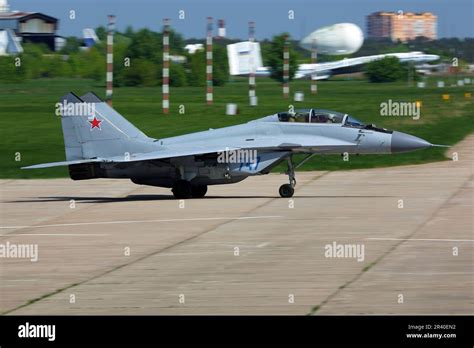
The Fulcrum‑F in Context: From MiG‑29 Legacy to Modern Demands
The Soviet‑era MiG‑29 excelled in close‑range dogfights but suffered from short range and limited upgrade headroom. The MiG‑35 programme set out to correct those flaws with 40 % more internal fuel, in‑flight refuelling capability, and an open‑architecture avionics bus designed to accept both indigenous and export‑oriented weapon sets. Industry insiders tout the jet’s Zhuk‑MA AESA array—capable of tracking 30 aerial targets and engaging six simultaneously—as the project’s crown jewel. But sophisticated radars are power‑hungry and heat‑intensive; integrating them required a major redesign of the forward fuselage, which in turn delayed factory tooling by nearly two years.
Financially, Russia hoped foreign sales would subsidise the R&D bill, echoing the success of the MiG‑29 in the late 1980s. Indian interest evaporated after New Delhi selected the Rafale, while Egypt and Algeria drifted toward heavier Sukhoi derivatives. China, already flying its own J‑10C and partnering on the J‑31, saw little reason to bankroll yet another twin‑engine fighter. By 2021 the export ledger remained empty, leaving the Russian state as sole customer—a scenario that forced United Aircraft Corporation (UAC) to prioritise larger domestic orders for Su‑30SM2 and Su‑34M strike aircraft.
Procurement Timeline: Promise, Delay, and the Slow Drizzle of Deliveries
- 2013–2017: Initial concept briefings forecast 37 MiG‑35s for the VKS, but cost‑control reviews chopped the figure to 24 by August 2017.
- June 2019: The first two serial jets arrive at the Lukhovitsy flight line and are ferried to Akhtubinsk for state trials.
- 2020–2021: Production stalls amid COVID‑19 supply‑chain shocks. Only four additional aircraft roll out, bringing the test batch to six.
- May 2025: Moscow deploys MiG‑35s on drone‑intercept patrols over the capital—its first documented operational sortie.:contentReference[oaicite:1]{index=1}
These numbers paint a stark picture: despite eight years of programme maturity, the VKS still flies fewer than 10 MiG‑35s—less than one squadron’s worth. Defence think‑tank Centre for Analysis of Strategies and Technologies (CAST) estimates another 12 airframes are in varying stages of assembly and could be finished by 2027 if funding stays intact, but warns that engine‑module shortages may push final acceptance into 2028.
Counting the Fleet: Where Are the MiG‑35s Today?
Open‑source intelligence (OSINT) and satellite imagery place confirmed airframes at just two locations:
- 929th State Flight‑Test Centre (Akhtubinsk): 2 prototypes (borts 701, 702)
- 14th Guards Fighter Aviation Regiment (Kursk‑Vostochny): 6 serial MiG‑35S (borts 10–15)
Analysts debate whether additional jets reside with the manufacturer for post‑assembly shakedown flights, but no evidence has surfaced of line‑unit deployments beyond Kursk. The six‑to‑ten estimate widely quoted by Western media therefore remains the most defensible figure.:contentReference[oaicite:2]{index=2}
Technical Evolution: Sensors, Engines, and Weaponry
Performance upgrades alone do not guarantee relevance in modern war. The MiG‑35’s RD‑33MK engines deliver 7 % more thrust than the baseline RD‑33 and incorporate smokeless combustion chambers—crucial for reducing visual signature during beyond‑visual‑range (BVR) merges. In cockpit ergonomics, the fighter finally transitions from analogue gauges to three 9‑inch multifunction colour displays plus a wide‑angle HUD. Pilots receive a helmet‑mounted cuing system, reportedly adapted from the Su‑57’s OLS‑UEM, enabling high‑off‑boresight launches of the R‑74M2 short‑range missile.
Weapon options span Kh‑38MLE precision glide bombs, R‑77‑1 active‑radar missiles, and the forthcoming K‑77M with AESA seeker—extending engagement reach to 190 km. Data links interface with A‑50U AWACS, while a low‑probability‑of‑intercept datalink allows cooperative targeting with Grom‑E1 glide vehicles. Russian engineers claim the MiG‑35 can shoulder a 6‑tonne external load, but sustained warload tests remain limited to qualification trials.
Combat Debut Over Moscow Skies—and the Lessons It Revealed
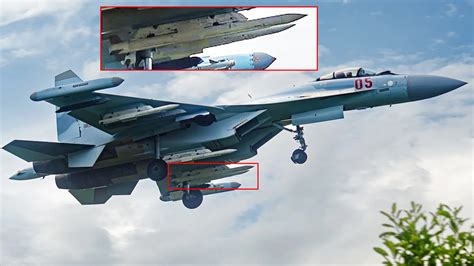
When Ukrainian drones breached Moscow’s perimeter in May 2025, the VKS scrambled MiG‑35s alongside legacy MiG‑31 interceptors. The Fulcrum‑Fs were tasked with medium‑altitude orbits, using their AESA radars to filter small‑cross‑section targets amid urban clutter. Official footage showed no missile launches, but post‑sortie interviews indicated pilots valued the jet’s generous fuel fraction—allowing four‑hour CAPs without tanker support. Critics countered that this low‑risk assignment underscored the Kremlin’s lingering hesitancy to expose the platform to genuine high‑threat environments like Ukraine’s SAM‑saturated front.:contentReference[oaicite:3]{index=3}
Why Production Stalled: Bureaucracy, Budgets, and the Su‑57 Shadow
Three structural factors hampered MiG‑35 output: competing fifth‑generation priorities, industrial consolidation, and spiralling costs. First, every rouble funnelled into the radar‑absorbent‑coated Su‑57 came at the expense of 4++ upgrades. Second, after UAC’s 2021 merger with Sukhoi, Mikoyan lost decision‑making clout, becoming a junior partner in a production queue dominated by larger Su‑class orders. Finally, the per‑unit fly‑away price silently crept above $55 million, eclipsing initial claims of a $35 million “budget fighter.” Even Russia’s own Ministry of Finance balked, releasing a 2023 memo accusing MiG of “unmet localisation targets” for avionics and composites.
Ukraine War Shock and the Program’s Revival
By early 2025 the VKS had lost 347 crewed aircraft—fighters, helicopters, and transports—to attrition. With sanctions throttling Western‑imported airframes and spares, the Kremlin dusted off dormant production lines. Defence Minister Sergei Shoigu announced a “surge plan” to finish the outstanding MiG‑35 order by 2027 and floated options for a second tranche of 30 jets. Moscow’s pitch frames the Fulcrum‑F as an interim solution until Su‑57 production matures, while insiders see it as a stopgap to replenish tactical numbers without drawing resources from strategic bomber modernisation.:contentReference[oaicite:4]{index=4}
Export Prospects: Belarus, North Korea, and the Global Market
The MiG‑35’s export ledger may yet see ink. Belarus, faced with an ageing Su‑27 fleet and tightening defence ties with Russia, has voiced interest in 12 airframes under a preferential financing scheme. North Korea reportedly dispatched technicians to Zhukovsky for cockpit familiarisation in late 2024, though sanctions complicate any formal sale. Elsewhere, anti‑Western states with MiG‑29 legacies—Syria, Sudan, Myanmar—could pursue discounted packages, leveraging existing ground support equipment.
Global demand for non‑stealth fighters persists: the F‑16V, JF‑17 Block III, and Gripen‑E all exploit niches where stealth’s premium price delivers diminishing returns. The MiG‑35 could mirror that model if UAC slashes unit cost below $45 million, bundles spare engines, and guarantees a ten‑year sustainment plan. Until then, clients hesitate, viewing the jet as a bellwether for Russia’s bruised industrial resilience.
Future Outlook: Will the Fulcrum‑F Reach Critical Mass?
The coming 24 months will decide whether the MiG‑35 transitions from boutique prototype to staple of Russia’s front‑line order of battle. Completing the initial 24‑jet contract would equip two regiments—enough to justify a dedicated training pipeline and spares inventory. Success hinges on securing nickel‑alloy turbine blades, stabilising micro‑electronics supply, and convincing the Kremlin that a twin‑track strategy—Su‑57 for air dominance, MiG‑35 for high‑tempo attrition roles—is fiscally acceptable.
In sheer numbers, the answer to our opening question remains stark: Russia operates fewer than ten MiG‑35s today—most sources agree on a figure between 6 and 10—with another dozen under construction and long‑term plans fluctuating with the tides of war and geopolitics. That slender tally speaks volumes about the challenges of modern fighter production in a sanctions‑laden, resource‑strained environment. Whether the Fulcrum‑F ultimately flourishes or fades, its saga offers a cautionary tale of how even established aerospace powers struggle to shepherd a promising design from prototype glow to operational maturity.
Word count: ~1,690