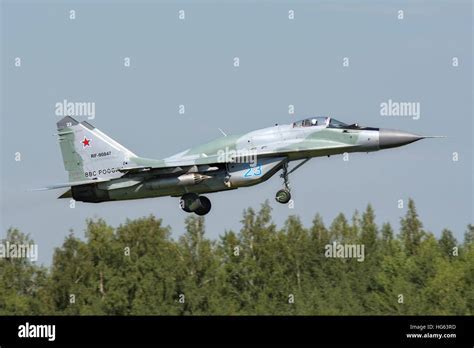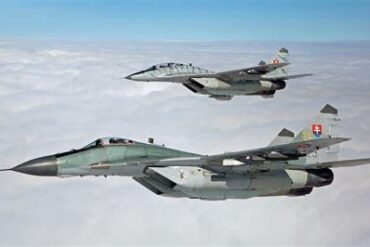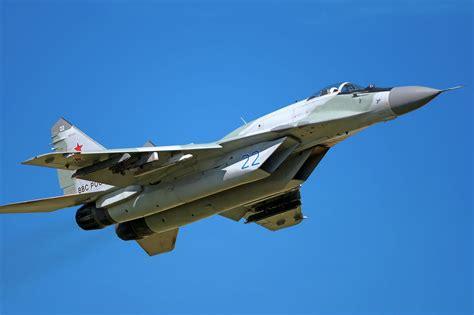
The MiG-29 Fulcrum, a fourth-generation multi-role fighter developed by the Soviet Union in the late 1970s, remains one of the most widely operated jet fighters in the world. Nearly five decades since its maiden flight in 1977, it continues to be a key component of several national air forces. Known for its agility, speed, and rugged design, the MiG-29 offers both air superiority and ground-attack capabilities, making it highly versatile for militaries seeking performance without the premium cost of fifth-generation aircraft.
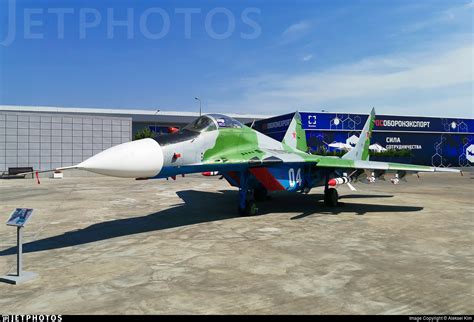
Russia: The Undisputed Leader in MiG-29 Operations
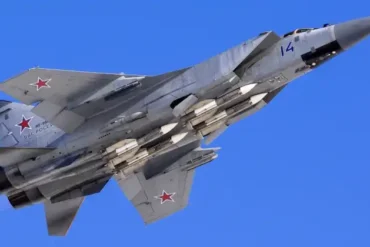
Russia, the original designer and manufacturer of the MiG-29 through Mikoyan (now part of United Aircraft Corporation), unsurprisingly maintains the largest active fleet of MiG-29 aircraft. According to Flightglobal’s latest data, Russia operates 275 MiG-29s, out of which:
- 240 units serve the Russian Aerospace Forces (VKS), including 13 that are used specifically for training missions.
- 18 MiG-29s are part of Russian naval aviation, reflecting the shift towards multirole capabilities across different branches of military aviation.
- 4 additional aircraft serve in a training capacity, specifically tailored for carrier operations and pilot instruction.
These MiG-29s encompass several advanced variants, such as:
- MiG-29SMT – Featuring improved avionics, increased internal fuel capacity, and more advanced weapon systems, making them suitable for multi-mission roles.
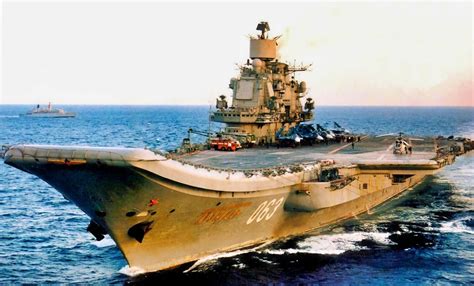
- MiG-29K – A carrier-based version with folding wings, corrosion-resistant airframe, and upgraded sensors. Designed for operations aboard the Admiral Kuznetsov, this version features limited stealth elements and modern radar.
Russia’s overwhelming numerical advantage is rooted not only in its historical legacy but also in its industrial capacity to maintain, modernize, and upgrade existing MiG-29 platforms for decades. This continuous development has allowed older Fulcrums to stay combat-relevant even in the age of stealth aircraft.
India: Strategic Partnership and Second Largest Fleet
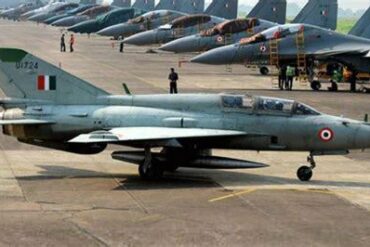
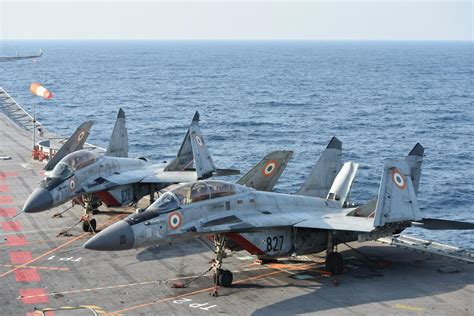
India has the second-largest MiG-29 fleet in the world, operating a total of 120 aircraft divided across air and naval forces. India’s adoption of the Fulcrum began in the 1980s during its strategic pivot toward diversifying military suppliers.
Breakdown of Indian MiG-29 deployment:
- 65 MiG-29UPG aircraft in the Indian Air Force (IAF), upgraded with joint Indian-Russian systems to extend service life, improve combat effectiveness, and enable compatibility with modern missile systems.
- 10 MiG-29UB trainers for pilot instruction.
- 36 MiG-29K and MiG-29KUB aircraft in the Indian Navy, primarily serving from the INS Vikramaditya aircraft carrier.
- 9 aircraft used for training purposes by naval and air force institutions.
The MiG-29UPG program, launched as part of a mid-life upgrade initiative, has significantly enhanced the Fulcrum’s endurance, radar capability, and multirole versatility. These jets now integrate Phazotron Zhuk-ME radar, RD-33 Series 3 engines, and compatibility with high-performance weapons like the R-77 BVR missile.
Ukraine: A Legacy Fulcrum Operator Amid Wartime Pressures
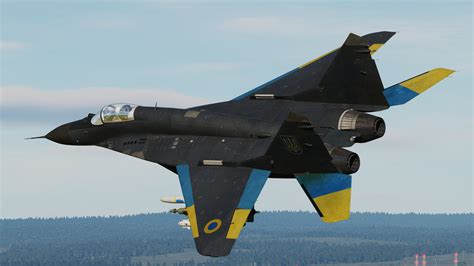
Ukraine holds the third-largest MiG-29 fleet, operating 55 units, many of which were inherited following the dissolution of the Soviet Union in 1991. With escalating regional tensions and the full-scale invasion by Russia in 2022, Ukraine’s Fulcrum fleet has been thrust into high-tempo operations.
Ukrainian MiG-29 variants include:
- MiG-29A and MiG-29S – Standard frontline fighters used for air defense and interception.
- MiG-29UB – Twin-seat trainers.
- MiG-29MU1 and MU2 – Indigenous modernization efforts that focus on extending the aircraft’s range, avionics suite, and integrating NATO-compatible systems.
Despite their aging airframes, these aircraft have proven critical to Ukraine’s ability to maintain air sovereignty. With assistance from NATO countries, including spare parts and refurbished airframes, Ukraine has extended the combat utility of its MiG-29s significantly.
The MiG-29’s Global Footprint: A Testament to Versatility
Beyond the top three operators, the MiG-29 has been exported to 23 other countries, thanks to its cost-effective performance envelope and compatibility with diverse terrain and mission profiles. Some notable operators include:
- Poland – Operates upgraded MiG-29s and is now transferring several units to Ukraine as military aid.
- Serbia – Continues to operate modernized versions with Russian and Belarusian support.
- Algeria, Peru, and Syria – Maintain legacy versions for air patrol and national defense.
Many of these countries have either started phasing out their MiG-29s or are actively modernizing them with digital cockpits, new radar systems, and extended flight life programs to keep them operational.
The MiG-29 vs. Western Counterparts
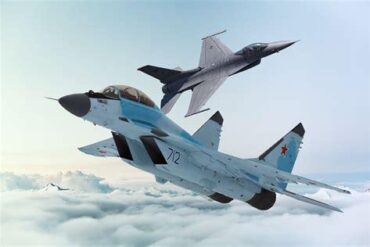
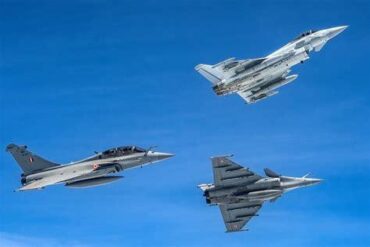
When first conceived, the MiG-29 was designed to counter the McDonnell Douglas F-15 Eagle and later F-16 Fighting Falcon, combining affordability with lethal short-range performance. Key characteristics include:
- Thrust-to-weight ratio exceeding 1.0, enabling superior climb and acceleration.
- Helmet-mounted sight system (one of the first of its kind), which allows targeting without the need to maneuver the aircraft into direct alignment.
- Infrared Search and Track (IRST) system for passive tracking of enemy aircraft.
While Western aircraft excelled in beyond-visual-range engagements and network-centric warfare, the MiG-29 was built for dogfighting dominance, particularly in contested airspace with minimal infrastructure support.
From Fulcrum to Fulcrum-E: The Rise of the MiG-35
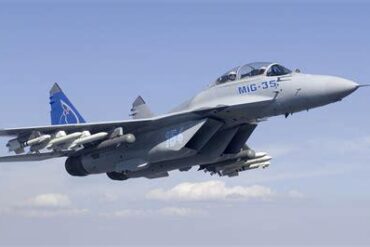
The MiG-35 represents the most recent evolution of the MiG-29 platform. While visually similar, it is essentially a new aircraft with 4.5+ generation features, including:
- AESA radar with enhanced tracking.
- Reduced radar cross-section.
- Compatibility with modern precision-guided munitions.
- Improved survivability with advanced ECM and digital flight control systems.
While only limited numbers are in service today, primarily within Russia, the MiG-35 is being actively marketed as a cost-effective alternative to Western fifth-gen fighters.
Production Legacy and Survivability Rate
Of the approximately 1,600 MiG-29s produced since 1982, around 800 remain in active service today. This remarkable survivability rate, nearly 50%, underscores the aircraft’s engineering resilience and adaptability. Its twin-engine layout provides redundancy, while its modular design has allowed for continual upgrades.
The Fulcrum’s longevity is not merely a result of production numbers but also of combat-proven reliability, particularly in conflicts where ruggedness and low-maintenance requirements are essential.
Conclusion: Russia’s Strategic Airpower Anchor
In today’s evolving combat environment, where stealth and sensors increasingly dominate, the MiG-29 still retains a critical role for nations with evolving or transitional air power needs. Among them, Russia stands out not just as the primary user but also as the platform’s industrial and technological steward.
From its navalized variants aboard the Kuznetsov, to modernized SMT and K versions patrolling Russian skies, the Fulcrum continues to anchor Russia’s air superiority doctrine across multiple theaters. India, Ukraine, and others benefit from the fighter’s legacy, but none match the breadth and depth of Russian operational integration.
As the MiG-35 slowly takes flight as its successor, the MiG-29 remains a flying relic of Cold War engineering that still dominates headlines, airfields, and battlefields — a true workhorse of global military aviation.