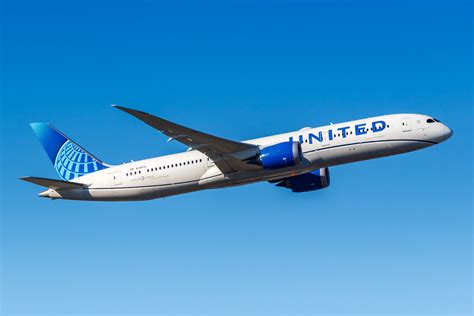
The global aviation industry has spent years searching for the perfect balance between distance, efficiency, and profitability. While ultra-long-haul flights were once considered risky experiments reserved for niche markets, advances in aircraft technology and changing passenger demand have transformed them into some of the most strategically valuable routes in the world. A rumored expansion by United Airlines connecting San Francisco International Airport (SFO) with major Indian cities such as Delhi (DEL) and Bengaluru (BLR) could represent one of the airline’s most ambitious long-distance strategies yet.
If launched, these flights would rank among the longest nonstop services operated by any airline. The proposed San Francisco–Delhi route would cover approximately 7,706 miles (12,401 kilometers), while the even longer San Francisco–Bengaluru service would stretch around 8,701 miles (14,003 kilometers). The Bengaluru route would approach the length of the world’s most famous ultra-long-haul services, including Qantas’ Perth–London flight, proving how far modern commercial aviation has evolved.
The idea of operating flights lasting 17 to 19 hours may seem financially challenging, but history has shown that the right market conditions can turn these routes into exceptionally profitable operations. Premium passengers, strong business connections, and limited nonstop competition can create an economic advantage that outweighs the enormous costs associated with operating aircraft across half the globe.
For United Airlines, India represents exactly the type of market where ultra-long-haul flying could succeed. The combination of a rapidly expanding economy, a massive Indian diaspora in the United States, and deep technology-sector connections between American and Indian cities creates a passenger base capable of supporting premium-priced nonstop services.
Why India Has Become A Strategic Priority For United Airlines
The relationship between the United States and India has grown significantly over the past several decades. Today, the two countries share extensive economic, political, and cultural connections, creating one of the most important international aviation markets. More than 5 million people of Indian descent live in the United States, forming the world’s largest Indian diaspora community.
This population generates consistent visiting friends and relatives (VFR) travel demand, but the opportunity extends far beyond family connections. India has become one of the world’s leading destinations for technology, finance, engineering, and entrepreneurship. Many professionals travel regularly between American technology hubs and Indian innovation centers, creating a passenger segment willing to pay higher fares for convenient nonstop flights.
United Airlines already understands the value of the India market. The airline currently operates service between Newark Liberty International Airport (EWR) and Delhi, a route that has been part of its network since 2005, except for a temporary pandemic-related suspension. The carrier has also previously explored additional connections, including service between Chicago O’Hare International Airport (ORD) and Delhi.
However, the next major opportunity may come from the airline’s largest West Coast hub. San Francisco International Airport is perfectly positioned to connect the United States with India because of its strong technology economy, extensive corporate travel base, and strategic location for Pacific and South Asian operations.
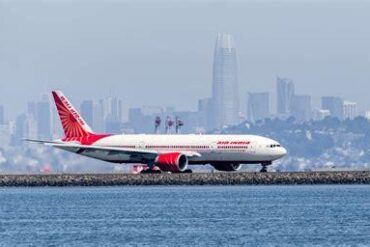
The rumored routes would also complement existing connectivity provided by Air India, United’s fellow Star Alliance member. Although Air India currently serves the United States market, operational challenges, aircraft availability issues, and regional airspace restrictions have limited its ability to expand.
The Economics Behind Ultra-Long-Haul Aviation
Operating an ultra-long-haul flight is not simply a matter of flying farther. The economics become increasingly complicated as aircraft spend more time in the air. Fuel is the largest challenge because aircraft must carry additional fuel weight for longer journeys, and that extra fuel itself increases consumption.
A 19-hour flight does not cost the same as two shorter flights combined. Instead, fuel requirements grow significantly because the aircraft must carry enough energy for the entire journey while maintaining efficiency throughout the operation.
Crew expenses also increase substantially. Ultra-long flights require additional pilots and cabin crew because of mandatory rest requirements. Airlines must also consider aircraft utilization. A plane flying a 17-hour route completes fewer daily cycles than an aircraft operating several shorter flights, meaning ownership and leasing costs are spread across fewer journeys.
These challenges explain why many airlines historically relied on connecting hubs rather than nonstop services. A passenger traveling from the United States to India could often connect through Europe or the Middle East, where airlines such as British Airways, Air France, and Turkish Airlines benefit from efficient hub structures.
However, nonstop ultra-long-haul routes have one major advantage: passengers value convenience. For business travelers and premium customers, avoiding a connection can justify significantly higher ticket prices.
This is where United’s potential India strategy becomes interesting. A successful ultra-long-haul route does not need every seat filled with economy passengers. Instead, profitability often depends on premium demand.
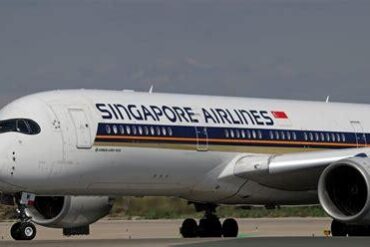
Airlines operating the world’s longest flights have demonstrated this approach. Singapore Airlines’ premium-focused services between Singapore and New York and Qantas’ long-distance flights connecting Australia with Europe show that high-value travelers can support routes that would otherwise appear financially difficult.

Why Bengaluru Could Be United’s Biggest Opportunity
While Delhi appears to be the more obvious choice because of its size and importance, Bengaluru may represent the most attractive opportunity for United Airlines.
Known as India’s technology capital, Bengaluru has developed one of the strongest connections with Silicon Valley. The two cities share deep relationships in artificial intelligence, software development, venture capital, and advanced technology industries.
Recent passenger data highlights the strength of this market. Thousands of travelers fly between San Francisco and Bengaluru each month, with demand driven heavily by corporate travelers and technology professionals. The average fares on this route indicate strong revenue potential, particularly compared with traditional leisure markets.
One of the biggest advantages for United would be capturing premium travelers who currently rely on connecting flights. Business passengers traveling between Silicon Valley and Bengaluru often prioritize schedule reliability and time savings. A nonstop service could eliminate many hours spent transferring through international hubs.
United’s aircraft strategy also aligns with this opportunity. The airline has invested heavily in improving its premium long-haul product, including its updated Polaris business class experience. A Boeing 787-9 configured with a significant number of premium seats could generate substantial revenue on a route dominated by technology professionals and corporate contracts.
Delhi remains highly attractive as well. It is India’s largest city, home to the country’s busiest airport, and a major political and economic center. Its location also makes it slightly easier operationally because it is closer to North America than many southern Indian destinations.
For United, the choice may ultimately come down to whether it prioritizes broader connectivity through Delhi or higher-yield technology-sector demand through Bengaluru.
United Faces Growing Competition In The India Market
United Airlines is not the only American carrier watching India’s growth. Other major U.S. airlines are also exploring opportunities to expand their presence.
American Airlines returned to India service in 2021 after a nine-year absence, launching daily flights between New York JFK and Delhi using the Boeing 787-9 Dreamliner. The airline previously considered launching a Seattle–Bengaluru route, which would have targeted the same technology-driven market United is reportedly evaluating.
However, American’s plans demonstrated one of the biggest risks facing ultra-long-haul aviation: geopolitical uncertainty. Airspace restrictions and regional conflicts can quickly disrupt routes that depend on specific flight paths.
Delta Air Lines has taken a different approach by relying primarily on partnerships with international airlines. Through cooperation with carriers such as Air France-KLM and Virgin Atlantic, Delta continues to connect U.S. passengers with India through European hubs. The airline has also explored restarting direct U.S.–India flights as market conditions improve.
The competition shows how valuable India has become. Major airlines are not simply chasing passenger numbers; they are seeking access to a market filled with premium travelers and long-term growth potential.
The Role Of Air India And Future Indian Airlines
The future of U.S.–India aviation will not depend only on American carriers. Indian airlines are also preparing for international expansion.
Air India is undergoing significant transformation, investing in fleet modernization and network growth. Once operational challenges ease and more aircraft become available, the airline is expected to strengthen its North American presence.
Meanwhile, IndiGo, India’s largest airline by domestic market share, has begun expanding internationally. The airline has placed large aircraft orders, including Airbus A350 aircraft, which could eventually allow it to enter longer international markets.
However, ultra-long-haul flights require more than aircraft range. They require premium demand, strong brand positioning, and a customer base willing to pay higher fares. As a low-cost carrier, IndiGo may face challenges competing directly in premium-heavy markets such as San Francisco–Bengaluru.
Why United’s Rumored Route Could Become A Major Profit Engine
The success of ultra-long-haul aviation depends on finding the perfect combination of distance and demand. A route can survive extraordinary operating costs if it connects two economically powerful regions with passengers who value time.
San Francisco and Bengaluru represent exactly this type of market. Both cities are global technology centers, both attract highly skilled professionals, and both generate strong corporate travel demand.
A nonstop United Airlines service would also strengthen the airline’s position as a leading U.S. carrier for international business travel. By connecting Silicon Valley directly with India’s technology hub, United could create a route that is not only geographically impressive but financially strategic.
The airline would still need to overcome challenges, including fuel prices, aircraft availability, geopolitical risks, and competitive pressure. Ultra-long-haul flights remain among the most demanding operations in commercial aviation.
Yet when the market conditions are right, these routes can become some of the most valuable assets in an airline’s network. United’s rumored San Francisco–India services represent more than just longer flights. They reflect a broader shift in aviation toward carefully targeted nonstop connections that link the world’s most influential economic centers.
If launched successfully, these ultra-long-haul routes could become a powerful example of how modern aircraft, premium demand, and global economic relationships are reshaping the future of commercial aviation.