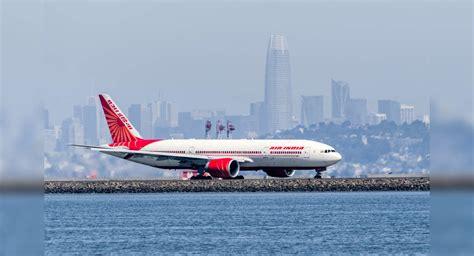
Air India is temporarily suspending three major ultra-long-haul routes to the United States after operational disruptions linked to the ongoing Iran crisis forced some flights to stretch to nearly 22 hours. The move highlights how geopolitical instability in the Middle East is now reshaping global aviation networks far beyond the conflict zone itself, with airlines facing rising fuel costs, rerouting complications, and mounting pressure on long-distance schedules.
The Indian flag carrier confirmed that between June 1 and August 31, it will suspend flights from Delhi to Chicago O’Hare, Delhi to Newark Liberty, and Mumbai to New York JFK. The decision comes after months of operational strain caused by restricted access to key Middle Eastern air corridors that airlines traditionally rely upon for efficient connections between India, Europe, and North America.
Air India stated that the temporary cuts are designed to improve network stability and reduce disruptions for passengers, particularly as flight durations and operational costs have surged due to extended routings around restricted airspace.
The suspended services had already become increasingly difficult to operate efficiently. Flights that once benefited from relatively direct polar and Middle Eastern corridors were forced onto far longer detours through Europe, requiring additional fuel stops and complex scheduling adjustments.
Ultra-Long-Haul Flights Stretched to Nearly 22 Hours
Among the most heavily impacted services were Air India’s Delhi to Chicago and Delhi to Newark routes. The Chicago operation had been rerouted through Vienna International Airport in Austria, while the Newark service was operating through Rome Fiumicino Airport in Italy. Both routes were running four times weekly before the suspension announcement.
The added stopovers dramatically increased total travel time. What were once among Air India’s flagship long-haul services evolved into exhausting multi-stage journeys involving refueling operations, extended ground handling, and prolonged crew management challenges.
For passengers, the experience became increasingly unpredictable. Delays triggered by congested rerouting corridors, combined with operational limitations tied to crew duty hours, made maintaining reliable schedules exceptionally difficult. Flights lasting close to 22 hours also placed additional strain on aircraft utilization, reducing operational flexibility across the airline’s international network.
The Mumbai to New York JFK route faced similar complications. Operated six times weekly via Rome, the service will also disappear from schedules during the summer adjustment period.
Air India emphasized that the changes were driven by a combination of continued airspace restrictions and record-high jet fuel prices, both of which have severely impacted the economics of ultra-long-haul flying.
Middle East Airspace Crisis Disrupts Global Aviation
The aviation industry’s reliance on Middle Eastern airspace has long been one of the foundations of global east-west connectivity. Carriers operating between Asia, Europe, and North America frequently depend on efficient corridors over Iran and neighboring regions to minimize flying time and fuel burn.
However, escalating regional tensions in 2026 have forced many airlines to avoid parts of the airspace entirely. The result has been widespread rerouting, longer block times, increased operational costs, and growing scheduling instability for international carriers.
For Air India, the disruption is particularly severe because of its geographic position and network structure. Many of its most profitable long-haul services rely heavily on these corridors to remain competitive against Gulf airlines and major international rivals.
As rerouted flights consume more fuel and require additional operational support, the cost of maintaining long-haul schedules has risen sharply. Airlines worldwide are now reassessing whether certain ultra-long-haul routes remain commercially viable under current conditions.
Air India Maintains Key North American Presence
Despite the suspensions, Air India is not withdrawing from North America entirely. Instead, the airline is consolidating operations around routes that remain more sustainable under current conditions.
The Delhi to San Francisco service, which operates via Kolkata, will continue flying but with reduced frequency. Weekly operations on the route are being cut from ten flights to seven.
Canadian operations are also being adjusted. Flights between Delhi and Toronto will temporarily fall from ten weekly services to five before later increasing to seven. This route currently operates through Vienna. Meanwhile, the Delhi to Vancouver route, which flies via Kolkata, will see frequencies reduced from seven flights weekly to five.
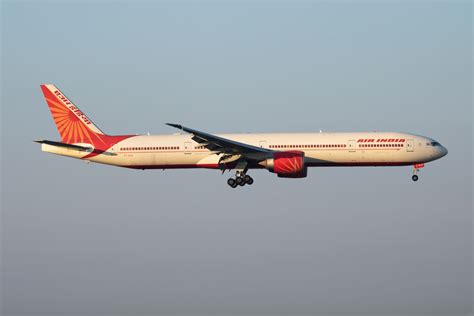
Interestingly, Air India is simultaneously strengthening one of its US routes despite the broader cuts. The Mumbai to Newark service will increase from three weekly flights to daily operations during the same period. Operated via Rome using the Boeing 777-300ER, the route appears to offer stronger operational efficiency and demand resilience compared with the suspended alternatives.
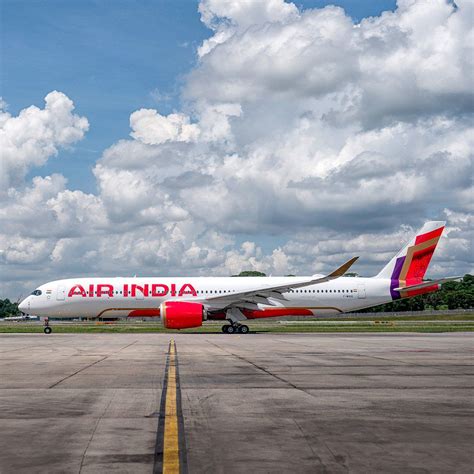
Meanwhile, Delhi to New York JFK will continue operating daily as a nonstop service using the Airbus A350, which has emerged as one of the airline’s most strategically important aircraft for long-range operations.
European Routes Also Face Capacity Reductions
The ripple effects of the airspace crisis are not limited to North America. Air India’s European network is also being scaled back as the carrier reallocates aircraft and adjusts schedules to maintain operational reliability.
Flights between Delhi and Paris Charles de Gaulle will be reduced from twice daily to once daily during the summer schedule period. Additional reductions are affecting routes from Delhi to Copenhagen, Rome, Vienna, and Zürich, each dropping from four weekly flights to three.
The Delhi to Milan route is also seeing capacity trimmed, with weekly frequencies declining from five to four rotations.
Operational Reality Reshapes Ultra-Long-Haul Aviation
Air India’s latest suspensions demonstrate how fragile ultra-long-haul aviation can become during periods of geopolitical instability. Flights designed around highly optimized routing structures quickly become economically vulnerable when airlines lose access to critical air corridors.
The situation also underscores a broader industry challenge. As airlines push toward increasingly ambitious nonstop services connecting distant global markets, disruptions involving airspace access, fuel prices, or geopolitical conflict can rapidly undermine even the most carefully planned networks.
For now, Air India appears focused on protecting operational stability rather than preserving maximum route coverage. Whether these suspended US services return after August may depend less on passenger demand and more on whether global airspace conditions return to normal in the months ahead.