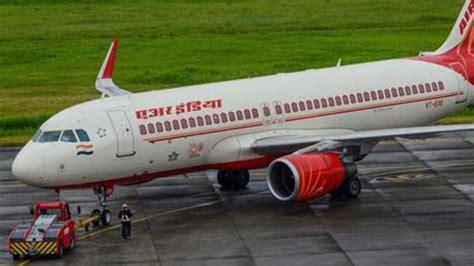
Air India has made a bold and unexpected strategic pivot by announcing the suspension of its ultra-long-haul routes connecting Bengaluru and Mumbai to San Francisco. These two high-profile connections, launched to cater to India’s thriving tech and expatriate communities, will see their final operations in late February 2025. The decision, though framed by operational challenges, carries wider implications for international aviation, premium business travel, and geopolitical tensions that continue to reshape airspace corridors.
Bengaluru to San Francisco: A Route Laden With Promise and Problems
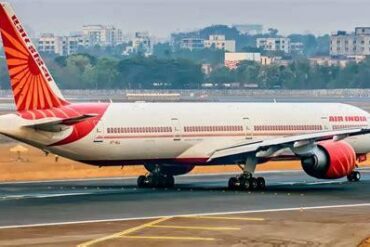
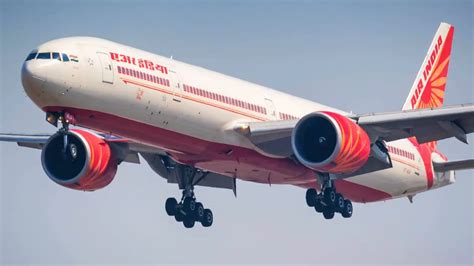
Introduced during the pandemic in 2021, Air India’s Bengaluru–San Francisco service was an ambitious endeavor. The nonstop route linked two of the world’s largest tech hubs—India’s Silicon Valley and California’s Bay Area—spanning an astounding 7,561 nautical miles (14,003 kilometers). Operated initially by Boeing 777-200LRs, the flight catered to premium clientele drawn from the IT and startup sectors.
However, the route’s optimism was short-lived. Within a year, Russia’s invasion of Ukraine forced Indian carriers to avoid Russian airspace. Matters worsened in early 2025 when Pakistan imposed a ban on Indian airlines using its airspace, cutting off a critical corridor. The consequence was two-fold:
- Increased flight time, often pushing aircraft past operational limits.
- Mandatory refueling stops, initially in Kolkata and later in Delhi for outbound flights and Vienna or Kolkata for the return leg.
Despite recording 156,000 round-trip passengers in the 12 months to October 2025, the carrier retained only a 25% market share on the route. The average round-trip fare? A whopping $3,200, highlighting the lucrative nature of this sector. Yet, even premium pricing couldn’t sustain operations stretched thin by rerouting.
Mumbai–San Francisco: Another Ambitious Route Falls
Just months after its southern counterpart’s return, Air India launched nonstop flights from Mumbai to San Francisco in December 2022. Initially using the 777-200LR, this route clocked in at around 16 hours and 40 minutes. But rerouting to bypass Russian and Pakistani airspace added 3 to 4 more hours, bloating the return trip to nearly 20 hours.
What began as a promising four-times-a-week connection quickly morphed into a logistical headache. As the geopolitical climate deteriorated, Air India increasingly relied on refueling in Vienna, complicating operations and adding to crew and fuel costs. Though performance data isn’t as widely published for the Mumbai route, industry insights point to a similar trend of unsustainable detours and loss of operational efficiency.
The final flight from Mumbai to San Francisco is scheduled for February 28, 2025, marking the end of another ambitious yet ill-fated route.
Behind The Curtains: The Role of Airspace Restrictions
At the heart of this decision lies the dual closure of Russian and Pakistani airspace—a rare and punishing squeeze for any long-haul carrier in South Asia. For Air India, this means abandoning the great circle route and instead adopting a circuitous path via Central or Southeast Asia and Europe. This results in:
- Excessive fuel burn
- Additional crew costs
- Tight aircraft turnaround windows
- Diminished passenger comfort
The operational burden proved particularly heavy for older aircraft like the Boeing 777-200LR and 777-300ER, whose efficiency pales in comparison to newer aircraft like the A350 or 787-9, both of which Air India is slated to induct as part of its broader fleet modernization.
Delhi to San Francisco: The Last Man Standing
With Bengaluru and Mumbai axed, Delhi–San Francisco remains the sole ultra-long-haul route to the U.S. West Coast for Air India. In an attempt to absorb displaced demand, Air India will ramp up this route from 7 to 10 weekly flights starting March 2025.
The Delhi service benefits from being closer to Northern flight corridors, making rerouting less dramatic compared to southern metros. However, even here, westbound flights are scheduled with a refueling stop in Kolkata, extending block times to 20 hours and 45 minutes on certain days.
Flights from San Francisco to Delhi will run:
- Daily on Mondays, Wednesdays, Fridays, and Sundays
- Twice daily on Tuesdays, Thursdays, and Saturdays
The move reflects Air India’s decision to consolidate capacity at its primary hub while preserving the high-revenue U.S.–India corridor, albeit through one city.
Passenger Fallout: Reduced Options, Longer Journeys
For travelers, especially tech professionals and Indian-American families, the loss of nonstop options from Bengaluru and Mumbai to San Francisco is more than a scheduling inconvenience. It introduces:
- Longer layovers in Delhi
- Higher travel fatigue due to stops
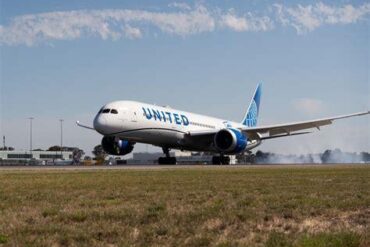
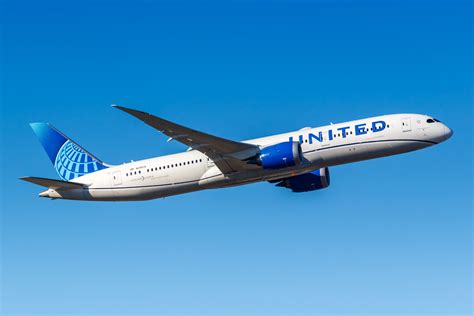
- Potential shifts in loyalty to competitors like United Airlines, which continues to maintain its Bengaluru–San Francisco service, benefiting from access to Russian airspace.
Passengers flying premium cabins—key revenue drivers on these routes—might now consider switching to Middle Eastern carriers like Emirates, Qatar Airways, or Etihad, all of which offer one-stop connections with luxurious services.
Air India’s Strategic Pivot: Consolidation Over Expansion
This move aligns with Air India’s ongoing transformation under the Tata Group’s ownership. The airline is pursuing a fleet renewal program, aiming to replace aging aircraft with next-generation, fuel-efficient models. Part of this strategy involves streamlining ultra-long-haul operations to reduce exposure to external risks like airspace politics.
Rather than spread thin over multiple routes, the focus appears to be on hub consolidation, increasing frequencies on core routes like Delhi–San Francisco and eventually deploying newer widebodies capable of flying longer with fewer limitations.
The suspension also hints at cost-consciousness. Ultra-long-haul flights come with notoriously thin margins, made worse when geopolitical factors force expensive detours. By trimming the fat, Air India could better allocate its aircraft and crew to more stable, profitable routes.
Outlook: What’s Next For Ultra-Long-Haul India–US Flights?
Air India’s decision underscores a broader reality facing ultra-long-haul aviation in an increasingly divided geopolitical world. While demand between India and the U.S. remains robust, sustaining direct flights without access to optimal airspace is akin to running a marathon uphill.
Unless there’s a breakthrough in diplomatic relations with Russia and Pakistan, the prospects of reviving such long routes remain dim. Meanwhile, travelers may have to settle for slightly longer but more operationally stable connections via Delhi, Europe, or the Middle East.
As new aircraft like the Airbus A350-1000 and Boeing 777X join fleets globally, there could be a future resurgence in ultra-long-haul options—but not until routing logistics and fuel economics make them viable again.
Conclusion: A Strategic Retreat, Not a Surrender
Air India’s withdrawal from Bengaluru and Mumbai to San Francisco should not be seen as a retreat in the face of adversity but rather a strategic recalibration in response to evolving global dynamics. With Delhi–San Francisco strengthened, fleet upgrades underway, and a renewed focus on efficiency, the airline is shaping itself for resilience and agility, preparing not just to survive—but eventually, to thrive.
In the end, the decision reflects a fundamental truth of global aviation: sometimes the skies are not the limit—but the obstacle.