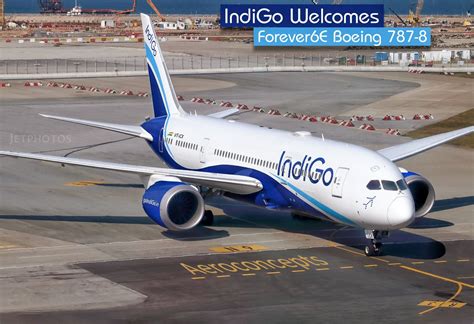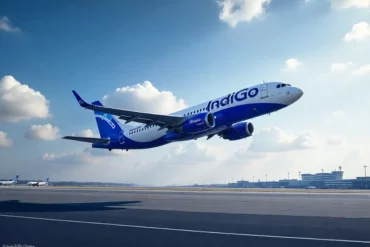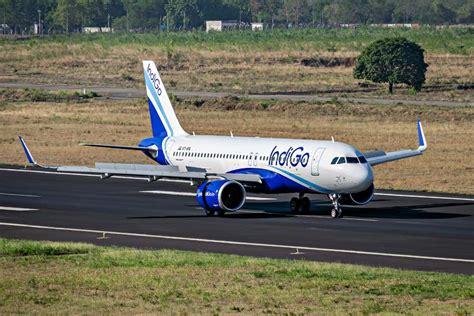
India’s largest budget airline, IndiGo, has officially stepped into the long-haul international aviation arena by launching direct flights from Mumbai to Manchester and Amsterdam, marking a major leap in its global expansion strategy. With these non-stop services operated by the technologically advanced Boeing 787-9 Dreamliner, IndiGo has entered a new chapter—one that not only elevates its brand globally but also strengthens connectivity between India and Europe.
The airline now stands as the only carrier offering direct flights between Manchester and India, and this bold move is expected to change the dynamics of travel between the subcontinent and two of Europe’s most influential cities. The three-times-a-week services will offer passengers an unprecedented level of convenience, efficiency, and affordability—cornerstones of IndiGo’s business model.
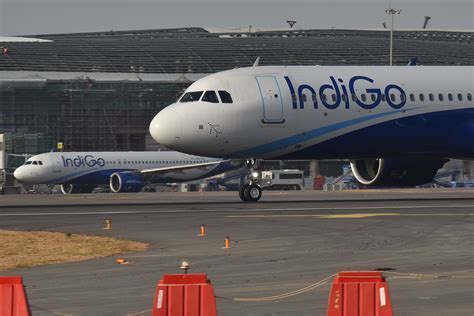
Mumbai to Manchester: A Direct Lifeline Between India and the UK
IndiGo’s Mumbai-Manchester service is a historic milestone in Indian aviation, bridging two bustling hubs of business, education, and culture. The route is operated three times a week:
- Flight 6E 0031 departs from Mumbai at 4:25 a.m. on Tuesdays, Thursdays, and Saturdays.
- The return flight 6E 0032 departs from Manchester at 12:05 p.m. local time on the same days.
This connection is uniquely strategic. Manchester serves as a significant node for Northern England, hosting a large Indian diaspora and key academic institutions. With no other airline currently offering direct connectivity between Mumbai and Manchester, IndiGo’s new service provides a competitive edge, cutting down travel time and enhancing passenger convenience. This route not only caters to leisure and family travelers but also opens up streamlined access for business professionals and students, who have long endured layovers and connecting flights.
Mumbai to Amsterdam: Gateway to the European Union
Simultaneously, IndiGo has commenced direct flights between Mumbai and Amsterdam, another power move in its European strategy. Operating on Wednesdays, Fridays, and Sundays, the schedule is as follows:
- Flight 6E 0021 leaves Mumbai at 5:25 a.m. local time.
- The return leg 6E 0022 departs Amsterdam at 2:00 p.m., arriving in Mumbai the next morning.
Amsterdam Schiphol Airport is one of the busiest and most connected hubs in Europe, serving as a critical access point to the entire EU region. With the Netherlands boasting robust trade, tourism, and educational exchanges with India, IndiGo’s strategic entry is poised to harness this demand effectively. This route also simplifies transit for passengers connecting onward within Europe.
Why the Boeing 787-9 Dreamliner is a Game-Changer for IndiGo
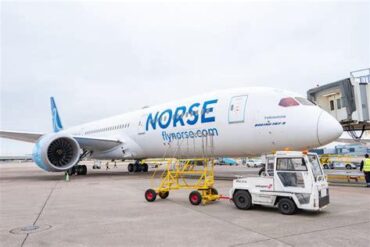
Central to the success of IndiGo’s long-haul venture is the Boeing 787-9 Dreamliner, an aircraft known for combining fuel efficiency, passenger comfort, and technological advancement. The Dreamliner used for these routes has been leased from Norse Atlantic Airways, allowing IndiGo to test the waters of long-haul operations without a full-scale fleet acquisition upfront.
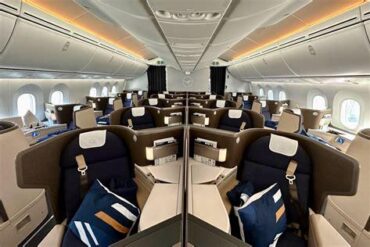
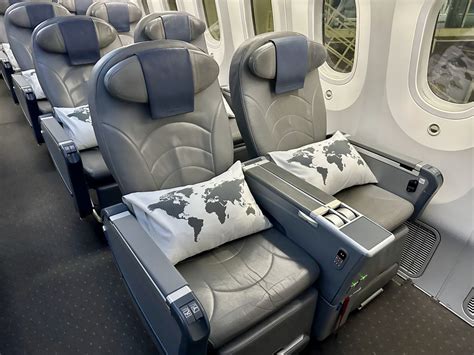
The aircraft features a two-class configuration:
- 56 Stretch Class seats for premium passengers.
- 282 Economy Class seats offering spacious, ergonomic design.
The Dreamliner is equipped with:
- Advanced cabin pressure and air filtration systems, reducing passenger fatigue.
- Over 300 hours of in-flight entertainment, ensuring a pleasant journey.
- Complimentary hot meals and beverages, including selections from Indian culinary brands, a touch aimed at enhancing brand loyalty among Indian travelers.
By offering amenities typically associated with full-service carriers, IndiGo is redefining what passengers can expect from a low-cost airline on long-haul flights.
Strategic Implications: ‘Towards New Heights and Across New Frontiers’
This international foray is not just a milestone; it’s a clear signal of IndiGo’s transformational strategy. Under the motto ‘Towards New Heights and Across New Frontiers’, the airline is evolving beyond its domestic stronghold into global aviation markets that have long been dominated by legacy carriers.
IndiGo’s move mirrors the shifting landscape of global air travel, where low-cost carriers (LCCs) are no longer confined to regional routes. By venturing into transcontinental operations, IndiGo is leveraging its cost-effective model to challenge the pricing power of traditional full-service airlines, especially in a post-pandemic world where affordability often trumps luxury.
From a macroeconomic standpoint, these routes also play a role in strengthening bilateral ties, especially in sectors such as education, tourism, technology, and trade. IndiGo’s flights will make it easier for Dutch and British companies to access India’s booming economy, and vice versa.
Passenger-Centric Services: A Recipe for Global Loyalty
A hallmark of IndiGo’s operational philosophy is its commitment to punctuality, efficiency, and customer satisfaction. The airline’s recent accolade as the ‘Best Airline in India and South Asia’ by Skytrax at the 2025 World Airline Awards only adds further credibility to its international aspirations.
This recognition reflects:
- Consistently on-time performance, a key KPI for international travelers.
- Transparent pricing with value-added services, such as meal inclusions on long-haul flights.
- Seamless online booking and check-in experiences, leveraging digital innovation.
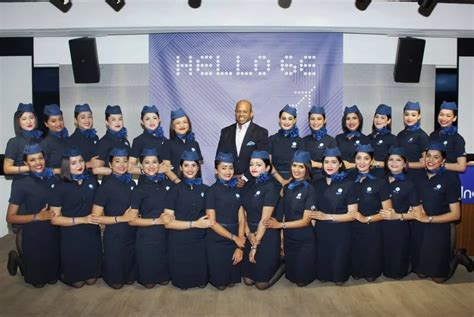
Customer feedback from early flights has also indicated high satisfaction levels, particularly around cabin cleanliness, comfort, and the warmth of the flight crew. IndiGo’s ability to maintain service excellence while scaling operations will be crucial in cementing its position on the world stage.
Economic and Market Forecast: Will IndiGo Succeed Internationally?
Analysts are already speculating on IndiGo’s future plans. If the Mumbai-Manchester and Mumbai-Amsterdam routes perform well, additional cities such as Frankfurt, Paris, and Milan could follow. The airline’s smart use of leased aircraft minimizes risk while maximizing reach, making it a prudent approach in an unpredictable aviation market.
The demand for India-Europe travel is also set to rise in the coming years, driven by:
- Growth in Indian outbound tourism.
- Expanding Indian student population in Europe.
- Increased bilateral trade and corporate travel.
By entering this segment early, IndiGo is positioning itself as a first-mover in the LCC long-haul market out of India—a segment that has long remained underserved.
Conclusion: A New Era of Accessible Long-Haul Travel for India
The launch of direct long-haul flights to Manchester and Amsterdam using the Boeing 787-9 Dreamliner is not just an expansion—it’s a redefinition of what Indian aviation can achieve on the global stage. For IndiGo, the shift from domestic dominance to international credibility is well underway.
By prioritizing efficiency, passenger comfort, and affordability, IndiGo is setting new standards for long-haul travel, while also giving legacy carriers a reason to look over their shoulder. These flights serve as a gateway—not just between countries—but between a traditional model of air travel and a future defined by accessibility, value, and seamless connectivity.
IndiGo’s ambition, coupled with calculated execution, signals that the airline is not merely testing global waters. It’s preparing to soar across oceans and, quite possibly, redefine the very meaning of international air travel from India.