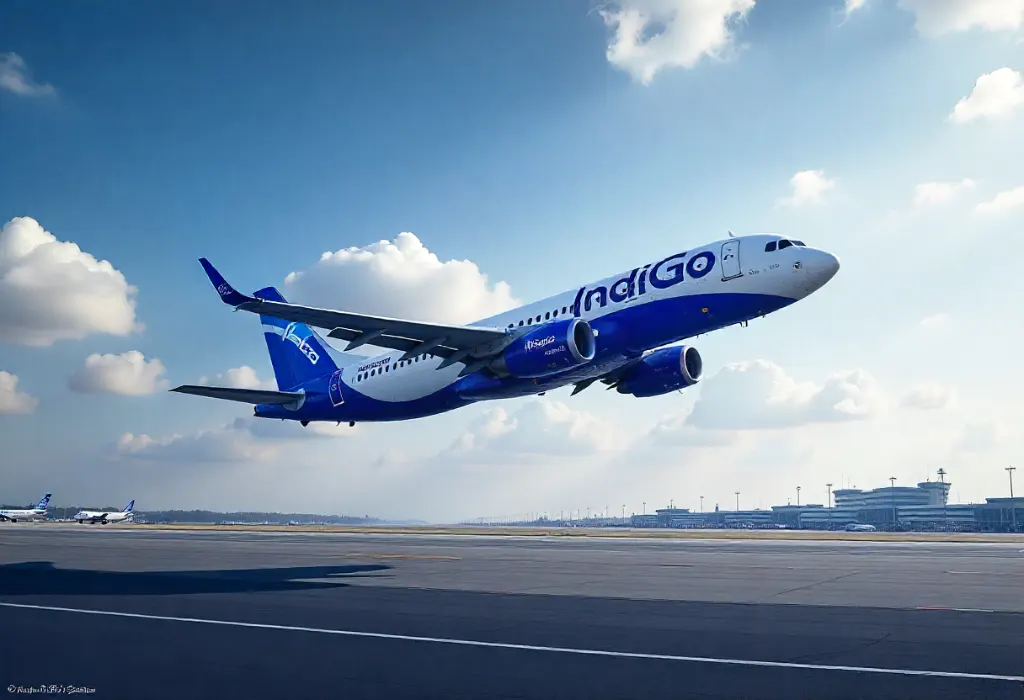
IndiGo, India’s largest airline by passenger volume, has made a bold move to strengthen its long-haul capabilities by significantly increasing the flight frequencies on two major European routes: Mumbai to Amsterdam and Mumbai to Manchester. This strategic expansion, driven by strong passenger demand and fleet growth, signals a decisive step in IndiGo’s transformation from a predominantly domestic carrier to a competitive force in the global aviation market.
The decision to ramp up service on these routes was announced following the airline’s successful launch of flights earlier in July 2025. Both routes have quickly demonstrated exceptional performance metrics, prompting the airline to deepen its international network footprint with more frequent service and enhanced passenger experiences.
Mumbai to Amsterdam: From Launch to Daily Service
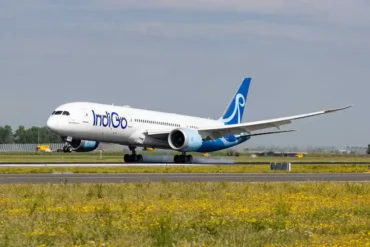
IndiGo’s direct service between Mumbai and Amsterdam began on July 2, 2025, marking a milestone in Indian aviation. The route became the first long-haul service operated by a low-cost Indian carrier using a wide-body aircraft, namely the Boeing 787-9 Dreamliner. This aircraft offers advanced fuel efficiency, a spacious cabin environment, and superior passenger comfort.
Due to overwhelming demand and positive customer feedback, the airline will increase the frequency of this route to six times a week starting September 20, 2025, and by October 13, it will transition into a daily service. This boost will provide greater flexibility and convenience for passengers traveling between India and the Netherlands, enhancing connectivity for both leisure and business travelers. Amsterdam, with its pivotal role as a European hub, offers smooth connections to the rest of Europe, thereby expanding the travel potential for Indian passengers even further.
Mumbai to Manchester: Strengthening UK-India Ties
Hot on the heels of its Amsterdam success, IndiGo is reinforcing its Mumbai to Manchester service. Originally launched on July 1, 2025, this route is operated using a wet-leased Boeing 787-9 Dreamliner from Norse Atlantic Airways, aligning with IndiGo’s growing reliance on next-generation aircraft.
Effective September 22, 2025, the airline will operate four weekly flights on the Mumbai-Manchester route. Manchester, a critical economic and cultural center in the UK, opens doors to increased tourism, business, and educational exchanges between the two countries. With a growing Indian diaspora in northern England and increasing trade ties, IndiGo’s presence in Manchester is expected to support broader economic integration.
IndiGo’s Long-Haul Strategy Backed by Dreamliner Fleet Growth
The backbone of IndiGo’s international expansion strategy lies in its growing Boeing 787-9 Dreamliner fleet. The airline has confirmed plans to induct five more Dreamliners within the current financial year. This is a calculated move to expand its footprint in Europe and initiate possible North American routes in the near future.
The Dreamliner’s advanced fuel efficiency, increased range, and enhanced cabin features make it ideal for low-cost long-haul operations. The aircraft’s larger windows, quieter engines, and lower cabin altitude contribute to a noticeably better travel experience. For a low-cost carrier aiming to balance affordability with comfort, this is a vital asset.
According to IndiGo CEO Pieter Elbers, the strong passenger uptake and better-than-anticipated route performance were key motivators behind this expansion. Elbers stated, “This step is a testament to our commitment to enhancing international connectivity, particularly on high-potential, underserved routes. We are not just expanding capacity—we are elevating the IndiGo experience globally.”
Passenger Benefits and Enhanced In-Flight Experience
IndiGo’s entry into the long-haul segment comes with a promise of delivering value-driven comfort. The Dreamliner’s cabin design, featuring wider seats, modern lighting, and state-of-the-art in-flight entertainment, is engineered to reduce jet lag and improve passenger well-being.
Business and premium economy travelers can look forward to spacious seating options, increased baggage allowances, and personalized onboard service. The airline is also integrating next-generation in-flight connectivity solutions to cater to digitally connected travelers. These improvements reflect IndiGo’s effort to shift from a bare-bones low-cost model to a hybrid service offering that competes effectively on international turf.
Impacts on Indian and European Aviation Markets
The increase in long-haul frequencies from India to key European cities marks a significant development in both regional and global aviation dynamics. For India, it represents a step forward in aligning its aviation growth with global standards, providing travelers with more international options under a domestic carrier.
In the European context, these additions intensify competition in already saturated skies, especially on routes traditionally dominated by legacy carriers such as British Airways, KLM, and Lufthansa. IndiGo’s low-fare, high-frequency model disrupts this landscape by providing more affordable access to Europe from India, without sacrificing on comfort.
Furthermore, as global travel demand rebounds post-pandemic, capacity expansion on proven routes offers a reliable growth strategy. It also underlines a broader industry trend where budget carriers are moving into long-haul territory, a space once considered unfeasible for LCCs.
India’s Aviation Growth and IndiGo’s Global Positioning
IndiGo’s latest move comes at a time when India is set to become the third-largest aviation market globally. With rising disposable income, a tech-savvy population, and robust outbound travel demand, Indian carriers are now focusing aggressively on international expansion.
IndiGo, already the market leader domestically, is positioning itself as a credible international player. Its international network spans cities across Asia-Pacific, Middle East, and now Europe, and will soon likely stretch across the Atlantic as new Dreamliners join the fleet. This builds toward a hub-and-spoke model centered around Mumbai and Delhi, offering a cohesive global network.
Looking Ahead: What This Means for Travelers
For Indian travelers, the benefits are clear. More flights mean more flexibility, shorter layovers, and better airfare options. As these routes mature, IndiGo is likely to roll out more international destinations, especially in Western Europe and the U.S., where the 787-9 can operate efficiently.
Tourists from Europe can also explore India’s booming tourism sector with greater ease, aided by IndiGo’s extensive domestic network that offers seamless onward connections to Goa, Jaipur, Kochi, and other cultural hotspots. The symbiotic relationship between long-haul and domestic legs ensures full capacity utilization and strengthens IndiGo’s business case for route sustainability.
Moreover, IndiGo’s expansion underscores the rising significance of affordable long-haul travel, meeting demand for premium economy-like experiences at budget prices—a concept whose time has clearly arrived.
Conclusion: IndiGo Charts New Altitudes in Global Aviation
IndiGo’s expansion on the Mumbai-Amsterdam and Mumbai-Manchester routes is more than a simple increase in flight frequency—it is a strategic maneuver that signals the airline’s arrival on the global aviation stage. Backed by a growing Dreamliner fleet, IndiGo is positioning itself to serve price-sensitive yet comfort-conscious international travelers, fulfilling a niche that traditional full-service carriers often overlook.
As these long-haul frequencies take flight in the coming months, they carry not just passengers, but the aspirations of a growing nation to connect more deeply with the world. For travelers and the aviation industry alike, IndiGo’s long-haul play is one to watch.