
The resumption of flights between Amsterdam and Jersey marks a notable milestone in KLM Royal Dutch Airlines’ UK network expansion, bringing the total number of destinations served in the UK and Crown Dependencies to 19 airports. This move not only re-establishes a route last operated by KLM nearly three decades ago but also underscores the airline’s strategic focus on regional connectivity across the British Isles.
KLM Returns to Jersey After 30 Years
On April 4, 2026, KLM will once again land on the shores of Jersey, a British Crown Dependency nestled in the Channel Islands. Although not technically part of the UK, Jersey’s inclusion in the UK route network is driven by aviation convenience and travel categorization.
The announcement came alongside two other new KLM routes from Amsterdam Schiphol to Asturias and Santiago de Compostela in Spain. However, the Jersey route holds unique historical significance given the long hiatus since the airline last served the island.
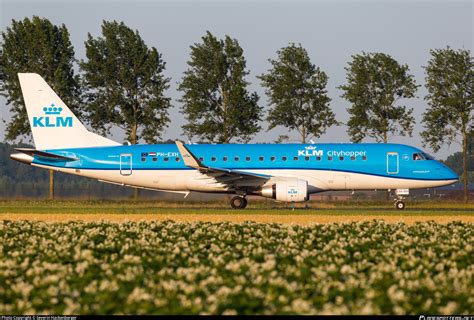
Initially, the Jersey service will operate on a weekly basis, gradually scaling up to a daily schedule from July 4 to August 30, before returning to weekly operations until October 24, marking the end of the summer season. Most of these flights will be operated by KLM Cityhopper’s 88-seat Embraer E175, an aircraft well-suited for short-haul, lower-volume routes.
This aircraft type has been instrumental in KLM’s regional growth strategy. As seen with its Exeter route launched in March 2025, the E175 allows the airline to minimize risk while nurturing demand and adjusting capacity dynamically.
Flight Schedule and Duration
In the peak summer month of July, flights from Amsterdam to Jersey will depart at 12:05 pm, arriving at 12:25 pm local time, with a total flight time of 1 hour and 20 minutes. The return leg leaves Jersey at 12:55 pm, landing back in Amsterdam at 3:20 pm, slightly longer at 1 hour and 25 minutes due to air traffic patterns.
This schedule is crafted to offer travelers seamless connectivity to KLM’s broader European and intercontinental network via Schiphol Airport—a significant advantage over purely point-to-point carriers.
Why Jersey, and Why Now?
KLM’s return to Jersey follows a turbulent decade for the Amsterdam–Jersey air corridor. Carriers like Blue Islands ceased operations in 2013, and easyJet attempted to fill the gap in 2023 but quickly retreated. Despite recording 11,700 passengers during its brief tenure, easyJet suffered from a poor load factor of just 56%, making the route commercially unsustainable.
Unlike easyJet’s operation, which was strictly point-to-point, KLM’s model leans heavily on network connectivity. This gives Jersey travelers access to dozens of international destinations without the need for multiple tickets or airport transfers.
Transit Traffic Potential: A Hidden Advantage
Jersey’s geographic isolation has created latent demand for well-timed, network-connected flights. Recent passenger data shows that nearly 18,000 round-trip travelers flew between Amsterdam and Jersey in the 12 months ending July 2024. The peak came in summer, aligning perfectly with KLM’s seasonal strategy.
KLM’s ability to attract indirect passengers via Amsterdam is vital. Many travelers from cities like New York (8,000 passengers/year), Barcelona (7,500), Rome (6,700), and Geneva (4,700) have historically routed through other hubs. With KLM’s entry, these passengers will now have a one-ticket, one-stop solution.
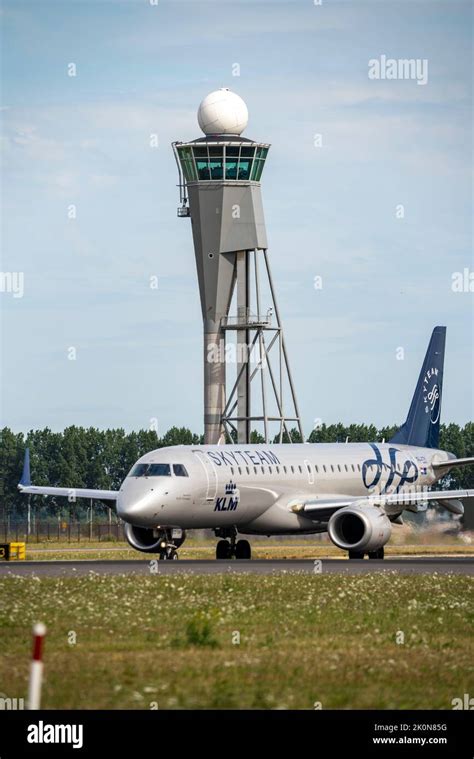
Even long-haul cities like Dubai (4,600), Los Angeles (4,400), and Mumbai (2,700) contribute meaningfully to the transit volume. The cumulative demand from these global markets, spread across KLM’s SkyTeam alliance and partner airlines, will help fill seats efficiently.
Strategic Importance of Jersey in KLM’s UK Network
With Jersey’s addition, KLM becomes the most prolific foreign airline in the UK by destination count, outpacing rivals like British Airways, which serves just 13 UK airports with its mainline fleet. In July 2026, KLM is scheduled to operate 461 weekly departures from the UK, equivalent to 68 daily flights each way.
This marks only a slight increase from the 459 weekly flights in July 2025, reflecting a plateau in capacity growth. This is partly attributed to fleet adjustments and changes in airport strategy—most notably at Bristol, where weekly flights are reduced from 28 to 20 to support new service in Exeter.
The airline’s tactic of deploying the E175 more frequently at regional airports like Bristol and Jersey demonstrates a deliberate move toward operational agility. Rather than simply increasing capacity through larger aircraft, KLM is optimizing for frequency and connectivity, allowing better alignment with passenger patterns and demand elasticity.
Beyond Point-to-Point: A Network Play
The move into Jersey reflects KLM’s wider philosophy of maximizing its role as a network enabler, rather than a budget-friendly direct competitor. While easyJet may dominate certain point-to-point summer routes with lower fares, it lacks the feeder and transit capacity that KLM can tap into.
Even if the Jersey route operates for just seven months annually, the value lies not in volume alone but in yield, network strength, and brand loyalty. KLM’s existing UK passengers, Flying Blue members, and SkyTeam partners can now benefit from an additional gateway—serving both inbound tourism and outbound residents.
Economic and Tourism Implications for Jersey
For the island itself, KLM’s return offers significant tourism potential. The route provides Dutch tourists and European travelers a convenient path to explore Jersey’s historic charm, beaches, and unique blend of French and British cultures.
The daily summer flights are poised to boost hotel occupancy, restaurant footfall, and the broader local economy. Business travelers and returning Jersey residents will also benefit from improved schedules and reduced reliance on complex multi-leg journeys.
Looking Forward: Potential for Growth
While the route currently operates on a seasonal basis, its performance in 2026 will likely determine its future longevity and possible expansion. If passenger numbers prove strong and yields acceptable, KLM could extend the season into shoulder months or increase frequency earlier in the summer.
Additionally, upgauging the route from the Embraer E175 to the larger E190 or E195-E2 could be on the table if demand justifies. Jersey’s runway and terminal facilities can accommodate such changes, giving KLM plenty of flexibility.
KLM’s calculated, data-backed re-entry into Jersey is not a nostalgic gesture. It is a pragmatic and commercially strategic decision that reflects the changing dynamics of European regional aviation. With passenger behaviors favoring connectivity and convenience over lowest fare, Jersey may well become a success story in KLM’s ever-expanding UK tapestry.