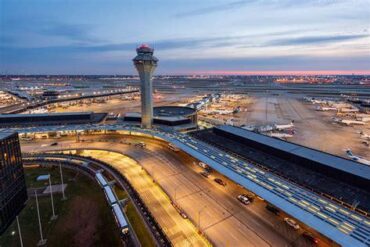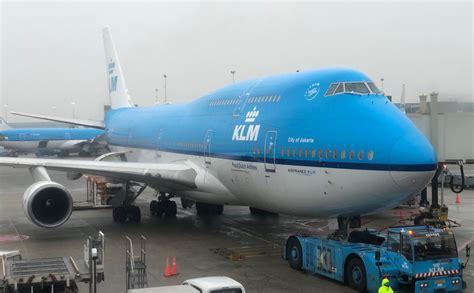
Amsterdam Schiphol Airport’s start to the new year has been anything but smooth. Severely hampered by unrelenting winter weather, the airport—one of Europe’s busiest—has been plunged into a logistical crisis, with snowfall-induced delays grinding its usually efficient operations to a near standstill. At the heart of this icy upheaval was KLM flight KL1003, which embarked on an astonishing two-hour ground journey, only to return to its gate, having never left the airport’s tarmac.
Two Hours Of Taxiing That Led Nowhere
On the morning of January 5, 2026, KLM’s Airbus A321neo, registered PH-AXA, was tasked with a routine short-haul mission: a flight from Amsterdam Schiphol Airport (AMS) to London Heathrow (LHR). The scheduled departure time was 8:35 a.m., with an expected landing at 9:00 a.m. local time—a quick hop across the North Sea. However, the unfolding events transformed this ordinary route into a surreal ordeal.
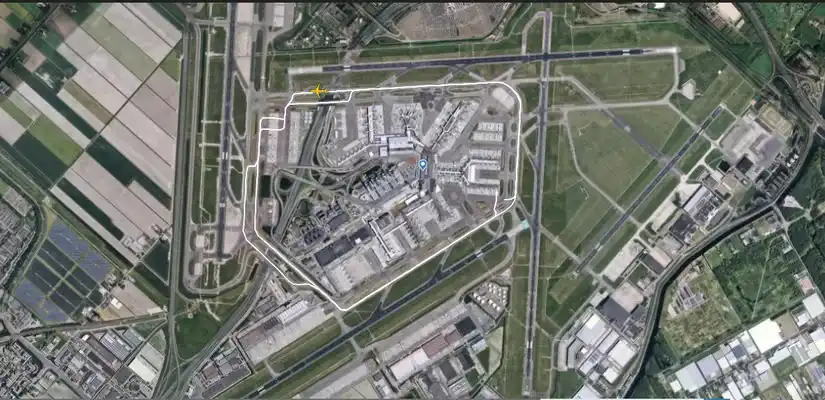
Despite a modest initial delay, the aircraft eventually pushed back at 9:05 a.m., seemingly poised for takeoff. What followed was an extraordinary ground loop—twice circling the congested airport’s taxiways, hindered by poor visibility, icy surfaces, and airside gridlock. Flightradar24 data revealed a pattern: two broad anticlockwise sweeps with slight directional variations, tracing a now-infamous path of futility. By 11:29 a.m., the aircraft returned to its stand. It had never left the ground.
A Victim of Worsening Weather And Ground Congestion
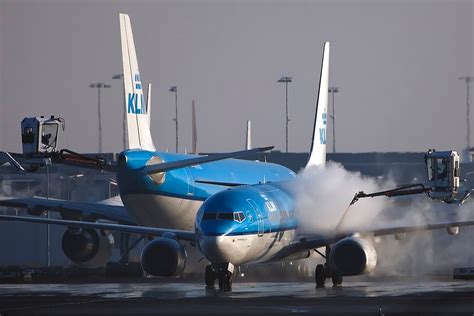
The KLM jet’s misadventure wasn’t isolated. Amsterdam Schiphol had already issued alerts, warning of “limited air traffic” and de-icing delays due to persistent snowfall. Runway maintenance teams were battling ice buildup, while a bottleneck of aircraft queued hopelessly for takeoff clearance.
Schiphol’s official statement made it clear:
“Due to persistent winter weather, only limited air traffic is possible to and from Schiphol. Our snow crews are working around the clock to keep the runways clear, and aircraft are being carefully de-iced.”
While such disruptions are not unheard of in winter, the scope and scale of this episode were extreme. The airport had become a snowswept maze, with ground movement slowed to a crawl and aircraft idling for hours as they waited for elusive departure slots.
Cancellation Fallout: KL1003 Abandoned, Return Flight Axed
Following the two-hour taxi to nowhere, KL1003 was officially canceled. Its return leg from London Heathrow was also called off. The aircraft, PH-AXA, would not fly again until much later that day—6:59 p.m., embarking on a delayed service to Dublin (KL1141), which had itself been scheduled for 3:40 p.m.
This cascading disruption extended across the airline’s network. The return Dublin flight (KL1142) was similarly delayed by almost four hours, illustrating how one weather-crippled airport can send shockwaves throughout a carrier’s scheduling matrix.
KLM’s Struggle At Its Home Base
As Schiphol’s dominant airline, KLM bore the brunt of the winter assault. According to aviation analytics firm Cirium, the Dutch flag carrier is responsible for over 57.85% of scheduled departures from the airport in January—totaling 9,816 out of 16,967 flights.
This central role translated into central vulnerability. Data from FlightAware revealed that on January 5:
- 435 KLM flights were canceled
- 169 flights experienced delays
KLM, forced into full-scale crisis mode, issued customer guidance noting that rebooking would be slow due to limited seats, strained crew schedules, and ongoing operational bottlenecks. It also temporarily suspended its Unaccompanied Minor (UM) program, with children barred from flying solo via Schiphol until January 11.
The airline’s statement was clear-eyed:
“Due to limited capacity across airlines, crew scheduling adjustments, and operational constraints caused by the weather, rebooking is taking longer than usual.”
More Than Just KLM: Emirates Also Hit Hard
The misery wasn’t exclusive to KLM. Other international carriers faced gridlock, too. A high-profile case involved Emirates flight EK147, an Airbus A380 arriving from Dubai International Airport (DXB).
Despite completing its long-haul journey, the superjumbo then endured a three-hour taxi wait on arrival in Amsterdam. The reason: all three of Schiphol’s A380-compatible gates were occupied. EK147 was stranded, engines running, unable to dock.
Its return leg, EK148, ultimately departed over seven hours behind schedule, further exacerbated by de-icing needs. This illustrated the extent to which infrastructure limitations, gate availability, and snow logistics can cripple even the best-resourced airlines in extreme weather.
Passenger Disruption: From Inconvenience To Chaos
Travelers, already weary from holiday-season fatigue, found themselves thrust into chaotic scenes. Inside terminals, long queues formed at check-in desks, as delays mounted and cancellations surged. Frustrated passengers flooded social media with accounts of hours-long waits, rescheduled flights, and missed connections.
Some faced an even more acute hardship: missed funerals, weddings, and crucial medical appointments, due to unanticipated cancellations like that of KL1003. With rebooking queues stretching into days, many opted to abandon air travel altogether, turning to trains or buses to escape the frozen airport hub.
Winter Weather: A Growing Threat To European Air Travel
This episode is not an isolated anomaly but part of a growing trend. As climate patterns become more erratic, European airports—often unprepared for prolonged winter events—are increasingly vulnerable to snow-driven disruptions.
Amsterdam, a city with a relatively mild climate, does not often see prolonged snowfall. But when snow does hit, it catches infrastructure off-guard. Limited de-icing trucks, sparse snow-clearing equipment, and underprepared personnel compound the problems. In these moments, Europe’s aviation giants become paralyzed in ways unthinkable in colder countries like Norway or Canada, where snow readiness is built into the system.
Operational Fragility In Focus: Lessons From The Tarmac
KL1003’s doomed journey is more than an amusing footnote—it’s a case study in systemic fragility. Airlines operate with tight schedules, narrow margins, and minimal spare capacity. When a key hub like Schiphol seizes up, the knock-on effect is exponential.
For KLM, it highlights the risks of heavy dependence on a single hub. For Schiphol, it exposes the critical importance of winter operations resilience. And for regulators, it raises pressing questions: Are current infrastructure and contingency planning standards adequate for a world facing increasing weather volatility?
The Road Ahead: Recovery And Reflection
As the snow thaws and flights begin to resume some semblance of normality, Schiphol and KLM face the mammoth task of clearing the backlog. Hundreds of crew rosters need rebalancing. Thousands of bags need rerouting. And tens of thousands of passengers need rebooking, rerouting, or refunds.
The broader lesson is clear: Airports in temperate climates must bolster winter preparedness. This includes:
- Investing in faster, more efficient de-icing systems
- Increasing snow-removal capabilities
- Enhancing airside coordination and communication
While flight KL1003 never left Dutch soil, its ghost journey may spur real-world change. From a two-hour taxi to nowhere may come a roadmap to somewhere more resilient.