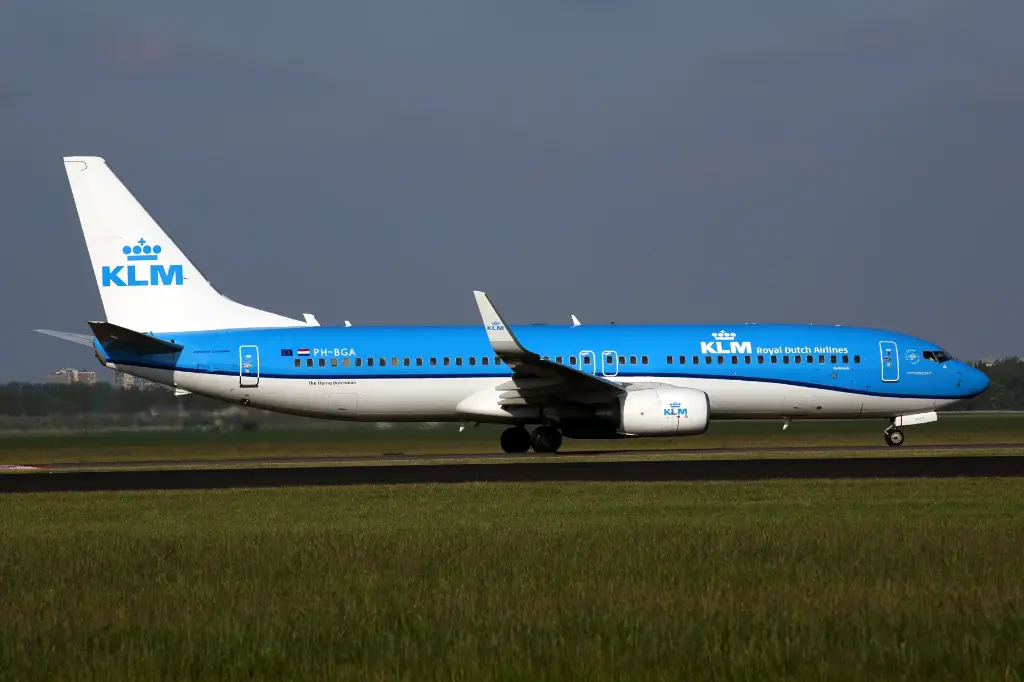
KLM Royal Dutch Airlines, the flag carrier of the Netherlands, has long held a strategic advantage in the UK aviation market, but its current scale of operations has reached unprecedented levels. With up to 71 daily departures from 18 UK airports, KLM’s expansive presence now cements it as the third-largest foreign airline operating in the United Kingdom. At the heart of its operation lies the vital Schiphol hub in Amsterdam, serving as a launchpad for both business and leisure travelers heading across Europe, North America, Asia, and beyond.
Unlike its national counterpart British Airways, which concentrates the bulk of its traffic through London, KLM has built a diverse and regionally embedded footprint across the British Isles. Only 22% of its UK flights originate from London airports—demonstrating a firm commitment to regional accessibility and a powerful alternative to London-centric air travel.
KLM’s Dominance in December: Record-Breaking Capacity and Coverage
The December 2025 schedule provides a powerful snapshot of KLM’s remarkable growth. The Dutch flag carrier will operate more flights in December than in any other December on record, capturing 61% of the UK–Amsterdam market and nearly 5% of the UK’s entire short-haul international segment. Such volume isn’t just impressive—it’s transformative for UK connectivity.
This year-over-year growth is particularly striking given the concurrent increase in average aircraft seat capacity—from 125 to 130. While a modest 1% increase in departures from December 2024 might seem incremental, this growth is amplified by the deployment of larger aircraft, especially the 227-seat Airbus A321neo, which is now being used on high-demand routes including Edinburgh, Manchester, and London Heathrow.
Crucially, KLM Cityhopper, the regional subsidiary, remains the workhorse of the network. Nearly 70% of KLM’s UK flights are still operated by this unit, despite the growing use of larger aircraft and a slight year-over-year dip in the share of regional jets.
Exeter and the Rise to 18 UK Airports
One of the key milestones for KLM in 2025 has been the addition of Exeter Airport, bringing the total UK destinations to 18. This new route, inaugurated in March 2025, revives a previously discontinued connection between Devon and Amsterdam—last served in 2020 by the now-defunct Flybe.
Now operating daily, Exeter’s flights are run with the 88-seat Embraer E175, offering critical access to international routes via Schiphol. During peak months, this route also sees upgrades to the 100-seat E190, reflecting seasonal demand-driven fleet flexibility that allows KLM to optimize load factors and yields.
A Closer Look: Flight Volume Across the UK
Between December 14–20, KLM has scheduled 466 UK departures, a 2% year-over-year increase. This week features daily fluctuations, from 56 flights on Sundays to a high of 71 on Tuesdays, Wednesdays, and Thursdays. These numbers reveal both a rhythmic scaling strategy tied to business travel and an effective response to holiday traffic surges.
Leading the charge is London Heathrow, with 53 weekly flights using an array of equipment from E2 jets to the A321neo. This is followed closely by London City (46 flights) and Manchester (41 flights)—with Manchester notably operating non-regional aircraft for 85% of services, highlighting the airport’s premium positioning in KLM’s strategic blueprint.
Other high-frequency destinations include Birmingham, Newcastle, Edinburgh, Aberdeen, and Bristol, with multiple daily services. Meanwhile, smaller airports like Norwich, Humberside, Teesside, Cardiff, and Southampton maintain critical regional access with one to three daily flights.
Even Inverness and Exeter, at the lower end of the frequency spectrum, are served daily—underscoring KLM’s unwavering commitment to maintaining a truly national network.
Fleet Optimization: Matching Aircraft to Market Dynamics
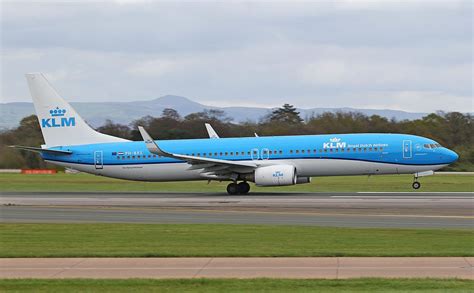
One of the most effective levers in KLM’s success is aircraft utilization strategy. The fleet mix is diverse, ranging from Embraer E175 and E190 regional jets to larger 737-700/800/900s and the game-changing Airbus A321neo.
The A321neo’s influence has grown sharply. This new-generation aircraft—boasting higher fuel efficiency, reduced emissions, and 227 seats—has significantly altered capacity economics on longer regional routes. Its deployment on peak-time services to Heathrow and Edinburgh demonstrates a calibrated balance between yield management and frequency maintenance.
While Heathrow requires high-frequency departures to feed long-haul services via Schiphol, it also presents severe slot constraints, making the A321neo’s larger capacity a crucial solution. Conversely, Manchester and Edinburgh, with more flexible slot environments, lean into higher-capacity flights across wider timebands to absorb demand more efficiently.
Manchester: KLM’s Capacity Crown in the UK
With an average of 186 seats per flight, Manchester emerges as KLM’s most capacious UK airport. Not only does it surpass Heathrow (170) and Edinburgh (179), but 85% of its services use non-regional aircraft, creating a robust and scalable hub in northern England.
This positioning benefits not only O&D traffic but also transfer passengers—leveraging Schiphol’s powerful global reach. The combination of high-frequency service, larger aircraft, and regional diversity makes Manchester a cornerstone of KLM’s UK ambitions.
Looking Ahead: Sustainability, Connectivity, and Market Leadership
As the European aviation sector transitions toward sustainability, KLM’s investment in modern, fuel-efficient aircraft like the A321neo and E2 Embraer jets signals a forward-thinking approach. By right-sizing capacity, improving fuel burn per seat, and optimizing fleet rotation, KLM not only enhances profitability but aligns itself with evolving regulatory and public expectations.
Beyond environmental strategy, network depth and customer accessibility remain paramount. KLM’s ability to link 18 UK airports to the world via a single stop in Amsterdam is not just a commercial strength—it’s a connectivity lifeline for both business communities and underserved regions across the UK.
The airline’s expansive reach, deep scheduling intelligence, and responsive fleet strategy give it a decisive edge in a post-pandemic travel landscape where efficiency, adaptability, and regionalism increasingly dictate success.
In essence, KLM’s 71 daily UK flights are far more than a number—they are the embodiment of an airline that understands the value of strategic regionalism, acts on data-driven capacity planning, and delivers consistent, world-class connectivity across the UK.