
Amsterdam’s Schiphol Airport (AMS) found itself at the epicenter of a global aviation disruption over the weekend of January 2–4, 2026, as snowfall and ice pushed one of Europe’s busiest hubs past its operational limits. According to Flightradar24, Schiphol recorded the highest number of flight disruptions globally during this period, surpassing even Caribbean airports affected by regional airspace shutdowns.
Severe Winter Storm Cripples a Major European Hub
A prolonged winter storm swept across the Netherlands, bringing heavy snowfall and treacherous ice that paralyzed both airside and landside operations at Schiphol. The Dutch Meteorological Institute issued a code yellow weather warning, urging caution across the region. Snowfall began Friday and continued through Sunday, wreaking havoc on flight schedules and airport ground logistics.
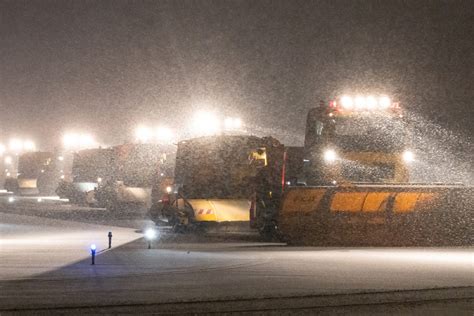
The severity of the weather, compounded by limited runway availability and intense de-icing demands, forced Schiphol into a state of operational bottleneck. Hundreds of flight cancellations and delays reverberated across KLM’s extensive network, with the airline confirming that over 120 additional flights were cancelled for Monday, January 5.
KLM stated:
“The persistent winter weather has disrupted air traffic at Schiphol Airport. Since last Friday, KLM has unfortunately had to cancel hundreds of flights to and from Schiphol. The winter weather is set to continue over the coming days. As a result, 124 flights to and from Schiphol have been canceled for Monday, January 5.”
Ground Operations at Breaking Point
By Sunday evening, Schiphol had outpaced every other international airport in terms of cancellations, diversions, and delays. The impact was particularly severe because AMS functions as a hub-and-spoke model, heavily reliant on short-haul connections feeding into long-haul departures.
De-icing delays, snow-covered taxiways, and aircraft repositioning issues caused ripple effects that spread far beyond the Netherlands. Even during lulls in snowfall, low temperatures meant ice remained on runways and aircraft surfaces, necessitating repeated rounds of de-icing that slowed operations to a crawl.
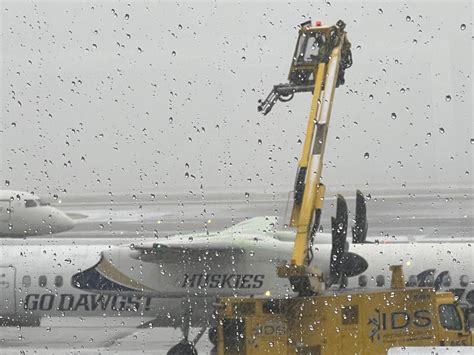
KLM’s crews and aircraft became misaligned across Europe, complicating recovery efforts. Passengers, meanwhile, faced the chaos of long rebooking queues, missed connections, and constant schedule changes, with little clarity on when operations would normalize.
A Network Under Strain: From Feeder Flights to Long-Haul Disruptions
The structure of Schiphol’s operations made it especially vulnerable. KLM’s reliance on feeder flights from across Europe meant that delays or cancellations of these services triggered cascading effects on intercontinental routes. With minimal buffer time between arrivals and departures, even a single delayed aircraft could destabilize entire wave patterns of flights.
This operational fragility was compounded by the airport’s limited runway and apron space, which further restricted movement during periods of snow accumulation. The sheer volume of affected passengers, combined with a constrained winter-weather playbook, led to a logistical gridlock that couldn’t be resolved overnight.
Recovery Stalled by Lingering Weather and Displaced Assets
As of Monday morning, January 5, the picture remained bleak. Though snowfall had lessened slightly, freezing temperatures and runway ice continued to hamper a return to full capacity. Aircraft remained scattered across various airports in Europe, and flight crews had surpassed duty time limits, forcing cancellations even when weather marginally improved.
Airlines warned that the operational recovery would take several days, not hours. The backlog of stranded passengers needed to be re-accommodated, aircraft repositioned, and new crew schedules coordinated—all under persistent weather uncertainty.
Airport authorities emphasized flexibility and patience:
“Passengers should build in extra travel time, check their airline’s app or website frequently for updates, and be prepared for further changes. The current situation is fluid, and recovery is contingent on several moving parts aligning.”
Schiphol’s Winter Weaknesses Exposed Again
This weekend’s events have renewed scrutiny over Schiphol’s ability to withstand sustained winter conditions. While snowfall is not uncommon in Northern Europe, the combination of high flight volumes, operational density, and limited resilience made the airport especially vulnerable.
Analysts noted that Schiphol, like many major hubs, lacks the infrastructure redundancies found in more weather-hardened facilities. A small reduction in runway availability or ground operations capacity can lead to compounding failures across the system, especially when operating near maximum throughput.
The result is a network effect that doesn’t just delay travelers in Amsterdam—but also those connecting from Tokyo, Nairobi, New York, or Barcelona.
Airlines and Airports Rethink Winter Contingency Plans
KLM and other carriers operating at Schiphol are expected to conduct post-mortem analyses of the disruption, reviewing weather forecasting integration, de-icing coordination, and aircraft routing protocols. For KLM in particular, maintaining schedule integrity at its home hub is not only a matter of efficiency but also of brand reliability.
Meanwhile, airport operators must confront difficult questions about climate resilience, especially as weather patterns become more erratic. Enhancing snow-clearing capabilities, streamlining aircraft turnaround under adverse conditions, and expanding overnight parking capacity may all be under review.
Global Impact: When One Hub Falters, Others Feel It
Despite a simultaneous airspace closure across the Caribbean due to security concerns, Amsterdam Schiphol remained the most disrupted airport globally—a testament to how a snowstorm in one key location can have outsize effects on international travel.
Passengers across the world felt the ripple: missed connections, lost baggage, altered itineraries, and in some cases, involuntary overnight stays. As the aviation sector continues to rely heavily on tight scheduling and interconnected hubs, disruptions at a single node can destabilize broader networks.
Looking Ahead: A Cautious Recovery in Progress
By Tuesday, signs of stabilization were cautiously emerging. Rebookings were progressing, aircraft were gradually being repositioned, and weather forecasts showed a potential easing of sub-zero conditions. However, full recovery remained days away, with some travelers rebooked onto flights as late as Thursday or Friday.
Schiphol’s weekend ordeal serves as a stark reminder of aviation’s vulnerability to extreme weather, even in well-prepared, technologically advanced hubs. The incident has prompted renewed calls for robust climate contingency planning, not just at Schiphol but across the global aviation ecosystem.
The question isn’t whether another storm will come—but whether airports and airlines will be better equipped when it does.