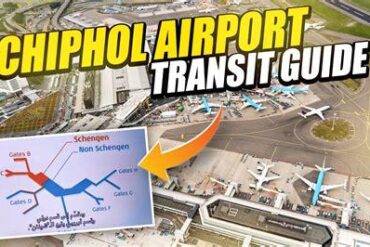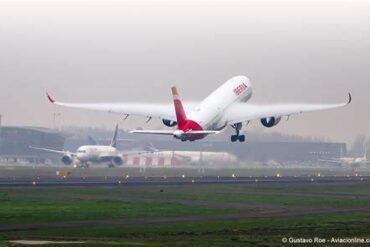
Amsterdam Schiphol Airport, one of Europe’s most vital aviation hubs, has announced a monumental $11 billion expansion and modernization plan set to unfold over the next ten years. Under the stewardship of Royal Schiphol Group, this bold initiative aims not only to expand capacity but also to elevate environmental responsibility, worker welfare, and passenger experience as part of its long-term Schiphol 2050 Master Plan.
A Vision for Global Competitiveness and Passenger-Centric Growth
At the heart of this decade-long blueprint is the development of a New Terminal South, a sprawling, light-filled complex that will preserve Schiphol’s signature one-terminal design. While the complete terminal won’t be operational within the ten-year window, its phased construction marks a strategic approach to growing capacity without compromising operational efficiency. The terminal is engineered for space, serenity, and sustainability, ensuring future-proof infrastructure while enhancing traveler comfort.
Adjacent to this, significant investments will be directed toward renovating existing piers — including Piers B, C, D, and H/M. These upgrades will bring aging facilities in line with modern standards, addressing both aesthetic and environmental goals. The transformation of these piers is set to increase gate capacity for larger aircraft, reduce turnaround times, and improve overall passenger flow across the airport.
Infrastructure Revolution Below Ground and Beyond
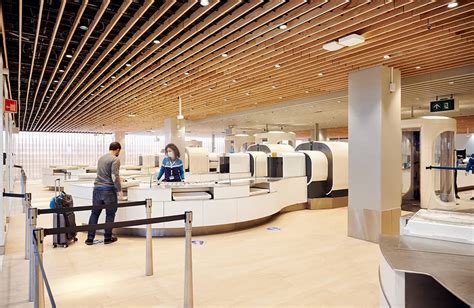
Among the most cutting-edge aspects of the plan is a revamp of Schiphol’s baggage systems, a known bottleneck in the airport’s operations. The master plan includes underground, high-speed baggage transport mechanisms supported by robotics, designed to optimize throughput while improving worker conditions by reducing physical strain.
The airport is also exploring an extension of its public transport connectivity, proposing a new Schiphol–Hoofddorp metro line and enhancements to surrounding roadways. This push toward multimodal access is not just about efficiency; it’s part of a larger commitment to reduce ground traffic emissions and shift more travelers to sustainable transport options.
Sustainability: The Cornerstone of the 2050 Vision
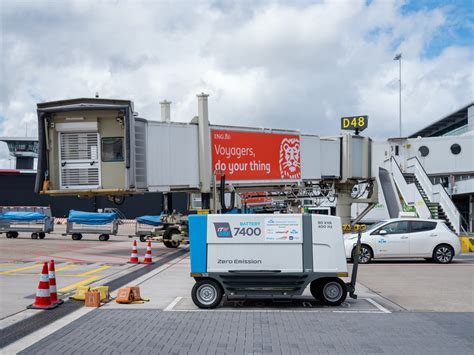
Sustainability is deeply embedded in every component of the Schiphol 2050 vision. The airport has pledged a 90% reduction in ground-level emissions by 2030 relative to 2019 levels. This is being tackled through a fleet transformation to electric ground vehicles, elimination of gas-powered operations, and increased use of renewable energy sources.
Aircraft emissions, meanwhile, are targeted to return to 2005 levels by 2030. Central to this goal is the adoption of Sustainable Aviation Fuel (SAF), a technology that remains underutilized but is seen as essential for decarbonizing air travel. However, reaching this goal will be an uphill climb. Regulatory, logistical, and supply chain barriers still inhibit large-scale SAF deployment, a challenge that Schiphol must confront head-on.
Adding further complexity to this green transition are operational restrictions being considered or imposed, such as flight movement caps aimed at reducing noise pollution and carbon output. In fact, the Dutch government’s proposal to reduce annual flights from 500,000 to 478,000 has drawn strong reactions from airlines — including legal threats from major US carriers — but is emblematic of Schiphol’s determination to rebalance aviation with environmental and community concerns.
Strategic Diversification Beyond the Netherlands
Schiphol’s ambitions stretch well beyond its namesake airport. The Royal Schiphol Group intends to inject hundreds of millions into smaller regional and international airports, including facilities in the Netherlands Antilles. This diversification strategy aims to mitigate risk, expand its global footprint, and ensure financial resilience amid a volatile global travel industry.
These satellite investments will also serve as testbeds for innovation, with technology, staffing models, and sustainability measures likely to be piloted in smaller, more agile environments before scaling up to Amsterdam.
A Renewed Bid for Top-Tier Status in Europe
Despite handling 66.8 million passengers in 2024 and boasting over 40 million scheduled departure seats, Amsterdam Schiphol currently ranks fourth among European airports, trailing behind London Heathrow, Istanbul, and Paris Charles de Gaulle. CEO Pieter van Oord has made it clear: returning to the top three is a central ambition driving the airport’s transformation.
To that end, the airport has outlined six strategic pillars to guide this evolution:
- Enhancing airport quality to compete globally
- Balancing operations with environmental and social needs
- Improving working conditions through automation and redesign
- Expanding the role of regional airports
- Boosting international cooperation
- Ensuring financial robustness even amid rising airport fees

Rising Costs, Rising Expectations
The expansion won’t come cheap. The initial €10 billion ($11.5 billion) earmarked is only a portion of the total cost expected by 2050. To finance this, Schiphol will rely primarily on airport fees, which are set to increase by 37% over the next three years. While such a hike could meet resistance from airlines and travelers alike, it’s a calculated move to maintain long-term capital independence and invest consistently without over-leveraging.
In tandem, the airport is consulting with airlines and stakeholders on the most cost-efficient and mutually beneficial ways to phase its investments. This collaborative ethos, if sustained, will be key to navigating the turbulence of infrastructural overhaul.
Conclusion: Schiphol’s Bet on the Future
Amsterdam Schiphol Airport’s decade-long, $11 billion transformation plan is more than an expansion — it’s a redefinition of what a 21st-century international airport can be. By doubling down on innovation, sustainability, and human-centric design, Schiphol is positioning itself not just to reclaim past glory but to shape the future of global aviation.
If it succeeds, the project may become a blueprint for other major airports seeking to balance growth with responsibility, and efficiency with empathy. The Netherlands — a small country with big ambitions — may soon have the world’s most forward-thinking airport to show for it.