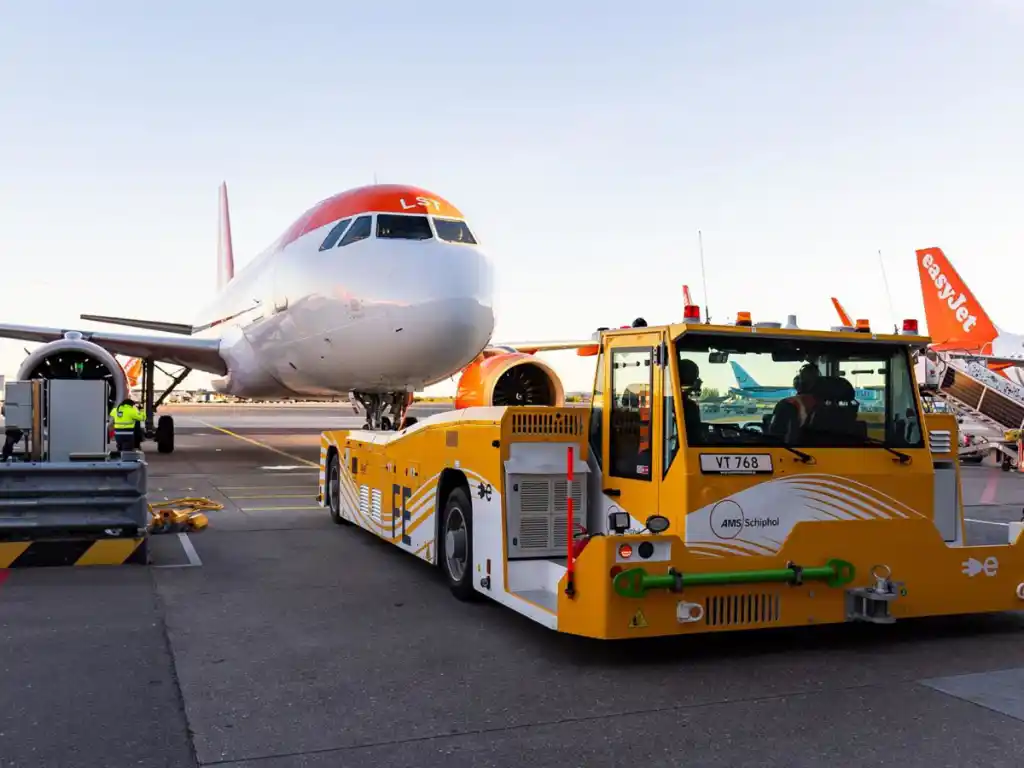
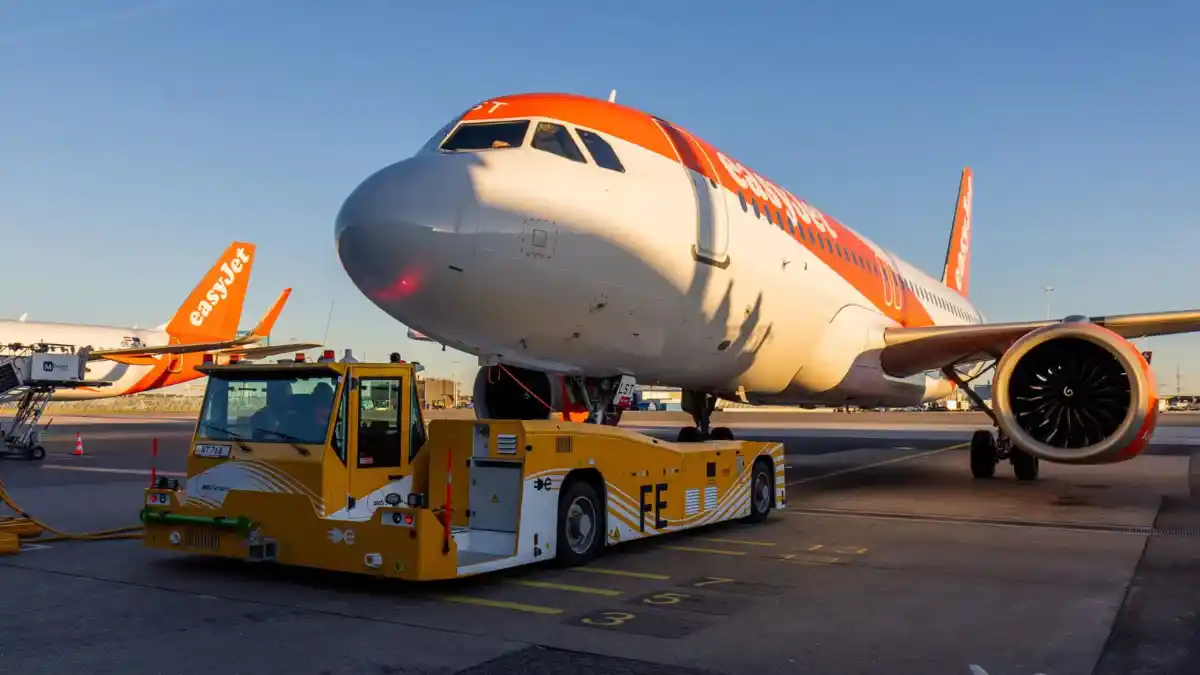
Amsterdam Schiphol Airport and easyJet have taken a major step toward cleaner aviation operations with the launch of autonomous aircraft taxiing technology designed to dramatically reduce fuel burn on the ground. The initiative introduces TaxiBot, a semi-robotic towing vehicle that allows aircraft to move between terminal gates and runways without using their main jet engines, cutting emissions during one of the most inefficient phases of flight.
The first official easyJet commercial operation using TaxiBot took place on April 30, marking a milestone not only for the airline but also for Europe’s broader aviation sustainability strategy. Schiphol, one of Europe’s busiest and most operationally complex airports, is now positioning itself at the center of a new generation of low-emission ground handling systems that could soon become standard across major international hubs.
Aircraft taxiing has long been overlooked in discussions about aviation emissions, yet it represents a surprisingly costly and carbon-intensive process. At airports with sprawling layouts like Schiphol, aircraft may spend significant periods moving slowly between terminals and runways while burning fuel inefficiently. For short-haul airlines operating hundreds of daily sectors, those wasted minutes quickly accumulate into substantial environmental and financial costs.
The TaxiBot program addresses this challenge directly by replacing engine-powered taxiing with tug-assisted movement controlled entirely by pilots from inside the cockpit.
Schiphol’s Long Taxi Routes Make It an Ideal Testing Ground
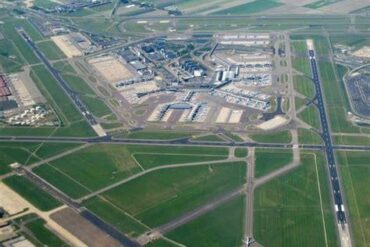
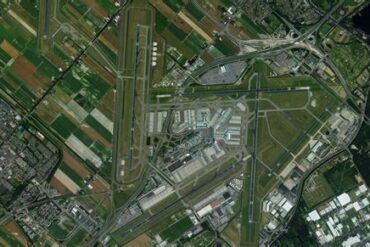
Amsterdam Schiphol Airport presents a uniquely valuable environment for testing advanced taxiing systems because of its extensive taxiway network and runway configuration. Unlike smaller airports where aircraft may reach the runway within minutes, Schiphol often requires aircraft to travel considerable distances before departure.
These lengthy taxi routes create a major operational burden. Jet engines are engineered for high-altitude cruising and takeoff thrust, not low-speed ground movement. When aircraft taxi under their own power, engines consume disproportionate amounts of fuel relative to the distance traveled. The result is unnecessary carbon dioxide emissions, increased nitrogen oxide output, elevated noise pollution, and avoidable operating expenses.
According to airport estimates, TaxiBot technology could reduce taxiing fuel consumption by as much as 65% on specific routes at Schiphol. easyJet projects that every TaxiBot-assisted departure could save approximately 95 kilograms of fuel while preventing nearly 300 kilograms of carbon dioxide emissions from entering the atmosphere.
For an airline operating thousands of annual short-haul departures, those savings are far from minor. Over time, the cumulative reductions could translate into substantial environmental gains and millions in fuel cost savings.
Schiphol executives have described the deployment as one of the most realistic near-term sustainability measures currently available to commercial aviation because it does not require waiting for futuristic aircraft technologies or entirely new airport infrastructure.
How TaxiBot Technology Works During Aircraft Movements
TaxiBot differs significantly from traditional airport towing vehicles. Conventional tugs typically push aircraft away from the gate before disconnecting almost immediately. TaxiBot, however, remains attached throughout the entire taxi journey until the aircraft reaches the runway holding point.
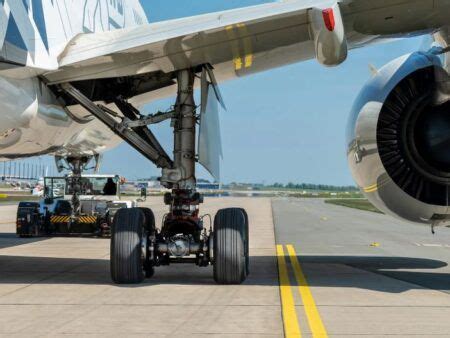
After connecting to the aircraft’s nose wheel, the vehicle lifts the wheel onto a rotating platform that allows pilots to maintain full directional control directly from the cockpit. Pilots continue steering, braking, and communicating with air traffic control exactly as they would during standard taxi operations, while the tug itself supplies the movement power.
This arrangement creates a seamless operational transition without requiring major procedural changes for flight crews. Once the aircraft arrives near the runway, the TaxiBot disconnects, and pilots start the main engines shortly before takeoff.
The current generation of TaxiBot systems operates using hybrid-electric technology, though fully electric variants are expected to enter wider service beginning in 2026 as airports modernize ground fleets and charging infrastructure expands.
The project itself represents a collaborative effort involving Airbus, Menzies Aviation, Schiphol Airport, and the European SESAR HERON initiative. Schiphol has stated that it is the first airport in Europe to deploy electric TaxiBot systems specifically for Airbus passenger aircraft operations, giving the airport an influential role in shaping future low-emission taxiing standards.
Why Airlines Are Watching the Schiphol Deployment Closely
The aviation industry’s attention toward Schiphol’s TaxiBot rollout extends far beyond the Netherlands. Airlines globally are searching for practical decarbonization strategies that can be implemented immediately using existing fleets rather than waiting decades for hydrogen aircraft or fully sustainable propulsion systems.
Ground operations have become an increasingly important focus because they offer relatively achievable opportunities for emissions reduction. While sustainable aviation fuel continues to face supply limitations and next-generation aircraft remain years away, automated taxiing technology can deliver measurable benefits today.
For low-cost carriers such as easyJet, the economics are especially compelling. Short-haul operations involve frequent departures, repeated taxi cycles, and tight turnaround schedules. Even modest reductions in fuel use per flight can produce substantial annual savings across an entire network.
At congested airports, the technology may also improve operational resilience. Reduced engine usage can decrease wear on aircraft systems, potentially lowering maintenance costs while minimizing delays associated with prolonged taxi queues.
Noise reduction represents another increasingly valuable advantage. Communities surrounding major airports have intensified pressure on regulators and airport authorities to address environmental and quality-of-life concerns. TaxiBot-assisted movements generate significantly less engine noise during ground operations, offering airports a practical tool for mitigating local complaints while supporting future growth.
easyJet Expands Sustainability Measures Beyond Sustainable Fuel
easyJet’s involvement in the Schiphol initiative aligns with the airline’s broader strategy of pursuing incremental yet scalable sustainability improvements across its network. Unlike some long-haul carriers focusing primarily on future propulsion technologies, easyJet has concentrated heavily on operational efficiency measures capable of producing immediate impact.
The airline has already invested in fleet modernization, lighter cabin equipment, optimized flight planning systems, and improved air traffic management practices. TaxiBot now adds another layer to that efficiency-focused strategy.
Four easyJet Airbus aircraft are currently being adapted for TaxiBot operations during the initial deployment phase. If the program proves operationally successful, expansion across additional aircraft and airports appears highly likely.
Industry analysts believe semi-autonomous taxiing systems could become commonplace at major airports within the next decade, especially as environmental regulations tighten and fuel costs remain volatile. Airports handling dense short-haul traffic are particularly well positioned to benefit because they experience the highest frequency of repetitive taxi movements.
The Schiphol deployment may ultimately serve as a blueprint for other European hubs seeking realistic emission reductions without waiting for transformative breakthroughs in aircraft design.
A Practical Decarbonization Strategy for Modern Aviation
The significance of easyJet’s TaxiBot launch lies not in futuristic marketing language but in its practicality. Aviation’s path toward sustainability increasingly depends on technologies that can be implemented incrementally while broader long-term solutions continue developing.
TaxiBot offers exactly that kind of near-term operational improvement. It reduces emissions immediately, requires limited infrastructure disruption, integrates with existing aircraft fleets, and delivers measurable cost savings alongside environmental benefits.
For airports under mounting regulatory and public pressure to cut emissions, the system provides a rare combination of scalability and realism. Rather than promising distant transformation, it addresses a specific inefficiency that has existed in commercial aviation for decades.
As Schiphol and easyJet expand the program, the success of autonomous taxiing could reshape how airports worldwide approach ground operations. What was once viewed as a routine and unavoidable part of flying may soon become one of aviation’s most important opportunities for immediate carbon reduction.