Amsterdam Schiphol Airport has always thrived on contradiction. It is compact by global hub standards yet relentlessly ambitious, a place where tight runway geometry meets globe-spanning reach. Early 2026 tested that reputation with winter weather snarls and mass cancellations, but the disruption only sharpened the contrast between operational fragility and strategic power. Schiphol remains one of Europe’s most important intercontinental gateways, funneling passengers from a dense continental network onto flights that stretch across hemispheres and time zones.
Those distances are not marketing abstractions. Current scheduling data reveals a handful of routes exceeding 7,000 miles, flights that transform endurance into a competitive asset. These services are not merely long; they are logistical marathons, blending aircraft performance, crew planning, and alliance connectivity into single, meticulously engineered journeys. At Schiphol, long-haul length is not a vanity metric—it is a statement of relevance.
The gravity of these routes lies in how they bind continents together through a single European node. Asia, South America, and Southeast Asia converge at Schiphol through non-stop and one-stop services that rival the longest commercial links anywhere. Each flight tells a story about airline strategy, fleet choices, and the enduring pull of Amsterdam as a transfer hub.

Schiphol’s Role as a Long-Haul Pivot in a Short-Haul World
Schiphol’s geography places it within easy reach of nearly every major European city, a fact that historically favored short-haul dominance. Yet that same geography also makes it a perfect springboard for intercontinental routes. Passengers from Scandinavia, the Baltics, and secondary European cities can funnel through Amsterdam with minimal backtracking, filling widebody cabins bound for far-flung destinations.
What distinguishes Schiphol’s longest routes is their blend of efficiency and ambition. Rather than chasing distance records for spectacle, airlines deploy ultra-long sectors where demand, alliances, and aircraft economics intersect. The result is a curated portfolio of marathon flights that quietly underpin the airport’s global stature.
Garuda Indonesia’s Non-Stop Jakarta Marathon
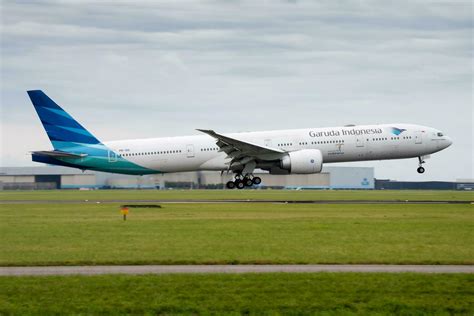
Among Schiphol’s longest non-stop services, Garuda Indonesia’s Jakarta–Amsterdam route stands out for its purity. Covering approximately 7,054 miles, the flight links Soekarno-Hatta International Airport directly with the Netherlands, eliminating intermediate stops and compressing Southeast Asia and Western Europe into a single airborne span.
Operated with the Boeing 777-300ER, the service showcases the aircraft’s long-range credentials. Early 2026 schedules feature a high-density configuration optimized for capacity, before transitioning to a more premium-heavy layout later in the month. This shift reflects Garuda’s dual mandate: serve diaspora and leisure demand while courting premium travelers who value non-stop convenience over segmented journeys.
The route’s deeper significance lies in alliance strategy. Amsterdam’s SkyTeam ecosystem allows Garuda to tap into onward European connections without duplicating infrastructure. The flight becomes more than a city pair; it is a bridge into a continental network that multiplies its value well beyond the 16-hour airborne stretch.
KLM’s One-Stop Asian Arteries via Kuala Lumpur and Singapore
KLM approaches the 7,000-mile threshold differently, favoring one-stop ultra-long routes that preserve flexibility while extending reach. Its Amsterdam–Jakarta service via Kuala Lumpur exemplifies this philosophy. Spanning over 7,000 miles in total, the route divides the journey into two operationally efficient legs, balancing crew duty limits with aircraft utilization.
The Boeing 787-9 Dreamliner anchors this service, bringing lower fuel burn and passenger-friendly cabin pressurization to a journey exceeding fourteen hours of combined flight time. The aircraft’s three-class layout underscores KLM’s focus on diversified demand, from business travelers to long-haul economy passengers seeking seamless connectivity.
A similar logic applies to KLM’s Amsterdam–Denpasar route via Singapore, which stretches to roughly 7,553 miles. This daily service binds Europe to Indonesia’s resort heartland, leveraging Singapore Changi’s role as a Southeast Asian crossroads. The route’s endurance is matched by its commercial appeal, capturing both point-to-point traffic and transfer flows that would otherwise fragment across multiple hubs.

South America in a Single Sweep: Buenos Aires to Santiago
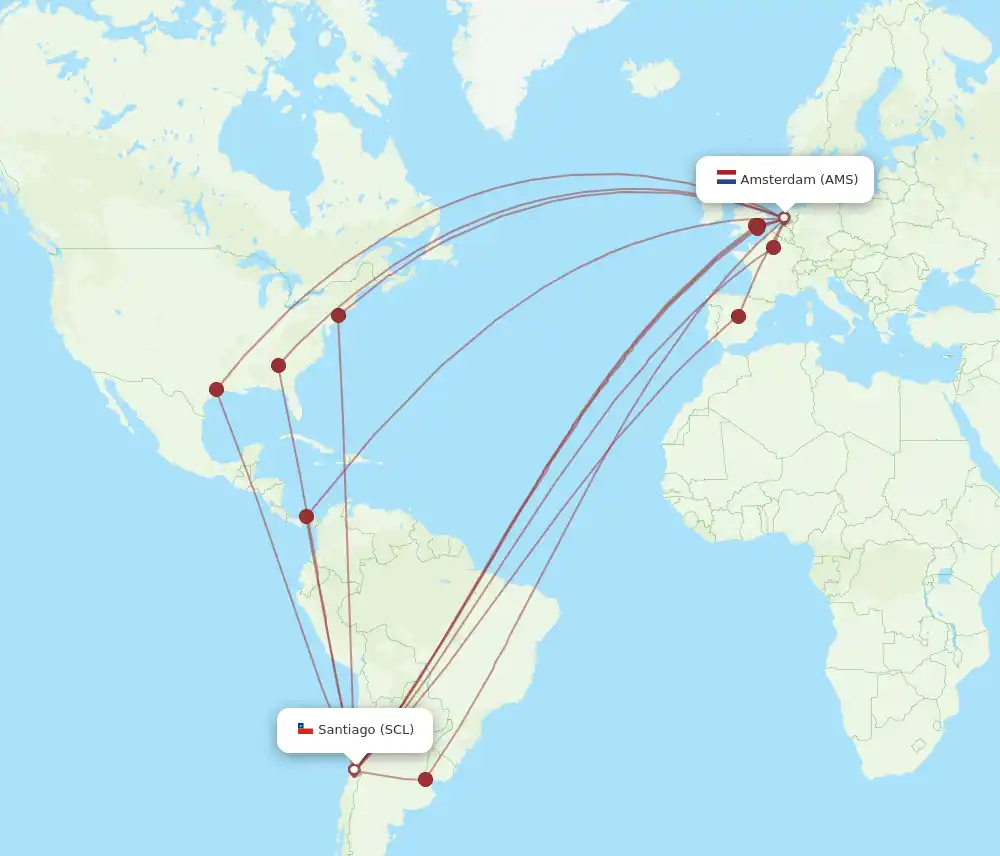
Asia may dominate Schiphol’s longest routes, but South America adds a compelling counterpoint. KLM’s service to Santiago de Chile via Buenos Aires covers approximately 7,445 miles, stitching together two major South American gateways in one continuous itinerary from Amsterdam.
Operated by the Boeing 777-200ER, the route unfolds as an overnight transatlantic crossing followed by a short intra-continental hop. The structure maximizes aircraft productivity while offering passengers a near-seamless journey to Chile’s capital. For Schiphol, the service reinforces its role as a European launchpad to the Southern Cone, a market traditionally dominated by Iberian hubs.
This route also highlights how distance alone does not define complexity. Crossing the equator, navigating seasonal winds, and coordinating daylight arrivals add layers of operational nuance that elevate these flights from long to genuinely demanding.
Endurance as Strategy, Not Spectacle
Schiphol’s 7,000-mile-plus routes reveal a quieter truth about modern aviation. Ultra-long-haul flying is no longer about records; it is about precision endurance. Aircraft are selected not just for range, but for how gracefully they sustain comfort, efficiency, and reliability across extreme distances. Airlines deploy these routes where alliances, demand density, and hub economics align.
In a year that began with disruption, these marathon flights reaffirm Schiphol’s enduring relevance. They demonstrate how a European hub, compact in footprint yet expansive in ambition, continues to project influence across oceans and continents. Distance, at Schiphol, is not an obstacle—it is a canvas.