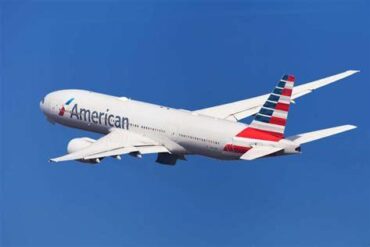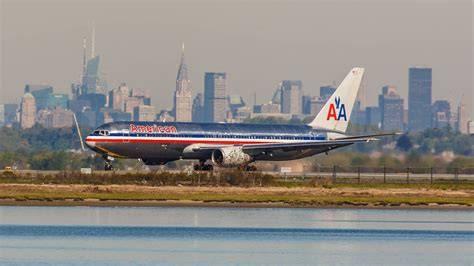
For most travelers, a 190-mile flight from London Heathrow Airport (LHR) to Brussels Airport (BRU) would seem almost unnecessary. The two cities are connected by high-speed rail, while short-haul airlines have long used smaller aircraft to link the United Kingdom and Belgium. Yet, for several months between 2009 and 2010, American Airlines operated this unusually short international sector using a widebody Boeing 767-300ER.
The route was not a conventional point-to-point service. Instead, the London–Brussels sector was the second leg of a longer Boston–London–Brussels itinerary. Passengers boarding in Boston could therefore continue to Brussels after stopping at Heathrow, creating an unusual fifth-freedom operation for the US carrier. The service also demonstrated how airlines can use seemingly strange routes to solve much bigger strategic problems.
The flights were scheduled during the quieter winter season, when demand at Heathrow traditionally softened. American Airlines had a valuable asset to protect: its highly constrained Heathrow takeoff and landing slots. Rather than leaving aircraft and slots underutilized, the airline experimented with extending its Boston service onward to Brussels. The result was a fascinating piece of airline network planning that lasted only a few months.
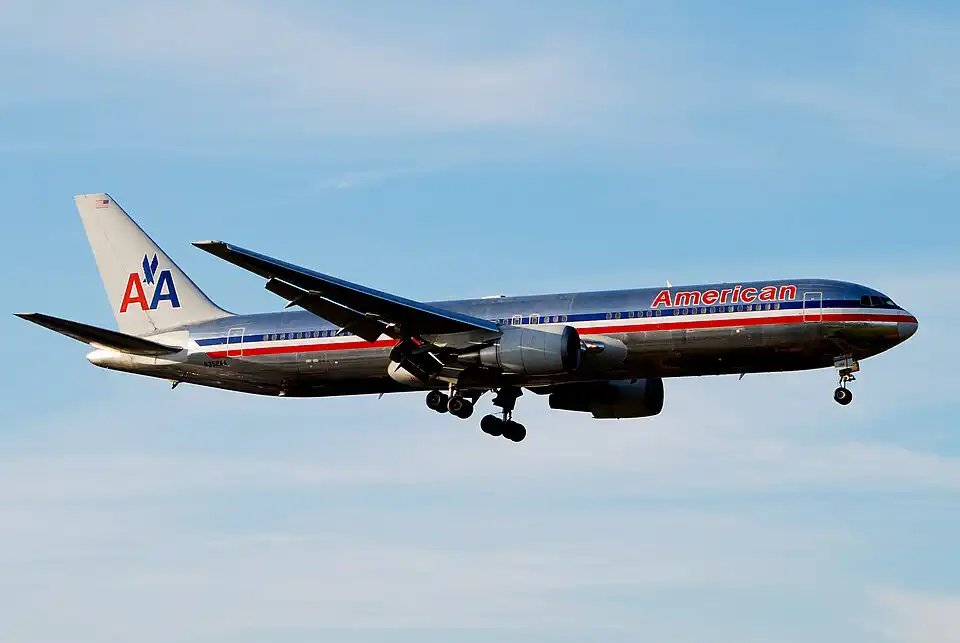
The 190-Mile American Airlines Heathrow–Brussels Flight
According to historical scheduling information, American Airlines operated 91 rotations between Heathrow and Brussels from November 2009 through March 2010. The service used the 225-seat Boeing 767-300ER, a substantial aircraft for such a short European sector. The 767 was primarily designed for medium- and long-haul missions, making its appearance on a roughly 190-mile flight particularly striking.
The flights originated at Boston Logan International Airport (BOS) before continuing to London and then Brussels. This meant that the short Heathrow–Brussels segment was not simply an isolated shuttle. It was effectively an extension of an existing transatlantic operation, allowing American to keep its aircraft moving while adding another destination to the itinerary.
Scheduling was far from consistent throughout the period. Historical data indicates that American operated as few as two flights per week during November and February, while January saw the frequency rise to as many as six weekly services. That variation reflected the seasonal nature of the experiment and the carrier’s broader objective at Heathrow rather than a sustained attempt to dominate the London–Brussels market.
Why American Airlines Needed the Route
The key to understanding this unusual service is Heathrow slot retention. London Heathrow is one of the world’s most heavily constrained airports, and obtaining desirable departure and arrival slots can be extremely difficult. For airlines holding valuable slots, simply not using them can carry commercial consequences.
Winter can make that challenge more complicated. Passenger demand traditionally declines during parts of the season, particularly compared with the busy summer period. Operating a long-haul flight with weaker demand can be unattractive, but abandoning a valuable Heathrow slot is not necessarily a better option.
American’s solution was clever. By continuing the Boston–London flight to Brussels, the airline could keep its Heathrow operation active while generating additional revenue from another market. The fifth-freedom flight also allowed passengers to travel between London and Brussels without having to begin or end their journey in the United States.
A Widebody on a Route Better Suited to Rail
From a passenger perspective, the service was unusual for another reason. The London–Brussels market already had a powerful alternative in Eurostar, whose high-speed trains connect the two cities through the Channel Tunnel. Conventional short-haul aircraft also offered frequent service, generally with smaller narrowbody jets better suited to such a short stage length.
American’s Boeing 767 therefore looked oversized for the job. The aircraft’s economics were designed around much longer flights, where its range and capacity could be used effectively. On a flight lasting only a fraction of the time required for a transatlantic crossing, those advantages largely disappeared.
Yet the aircraft was already committed to the Boston–London operation. Continuing onward to Brussels was therefore a different economic proposition from introducing a dedicated aircraft solely for the Brussels market. The additional sector could make better use of an aircraft already positioned at Heathrow while supporting the airline’s strategic requirements.
United Airlines Tried the Same Heathrow Strategy
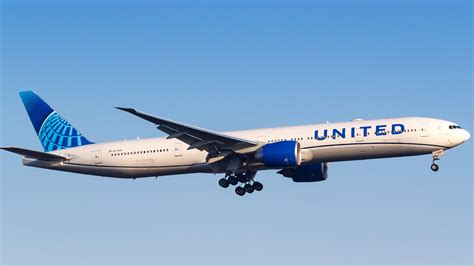
American Airlines was not alone in seeing value in this unusual approach. United Airlines also operated fifth-freedom flights between Heathrow and Brussels during roughly the same period.
United’s service formed part of a Chicago O’Hare–London–Brussels routing and ran more or less daily from late October 2009 until late March 2010. Historical schedules listed approximately 148 services during the period, making United’s experiment even larger than American’s.
Most United flights used Boeing 777 aircraft, although three November rotations were operated by a smaller Boeing 767-300ER configured with 183 seats. The parallel operations were significant because they showed that the idea was not simply an eccentric scheduling decision by one airline. Two major US carriers were responding to the same underlying Heathrow slot constraints.
Why American Airlines Abandoned Brussels
Despite the novelty of the operation, American Airlines did not keep the Heathrow–Brussels route permanently. The flights ended in late March 2010, coinciding with the seasonal schedule change. The carrier subsequently never restored the fifth-freedom service.
American’s broader Brussels presence also disappeared over the following years. By September 2012, the airline announced plans to end its New York-JFK–Brussels service, having already discontinued its Chicago operation. The carrier cited route performance, market forecasts, trends, and the future outlook when explaining its decision.
The disappearance of the Heathrow–Brussels experiment therefore makes sense in retrospect. It was less about building a lasting London–Belgium network and more about finding a temporary use for scarce Heathrow capacity during a difficult seasonal period.
What Happened to US–Brussels Flights?
The transatlantic market between the United States and Brussels has since become concentrated among a small number of operators. In 2026, United Airlines remains the largest US carrier serving Brussels, with flights from Chicago, Newark, and Washington, DC. Brussels Airlines also maintains substantial service to the United States, while Delta Air Lines operates flights from Atlanta and a limited New York-JFK service.
That makes American’s old Heathrow operation even more unusual today. It was never simply a story about flying between two nearby European capitals. The 190-mile American Airlines Heathrow–Brussels route was a temporary network-planning solution built around one of aviation’s most valuable commodities: a Heathrow slot.
For travelers, it offered an intriguing way to cross the Channel aboard a Boeing 767. For American Airlines, however, the real destination was strategic flexibility. The short flight helped turn a potentially underused Heathrow position into an operating asset during the winter months. It may have lasted only from November 2009 to March 2010, but it remains one of the more curious examples of how airlines can make a seemingly irrational route serve a very rational purpose.