For decades, travelers passing through Las Vegas have unknowingly shared airspace with one of the most mysterious airlines in the United States. Its aircraft carry no recognizable branding. Its schedules are absent from airport departure boards. Its passengers never post vacation selfies from the destination. Yet this shadowy operation quietly conducts nearly 190 flights every week, transporting thousands of highly cleared workers into the heart of America’s most classified military programs.
The airline is known publicly as Janet — a name that sounds almost comically ordinary considering its extraordinary role in the national security apparatus of the United States. Operating primarily from a secluded terminal at Harry Reid International Airport in Las Vegas, Janet functions as a daily airborne commuter network for military personnel, engineers, intelligence specialists, aerospace contractors, and support staff working at facilities including Area 51, the Tonopah Test Range, and other deeply restricted installations hidden inside the Nevada desert.
Unlike commercial airlines competing for customers and visibility, Janet exists to do the opposite. Its purpose is concealment, reliability, and operational discretion. Every aspect of the airline — from the stripped-down paint scheme on its Boeing 737s to the intense background investigations conducted on crew members — is designed around one objective: moving sensitive personnel without attracting attention.
The result is perhaps the strangest airline operation in modern aviation: a fully functioning commuter carrier that officially behaves as though it barely exists at all.
The Cold War Origins Of America’s Most Secret Airline
Janet’s roots trace back to the height of the Cold War, when the United States accelerated development of advanced reconnaissance aircraft capable of penetrating Soviet airspace. In the early 1970s, military planners faced a surprisingly mundane problem. The nation’s most secret aerospace facilities were located in extremely remote areas of Nevada, far from major cities or military housing infrastructure. Thousands of scientists, engineers, and technicians needed reliable transportation into locations that could not openly acknowledge their existence.
The solution was the creation of a discreet air shuttle operation connecting Las Vegas to classified military installations.
The earliest version of the airline began operations in 1972 using a Douglas DC-6 operated by defense contractor EG&G, a company heavily involved in nuclear testing and black-project logistics. Flights carried workers from Las Vegas northward into the Nevada Test and Training Range, where experimental aircraft programs operated under layers of secrecy.
At the center of this network sat Groom Lake, more famously known as Area 51.
The base had already become legendary within defense circles due to its association with groundbreaking aircraft such as the Lockheed U-2, the A-12 Oxcart, and later the F-117 Nighthawk stealth fighter. These programs demanded extraordinary secrecy. Employees could not simply drive through civilian highways or travel openly through commercial terminals. Secure air transportation became essential infrastructure for America’s expanding classified aerospace ecosystem.
Over time, the operation expanded steadily. Additional aircraft were added. Security protocols intensified. Contractors changed through corporate mergers and acquisitions. But the airline’s mission remained essentially identical for more than fifty years: quietly move cleared personnel to locations the government prefers not to discuss publicly.
The name “JANET” itself reflects the strange bureaucratic humor often found inside defense programs. Aviation historians and former personnel have suggested the acronym may stand for “Just Another Non-Existent Terminal” or “Joint Air Network for Employee Transportation.” Another persistent story claims the name originated from the wife of a former Area 51 commander. Regardless of which explanation is true, the title perfectly captures the operation’s paradoxical identity — an airline that is simultaneously highly organized and deliberately invisible.
Why Las Vegas Became The Perfect Gateway To Area 51
Las Vegas may seem like an unlikely headquarters for one of America’s most classified aviation systems. The city is globally associated with casinos, tourism, nightlife, and entertainment rather than military secrecy. Yet strategically, it is almost ideal.
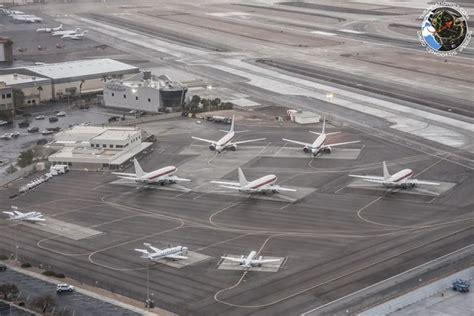
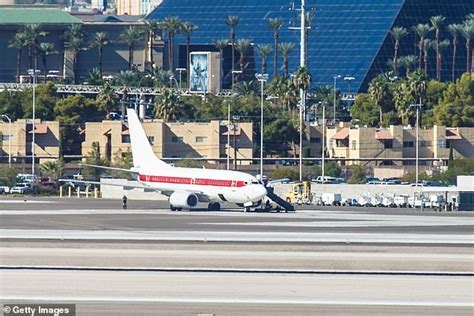
Harry Reid International Airport sits within relatively short flying distance of Nevada’s restricted military zones while also offering the anonymity of a major commercial hub. Millions of tourists move through the airport annually, making Janet aircraft easy to blend into the background. A plain white Boeing 737 parked near private terminals attracts far less attention in Las Vegas than it would at a smaller regional airport.
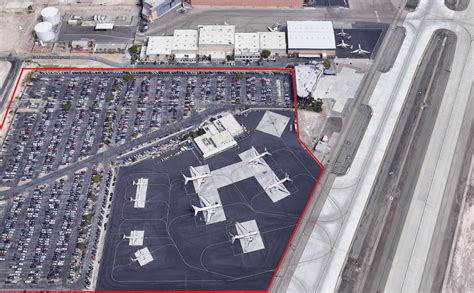
The airline operates from a heavily restricted terminal located on the western edge of the airport. Unlike normal passenger terminals, this facility contains no public ticketing areas, gate displays, or commercial branding. Access is tightly controlled. Employees reportedly park, pass through security screening, and board flights in a process designed for efficiency and compartmentalization.
What makes the terminal particularly revealing is its sheer scale.
Publicly visible satellite imagery and infrastructure analysis indicate the site contains roughly 1,740 parking spaces alongside dozens of motorcycle spots. That level of capacity strongly suggests a massive commuting workforce. This is not a tiny operation serving a handful of elite officers. Janet supports an industrial-scale classified ecosystem involving engineers, maintenance crews, analysts, radar specialists, software developers, security personnel, and aerospace researchers.
The parking infrastructure alone hints at the true size of America’s hidden defense projects.
The Boeing 737 Fleet Built For Discretion
Janet’s aircraft are among the most recognizable unrecognizable planes in aviation.
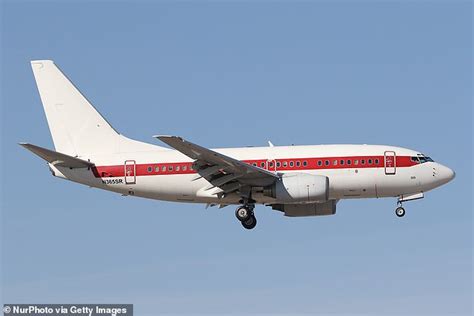
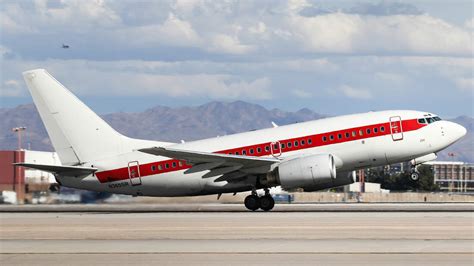
The airline primarily operates a fleet of Boeing 737-600s, the shortest and rarest member of the 737 Next Generation family. Boeing manufactured only 69 examples of the variant, making it something of an aviation oddity even before its association with classified government work.
Several of Janet’s aircraft originally flew for Chinese airlines before eventually entering US government service around 2008 and 2009. After processing through military channels, the aircraft were reassigned to Las Vegas and integrated into the classified shuttle network.
At first glance, the planes appear almost aggressively plain.
Each aircraft features a simple white fuselage with a thin red stripe running along the windows. There are no airline logos, flashy liveries, or promotional graphics. Tail markings are subdued. From a distance, the aircraft resemble generic charter planes rather than government-linked transports supporting some of the nation’s most sensitive programs.
This minimalist appearance is intentional.
The airline’s goal is not complete invisibility — which would be impossible near a busy international airport — but rather controlled anonymity. Janet aircraft are designed to look unremarkable enough that casual observers overlook them entirely.
Alongside the 737 fleet, Janet also operates several Beechcraft King Air B200C turboprops. These smaller aircraft provide flexibility for shorter runways and lower-volume destinations within restricted military zones. While the 737s handle the primary Las Vegas-to-Groom Lake commuter corridors, the King Airs allow for more specialized transportation missions involving smaller groups or secondary facilities.
Together, the fleet creates a layered transportation network capable of supporting both mass commuting operations and discreet personnel movement.
Area 51’s Daily Commute Is More Ordinary Than People Imagine
Popular culture often portrays Area 51 as a mythical fortress occupied only by shadowy figures studying alien spacecraft beneath underground hangars. The reality appears simultaneously less cinematic and more fascinating.
Most people traveling aboard Janet are not mysterious men in black. They are professionals commuting to work.
Some are aerospace engineers developing advanced flight systems. Others manage radar technology, logistics, cybersecurity, propulsion research, weapons testing, or classified software integration. Many likely work on projects so compartmentalized that even coworkers at the same facility do not fully understand each other’s assignments.
Janet essentially functions as a government commuter airline for America’s black-project workforce.
Flights often depart Las Vegas early in the morning and return later in the day, mirroring the rhythms of ordinary corporate commuting. The difference lies in the destination. Instead of office towers or industrial parks, passengers disappear into installations buried deep within restricted airspace where photography, public disclosure, and unauthorized observation are prohibited.
This routine nature is precisely what makes the operation so remarkable. Beneath the mythology surrounding Area 51 lies an enormous logistical machine operating with corporate-like regularity.
The secrecy may be extraordinary, but the transportation system supporting it is built around efficiency and predictability.
Janet’s Radio Callsigns And The Hidden Language Of Classified Aviation
Even Janet’s communications procedures reflect the balance between operational necessity and secrecy.
Aircraft typically use the “Janet” callsign while operating within civilian-controlled airspace around Las Vegas. Aviation monitors have long tracked these transmissions, observing the airline’s regular movements between Harry Reid International Airport and Nevada’s restricted military corridors.
The operation is associated with the ICAO airline code WWW, an unusual designation that appears in aviation records but reveals almost nothing about the organization itself.
Once flights approach deeply restricted airspace near Groom Lake or Tonopah, communications become more opaque. Aviation enthusiasts and radio observers have reported apparent changes in procedures and identifiers, though much of the exact system remains speculative due to limited public documentation.
What is clear is that Janet operates within one of the most tightly controlled airspace environments on Earth.
The Nevada Test and Training Range encompasses enormous swaths of restricted airspace used for military exercises, stealth testing, electronic warfare simulations, and classified aerospace development. Inside these zones, standard civilian aviation norms give way to specialized procedures shaped by national security priorities.
Interestingly, some technical details have still emerged through public records requests. Jeppesen approach charts associated with Groom Lake have surfaced over the years, offering rare glimpses into the navigation infrastructure supporting the secretive flights.
Even so, the broader operational picture remains heavily compartmentalized.
The Extraordinary Security Clearance Required To Work For Janet
Operating a classified airline demands employees capable of functioning inside environments defined by secrecy and trust.
For Janet crews, professional qualifications alone are insufficient. Pilots and flight attendants must also pass some of the most intensive background investigations conducted by the United States government.
Crew members require Top Secret security clearances, often involving a Single Scope Background Investigation (SSBI). These investigations examine financial records, criminal history, foreign contacts, travel patterns, psychological stability, and personal conduct extending back many years.
Investigators may interview neighbors, former coworkers, friends, and family members.
Foreign financial entanglements, unexplained debts, questionable online activity, or suspicious personal associations can all jeopardize eligibility. Even highly experienced military aviators reportedly fail the screening process in some cases.
Maintaining clearance is not a one-time event. Employees remain subject to periodic reinvestigations and continuous monitoring throughout their careers.
This extraordinary scrutiny reveals something important about Janet’s passengers. The people boarding these flights every day are themselves among the most carefully vetted individuals in the American defense establishment. The airline effectively serves as the transportation backbone for Special Access Programs involving next-generation military technologies and strategic systems.
In many ways, Janet’s employees become part of the classified ecosystem they support.
Discretion is not simply encouraged — it is foundational to the operation’s survival.
The 190 Weekly Flights Reveal The Massive Scale Of America’s Black Programs
For years, public understanding of Janet’s size remained mostly speculative. That changed significantly when the US Air Force released procurement-related documentation in 2023 outlining operational requirements for future contractors.
The numbers were startling.
According to the Request for Information, Janet operations could involve up to 190 weekly sorties, with potential expansion to 200 flights under certain conditions. Each Boeing 737-600 was expected to accumulate approximately 1,700 flight cycles annually.
Those figures fundamentally changed perceptions of the airline.
Rather than a niche shuttle service operating occasional secret missions, Janet appears to function at a tempo comparable to a busy regional airline. Spread across the fleet, the numbers suggest relentless routine movement supporting an enormous classified workforce.
This has major implications.
Advanced military aviation projects require not only pilots and engineers but also software specialists, data analysts, maintenance personnel, logistics teams, security forces, communications experts, and administrative support staff. The scale of Janet’s operations strongly indicates that America’s classified aerospace programs employ far more people than the public generally imagines.
The infrastructure supporting secrecy is itself enormous.
The Air Force documentation also hinted at eventual fleet modernization. Janet’s current 737-600s are aging aircraft, and future replacement initiatives may emerge during the next decade. Potential successors could include newer Boeing or Airbus narrowbody jets adapted for the airline’s highly specialized mission profile.
Yet regardless of which aircraft eventually replace the current fleet, the mission itself is unlikely to disappear.
As long as the United States continues developing classified aerospace systems, secure transportation networks will remain indispensable.
Why Janet Fascinates The Public More Than Most Military Programs
Part of Janet’s enduring mystique comes from its visibility.
Unlike underground bunkers or hidden satellites, Janet aircraft can actually be seen. Aviation enthusiasts photograph them departing Las Vegas. Radio hobbyists track their movements. Spotters observe the planes taxiing near restricted ramps.
The airline exists in plain sight while simultaneously refusing to explain itself.
That tension fuels public fascination.
In recent years, Janet has become something of a cult phenomenon within aviation communities. Mock safety cards imagining “classified destination procedures” have circulated online. Flight trackers monitor departures. YouTube videos analyze routes and aircraft registrations frame by frame.
Yet despite this visibility, the government maintains remarkable discipline around operational secrecy.
Officials rarely discuss the airline publicly. Passengers remain bound by strict nondisclosure obligations. Contractors reveal little beyond technical procurement details. Even basic operational specifics often emerge only through indirect analysis of infrastructure, satellite imagery, or aviation databases.
This combination of accessibility and silence creates a uniquely compelling mystery.
Janet is not hidden because nobody knows it exists. It is hidden because everyone knows just enough to realize how much remains concealed.
The Future Of America’s Invisible Airline
More than half a century after its creation, Janet remains one of the most unusual aviation operations ever assembled by the United States government.
It combines the structure of a commercial airline with the secrecy of an intelligence program. It moves thousands of workers every week while maintaining almost complete operational discretion. It functions openly at a major international airport while serving destinations absent from ordinary civilian life.
Most remarkably, Janet demonstrates how vast modern classified programs have become.
The image of Area 51 as an isolated desert outpost guarded by a handful of soldiers no longer matches reality. The existence of a near-industrial commuter airline operating 190 flights per week reveals a sprawling ecosystem of advanced aerospace development hidden behind layers of security clearance and restricted airspace.
Every morning, white Boeing jets quietly lift off from Las Vegas carrying passengers whose work may shape the future of military aviation, surveillance systems, stealth technology, or next-generation weapons platforms. By evening, those same aircraft return, blending once again into the endless movement of commercial traffic over Nevada.
No advertisements announce the flights. No public schedules list the routes. No tourism campaign celebrates the destinations.
And that is precisely the point.
Janet was never designed to be famous. It was designed to disappear into the background while sustaining some of the most sensitive operations in the American defense system. Yet ironically, its very secrecy transformed it into one of the most fascinating airlines in the world — a carrier whose greatest achievement may be operating constantly in public view while revealing almost nothing at all.