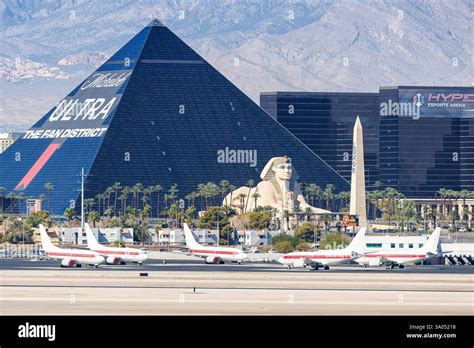
Las Vegas is built on spectacle. Neon lights, casino towers, luxury resorts, and endless entertainment dominate the skyline and the city’s reputation. Yet one of the most unusual operations in American aviation unfolds quietly away from the slot machines and tourist traffic. On a secluded side of Harry Reid International Airport, unmarked white aircraft carrying a thin red stripe depart daily into the Nevada desert. Their passengers do not include gamblers, vacationers, or business travelers. Instead, these flights carry engineers, military personnel, technicians, and contractors into some of the most secretive facilities in the United States.
The airline unofficially known as JANET has become one of aviation’s most enduring mysteries precisely because it operates in plain sight. Unlike covert spy planes hidden in underground hangars or classified military prototypes shielded from public view, JANET’s aircraft can be observed taxiing openly across the airport. Aviation enthusiasts track them. Photographers capture them. Travelers occasionally spot them from terminal windows. And yet, despite this visibility, the destinations tied to these flights remain wrapped in layers of national security secrecy.
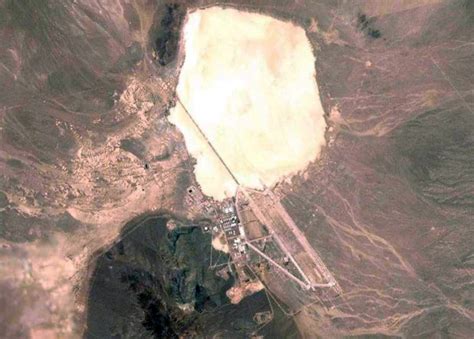
At the center of the fascination is Area 51, the legendary military installation at Groom Lake that has inspired decades of conspiracy theories, UFO speculation, and classified aviation rumors. While popular culture transformed Area 51 into a mythical location, the reality behind JANET is much more practical. Secret facilities still require thousands of people to keep them functioning. Aircraft must be maintained. Experimental systems need testing. Security operations run continuously. Even highly classified programs depend on ordinary daily logistics.
What makes JANET extraordinary is not only where it goes, but how routine the operation appears. Flights lasting barely half an hour replace brutal multi-hour desert commutes. Workers board aircraft in Las Vegas in the morning and arrive at heavily restricted military zones before most commuters finish their first coffee. The simplicity of the process masks the immense security infrastructure surrounding it.
The Origins of America’s Most Mysterious Airline
The exact origins of JANET remain partially obscured, which only strengthens the intrigue surrounding the airline. Most aviation historians trace the operation back to the Cold War era, when the United States dramatically expanded classified aerospace development programs across the Nevada desert. Facilities such as Groom Lake became ideal locations for testing aircraft that the government wanted hidden from foreign intelligence services.
The isolation of Nevada offered enormous strategic advantages. Vast empty landscapes, restricted airspace, dry lakebeds, and minimal civilian population created an environment where experimental aircraft could operate away from prying eyes. During the Cold War, secrecy was not merely desirable; it was essential. Programs involving stealth technology, reconnaissance aircraft, radar systems, and advanced weapons platforms required absolute operational security.
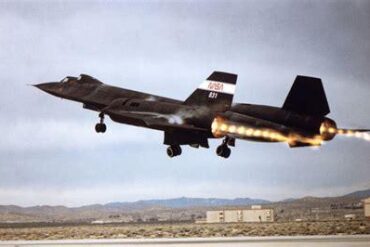
The Lockheed U-2 spy plane program famously used Area 51 during its early development. Later, the revolutionary SR-71 Blackbird and the F-117 Nighthawk stealth fighter were also connected to facilities inside the Nevada Test and Training Range. These projects involved thousands of employees working on technologies that could dramatically influence global military balance.
But even the most secretive aerospace projects faced a surprisingly ordinary problem: transportation.
Scientists, engineers, maintenance crews, security staff, and military officers still needed to physically reach these remote installations every day. Housing thousands of workers permanently at isolated desert facilities was impractical. Las Vegas, meanwhile, already possessed infrastructure, housing, entertainment, and transportation links capable of supporting a large workforce.
The solution was elegantly simple. Fly workers directly into the desert every day.
Why Area 51 Needed Its Own Airline
Area 51’s mystique often overshadows a basic operational reality. Classified military facilities function much like industrial campuses or corporate headquarters. They require a constant stream of personnel, supplies, maintenance, and technical expertise. The only difference is the extraordinary level of secrecy surrounding the work.
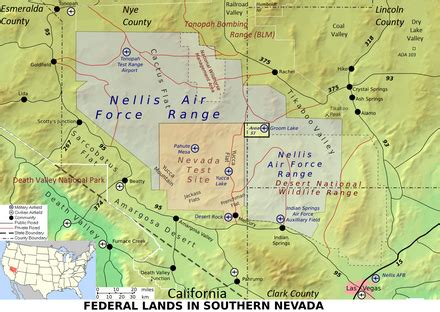
Geography itself became both an asset and a logistical nightmare. Groom Lake sits deep inside restricted federal land, surrounded by mountains, desert basins, guarded roads, and tightly controlled airspace. Tonopah Test Range, another major JANET destination, lies even farther northwest of Las Vegas. Driving to either location is exhausting, time-consuming, and heavily monitored.
For workers commuting daily, the distances would be punishing. A road trip to Tonopah alone can consume several hours each way through isolated desert terrain. Add security checkpoints, restricted zones, and operational screening procedures, and the commute becomes even less practical.
Flying solves nearly every problem simultaneously.
A short flight reduces travel time dramatically while allowing the government to maintain centralized control over employee movement. Personnel can be screened before departure, transported securely, and delivered directly into restricted facilities without exposure to public transportation systems or civilian road traffic.
In many ways, JANET operates less like an airline and more like a classified airborne employee shuttle. Yet the aircraft themselves resemble standard commercial airliners, adding another layer of surreal normalcy to the operation.
The Strange Simplicity of JANET Flights
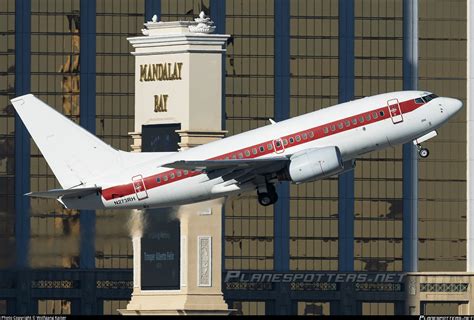
From the outside, JANET flights appear almost boring. The aircraft are usually painted plain white with minimal markings beyond the red cheatline running along the fuselage. There are no flashy logos, no marketing campaigns, and certainly no vacation advertisements promising discounted fares to mysterious desert destinations.
Passengers reportedly depart from a secure private terminal at Harry Reid International Airport, separated from standard commercial operations. Security procedures are naturally intense, though details remain limited due to the classified nature of the work involved.
Once airborne, the flights are remarkably short. The famous “30-minute flights” to Groom Lake have become central to JANET lore because they transform one of the world’s most secretive military installations into what essentially resembles a suburban commute.
That contrast is what fascinates aviation observers. A Boeing 737 carrying government contractors to Area 51 sounds like science fiction, yet it happens regularly. The aircraft take off, disappear into restricted airspace, and later return to Las Vegas with another load of workers heading home after their shifts.
For the employees onboard, the flights are likely mundane parts of daily life. For outsiders, they represent rare visible evidence of a hidden world operating beneath layers of secrecy.
The Fleet Behind the Operation
Over the years, JANET’s fleet has included several aircraft types, though Boeing 737s remain the most recognizable. The fleet is tailored for short-haul efficiency rather than luxury or commercial appeal.
The aircraft themselves are functional rather than glamorous. Interiors are believed to be configured for practicality, emphasizing employee transportation instead of passenger comfort. This is not first-class aviation. It is industrial-scale logistics for classified programs.
Despite the secrecy, aviation enthusiasts have managed to document many of the aircraft registrations and movements over the years. Flight tracking technology, long-range photography, and public observation have turned JANET into an unusual niche within aviation culture. The airline simultaneously hides and reveals itself.
That tension creates endless fascination. Enthusiasts know the planes exist. They can often track departures and arrivals. Yet the precise missions connected to many flights remain unknown.
The airline occupies a strange middle ground between public visibility and operational opacity.
Area 51, UFO Myths, and Aviation Legends
No discussion about JANET can avoid the gravitational pull of Area 51 mythology. The facility’s secrecy naturally encouraged speculation, especially during decades when the government refused to officially acknowledge the base’s existence.
Unusual aircraft sightings over Nevada fed rumors of extraterrestrial technology and alien spacecraft. In reality, many sightings likely involved classified military aircraft undergoing testing. Stealth aircraft designs in particular looked radically unconventional compared to standard military jets of their era.
The F-117 Nighthawk, for example, appeared almost alien when first revealed publicly. Angular surfaces, radar-evading geometry, and entirely black paint schemes created an aircraft unlike anything civilians had previously seen. Observers who spotted experimental prototypes before public disclosure often struggled to explain what they witnessed.
Area 51’s refusal to explain anything allowed myths to flourish.
JANET became unintentionally linked to these stories because its flights visibly connected Las Vegas with the legendary facility. A mysterious airline transporting cleared personnel into a secret desert base practically writes its own conspiracy theories.
Yet the true story behind JANET is arguably more interesting than the myths. Rather than extraterrestrial cover-ups, the airline demonstrates the enormous logistical machinery required to sustain modern classified defense programs.
The Human Side of Secret Aviation
One overlooked aspect of JANET is the ordinary humanity hidden beneath the secrecy. Popular imagination tends to portray Area 51 as a place occupied exclusively by spies, elite military officers, or shadowy intelligence operatives. The reality is likely much more grounded.
Complex defense facilities require accountants, electricians, mechanics, software engineers, cafeteria workers, administrators, and countless support staff alongside high-level scientists and military personnel. Entire ecosystems of workers keep these installations functioning.
JANET exists because classified projects still depend on human labor and daily operations. Even the most advanced stealth aircraft cannot maintain themselves. Experimental systems still require maintenance schedules, testing crews, data analysis, and logistical coordination.
This creates one of JANET’s most compelling contradictions. The airline supports some of America’s most advanced and secretive technologies, yet its core purpose resembles a commuter rail system transporting employees to work.
The flights may involve extraordinary destinations, but the structure itself is deeply ordinary. Workers wake up in Las Vegas, board a flight, complete their shifts, and return home at the end of the day.
That strange overlap between suburban routine and national-security secrecy gives JANET its uniquely surreal identity.
Why JANET Continues to Fascinate Aviation Enthusiasts
Aviation enthusiasts are naturally drawn toward mystery, and JANET provides an almost irresistible combination of accessibility and secrecy. Unlike fully classified aircraft hidden from public view, JANET planes can be photographed openly. Their movements can sometimes be tracked. Their routes are partially observable.
Yet critical details remain unknown.
This limited visibility creates an information vacuum where speculation thrives. Every unusual movement, aircraft change, or operational adjustment generates interest within aviation communities. Online forums and tracking groups routinely analyze JANET operations with remarkable attention to detail.
Part of the fascination comes from the rarity of visible secrecy in modern society. Most classified government activity is intentionally hidden from public observation. JANET, however, cannot function invisibly because transporting thousands of workers requires physical aircraft operating through public airspace.
The result is an airline that everyone can see but few truly understand.
Can JANET Truly Be Called an Airline?
Technically, JANET fulfills many standard definitions of an airline. It operates aircraft, transports passengers, follows schedules, maintains crews, and manages regular routes between airports. On paper, those are core airline functions.
Commercially, however, JANET exists in an entirely different category.
There are no ticket sales. No loyalty programs. No public schedules. No vacation packages. No competition for passengers. Its customer base consists exclusively of cleared government personnel, military staff, and approved contractors.
In practice, JANET resembles a hybrid between a military logistics operation and a private commuter airline. It borrows the operational structure of commercial aviation while serving highly specialized government needs.
That ambiguity is precisely why the airline remains so intriguing. JANET looks familiar enough to recognize immediately, yet operates under rules completely different from ordinary aviation.
The Quiet Symbolism of the 30-Minute Flight
The famous 30-minute flights symbolize something larger than mere transportation efficiency. They represent how modern governments sustain hidden technological development behind ordinary-looking systems.
A plain white Boeing 737 departing Las Vegas does not appear historically significant. Yet those short flights connect civilian America with some of the most advanced defense programs ever created.
The image itself feels almost cinematic. Tourists flood casino floors nearby while government contractors quietly board aircraft headed toward restricted desert runways invisible to the public. Two entirely different worlds coexist within the same city.
That contrast explains why JANET continues capturing public imagination decades after its existence became widely known. It embodies a rare blend of mystery, bureaucracy, aviation, military secrecy, and everyday routine.
Unlike fictional secret organizations operating from underground lairs, JANET’s reality is both more believable and more bizarre. America’s strangest airline is not hidden in darkness. It departs every day under the Nevada sun, carrying workers on a half-hour commute into one of the most secretive landscapes on Earth.