In a move that underscores the ongoing turbulence within Boeing’s critical supply chain, Spirit AeroSystems—a key supplier based in Wichita, Kansas—has announced temporary furloughs affecting between 250 and 350 employees working on the 737 MAX production line. This decision, deeply embedded in the intricate dynamics of inventory management, safety compliance, and production strategy, comes at a pivotal moment as Boeing prepares to acquire the troubled manufacturer in a $4.7 billion deal aimed at regaining control over quality and manufacturing consistency.
The layoffs, confirmed via an internal company memo shared with The Seattle Times, point to a strategic pause designed to address parts surplus and better align manufacturing cadence with current delivery targets. The move arrives amid heightened regulatory scrutiny and after a damaging fuselage panel blowout incident earlier this year, which traced its origin back to Spirit’s Wichita facility.
Spirit AeroSystems and the Burden of Overproduction
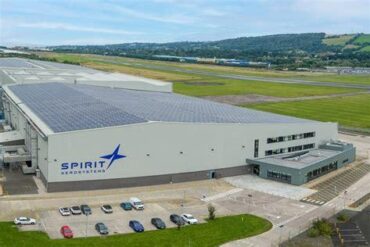
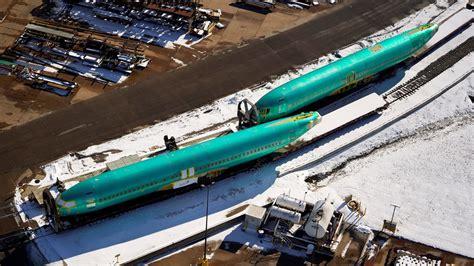
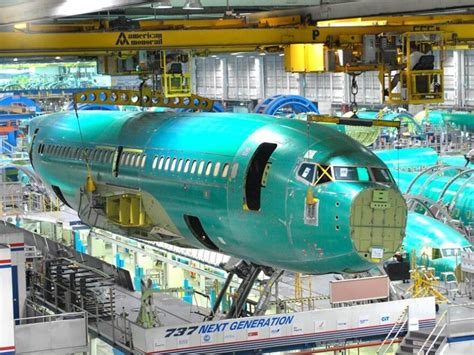
Spirit AeroSystems has, for years, served as the linchpin in Boeing’s narrow-body jet production ecosystem. Building entire fuselage assemblies for the 737 MAX, Spirit ships these units by train to Boeing’s Renton, Washington, plant. The Wichita site also constructs forward fuselage sections for most of Boeing’s commercial aircraft, making Spirit indispensable in Boeing’s manufacturing chain. However, this critical role has also placed Spirit at the epicenter of Boeing’s quality assurance crises.
The recent furloughs reflect the cumulative pressure of overproduction cycles, particularly over the past several years, when optimism about rising demand led to the accumulation of excess inventory. According to the company’s internal communication, “we’ve overproduced and accumulated a parts surplus. As a result, we must implement temporary layoffs in certain areas to reduce inventory levels.”
The temporary layoffs are limited to Spirit’s 737 fabrication and composite fabrication units, particularly teams engaged in thrust-reverser component work. While these workforce reductions are not permanent, they contribute to an already strained labor environment in Wichita, one of America’s oldest and most pivotal aerospace manufacturing hubs.
Manufacturing Defects and FAA Oversight Intensify Pressure
Beyond operational inefficiencies, Spirit AeroSystems continues to struggle with manufacturing quality control issues. The situation escalated dramatically in January 2024, when a door plug panel detached mid-flight from an Alaska Airlines 737 MAX 9, leading to an explosive decompression incident that rattled public confidence and reignited regulatory oversight.
Investigations revealed that the affected fuselage was manufactured in Spirit’s Wichita factory, placing the supplier squarely in the crosshairs of federal scrutiny. As a result, the FAA imposed a cap on Boeing’s monthly 737 output at 38 aircraft, directly stalling any ambitions for a ramp-up in production. This regulatory bottleneck has had ripple effects throughout the supply chain, stifling revenue generation and triggering a domino effect—culminating in the current furloughs.
Financial Turbulence: Losses and Missed Targets
The economic fallout for Spirit has been severe. In the first quarter of 2025, the company posted a net loss of $613 million, or $5.21 per share, slightly narrower than the $617 million loss in the same period last year. Revenue fell 11% year-over-year, primarily due to reduced activity on Boeing programs—most significantly, the 737 MAX.
While Spirit had anticipated a production rate increase for the 737 MAX earlier this year, the door plug incident and subsequent FAA directives thwarted these plans. Instead of growth, the company now faces the challenge of maintaining liquidity while sitting on a $48 billion order backlog that, ironically, remains tantalizingly out of reach.
These financial indicators underscore not just Spirit’s precarious position but also the systemic fragility of outsourced aerospace manufacturing models that prioritize speed and volume over granular quality control.
Boeing’s Strategic Reacquisition and Its Broader Implications
Boeing’s decision to reacquire Spirit AeroSystems after nearly 20 years of outsourcing marks a fundamental shift in how the aerospace giant intends to manage its production pipelines going forward. The $4.7 billion acquisition, expected to close later this year, is driven by a need to regain vertical integration, bringing previously external processes back in-house to reduce quality control errors and streamline oversight.
Under the terms of the acquisition, Boeing will assume ownership of nearly all Spirit operations related to its commercial aircraft, as well as selected defense and aftermarket units. However, not all of Spirit’s operations will follow suit. Facilities producing Airbus components—a notable segment of Spirit’s diversified portfolio—will be divested. Airbus has reached an agreement to acquire these facilities across the U.S., Europe, and Africa, delineating a clear operational boundary between Boeing and its European rival.
Production Pauses and Workforce Morale
The implications of Spirit’s furloughs extend beyond production logistics. Wichita’s skilled labor force—already tested by years of uncertainty—is facing yet another disruption. Although Spirit maintains that the furloughs are temporary and necessary for long-term program stability, the human toll is palpable. In a labor market where skilled aerospace technicians are a finite resource, even brief interruptions pose retention risks.
Moreover, Spirit’s internal memo indicates that these production pauses will be reviewed and adjusted as inventory balances normalize, suggesting that more such adjustments may follow if market conditions continue to stagnate.
The Road Ahead: Integration, Accountability, and Recovery
As Boeing moves closer to finalizing the acquisition, integration efforts will likely involve major operational realignments. These could include:
- Facility audits to root out systemic quality lapses
- Revised production quotas to align with FAA restrictions
- Reinvestment in training and automation to ensure precision and traceability in manufacturing
Spirit’s transition back into Boeing’s fold may also entail organizational restructuring, including leadership changes and revised oversight frameworks. The fuselage blowout incident has prompted Boeing and regulators to insist on greater accountability, not only from Spirit but also within Boeing’s own assembly lines.
While Boeing’s reacquisition of Spirit is largely seen as a corrective measure, it is far from a silver bullet. Restoring confidence—among regulators, airline customers, and the flying public—will require visible, measurable improvements in safety, timeliness, and reliability. Both companies now carry the burden of proving that lessons have been learned and that corrective actions are more than public relations gestures.
Conclusion: A Pivotal Crossroads for U.S. Aerospace Manufacturing
Spirit AeroSystems’ furloughs on the 737 MAX line are more than just a blip on the manufacturing radar—they represent a critical juncture in the broader narrative of U.S. aerospace production. The intersection of safety failures, overproduction, and strategic consolidation has created a volatile mix, forcing companies to reconsider long-held assumptions about efficiency, outsourcing, and supply chain resilience.
As Boeing inches closer to fully integrating Spirit’s operations, the next few quarters will be pivotal. Regulatory cooperation, execution of internal reforms, and transparent communication with stakeholders will determine whether this realignment leads to a renaissance in aircraft manufacturing quality or simply reinforces a cycle of reactive crisis management.
The aerospace industry, long known for its engineering prowess and rigorous standards, now faces its most pressing challenge: rebuilding trust through competence. And it begins with getting the 737 MAX program—and its supply chain—back on track.