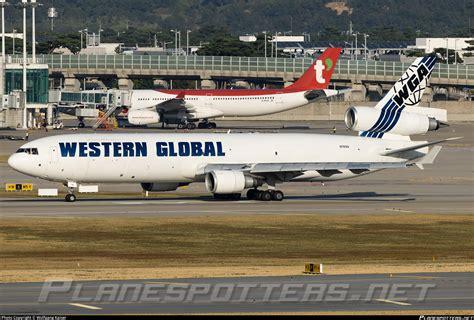
The extended grounding of the MD-11 fleet has pushed Western Global Airlines (WGA) into one of the most severe operational crises in its twelve-year history. The sweeping action, triggered by the FAA’s post-accident directive, has forced the Florida-based cargo carrier to furlough pilots as the airline faces a near-total loss of flying capacity. The company communicated the decision through an internal memo, calling the situation “untenable” and citing concerns for the airline’s long-term viability.
The backdrop to this decision is the catastrophic crash of UPS Flight 2976 on November 4, 2025, which set off a chain of safety responses across the U.S. aviation system. Only four days after the accident, the FAA grounded the entire U.S. MD-11 fleet, prompting a deep technical investigation and triggering a wave of operational disruptions at carriers dependent on the aging tri-jet.
Western Global finds itself uniquely exposed to this disruption. With 14 MD-11 freighters forming the backbone of its operation—alongside just four Boeing 747-400s—the airline has seen the majority of its aircraft parked indefinitely while Boeing engineers carry out highly invasive structural inspections. The grounding went into immediate effect as of November 8, 2025, and furlough notices were issued effective November 22.
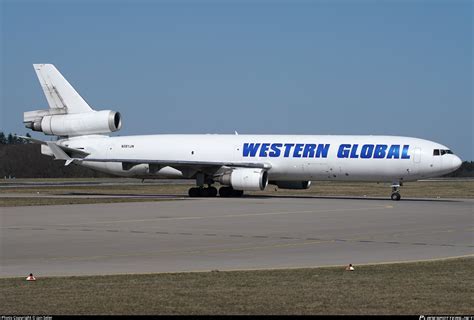
MD-11 Grounding Completely Halts Western Global’s Core Operations
The operational paralysis WGA now faces stems from its reliance on the MD-11, an aircraft type with an average age of more than 30 years across the airline’s fleet. While major integrators like UPS and FedEx Express also operate MD-11s, the aircraft represents only a fraction of their fleets. Western Global, however, has built an entire business model around the type. The sudden grounding removed virtually all of its working capacity overnight.
Boeing’s advisory to the FAA revealed the need for extensive structural checks, including inspection of engine-to-wing attachment hardware suspected of exhibiting fatigue cracks and repetitive overstress indicators. This reinforced early findings from the NTSB’s frame-by-frame analysis of the UPS crash, which displayed the horrifying moment an engine separated from the aircraft shortly after takeoff, leading to an immediate loss of control.
Internal Memo Reveals Depth of the Crisis
In the memo shared with pilots—and later viewed publicly after being posted by airline pilot and podcast host Nik Fialka—Western Global underscored that it had never issued furloughs or pay cuts in its entire history. The leadership emphasized that the airline was facing circumstances outside its control, and that with all MD-11s grounded, flying schedules had collapsed.
The airline noted that it hoped for a short-lived grounding, but Boeing’s findings forced expectations to shift dramatically. With inspections classified as “highly invasive” and involving structural disassembly, the timeline for returning the fleet to service remains murky.
FAA, NTSB, and Boeing Intensify Technical Reviews
The FAA’s grounding order has created ripples throughout the air-cargo sector, particularly as more details emerge about the structural failure that brought down UPS Flight 2976. The aircraft involved in that crash was 34 years old and nearing retirement. Investigators are now pulling data from previous incidents involving MD-11 and DC-10 aircraft—including the infamous American Airlines Flight 191 disaster—to identify patterns of metal fatigue and structural stress.
These parallels reinforce long-standing concerns related to engine pylon assemblies on older McDonnell Douglas widebodies, although no final conclusions have been drawn. For now, all MD-11 operators remain at the mercy of a technical investigation that continues to widen in scope.
Industry Impact Extends Beyond Western Global
Although Western Global is currently the most threatened by the grounding, the ripple effects reach major players across the cargo market. UPS, operating 26 MD-11s, has rebalanced its global network by rerouting flights to Boeing 767 and 747 aircraft when possible. FedEx Express, with its fleet of 58 MD-11Fs, has expressed cautious optimism, noting that its inspections appear simpler and may allow its tri-jets to return sooner.
Still, the grounding has reduced overall cargo capacity in an already strained holiday logistics season. Analysts expect spot air-freight rates to rise, especially on high-density transpacific and U.S. domestic routes once serviced by MD-11 operators.
A Grounding That Could Define Western Global’s Future
The crisis has brought Western Global Airlines to a crossroads. A company built on operating high-yield contracts with aging, fully-owned MD-11s now faces the possibility of prolonged fleet dormancy. Without clarity on inspection timelines or repair requirements, WGA must navigate financial pressures from loan payments, lease obligations, and idle crews.
Whether Western Global emerges intact will depend on both the speed of Boeing’s engineering review and the airline’s ability to withstand a steep drop in revenue. The MD-11—once seen as a sturdy workhorse for freight operations—has now become a symbol of high-stakes uncertainty.
The eventual return of the MD-11 to service will offer answers not only for Western Global but for an entire generation of tri-jet cargo operations still flying in the twilight of their long careers. The unfolding investigation continues to reshape how the aviation industry views aging fleets, structural fatigue, and operational resilience under sudden regulatory scrutiny.