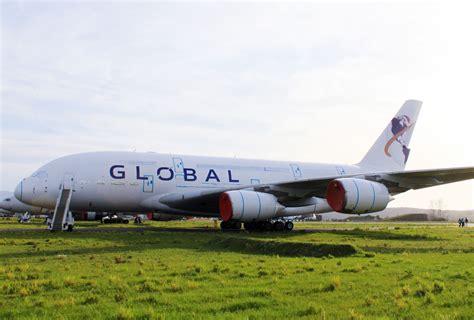
The audacious arrival of Global Airlines on the aviation scene, spearheaded by its solitary Airbus A380, has ignited a firestorm of debate and speculation across the industry. Promising a revolutionary transatlantic experience, the fledgling carrier completed a handful of initial flights, primarily between New York and Manchester, capturing the imagination of some and inviting intense scrutiny from others. However, with no further flights currently scheduled and a maelstrom of questions swirling around its operational capacity, financial stability, and the very condition of its flagship aircraft, the future of Global Airlines’ A380 hangs precariously in the balance. Is this the dawn of a new era for luxury A380 travel, or are we witnessing a fleeting, ill-fated venture destined to become a mere footnote in aviation history?
The Airbus A380, the world’s largest passenger airliner, has always been a symbol of ambition. Its sheer scale and passenger capacity promised unparalleled comfort and efficiency on high-density routes. Yet, its operational economics proved challenging for many, leading to premature retirements by some carriers even before the COVID-19 pandemic accelerated this trend. For a startup airline to base its entire initial strategy around a single, second-hand A380 is a bold move, one that industry veterans and enthusiasts alike are watching with a mixture of fascination and deep skepticism. The initial flurry of activity, marked by influencer flights and a significant media push, quickly gave way to a deafening silence regarding future operations, fueling concerns that the enterprise might be more about ephemeral buzz than sustainable aviation.
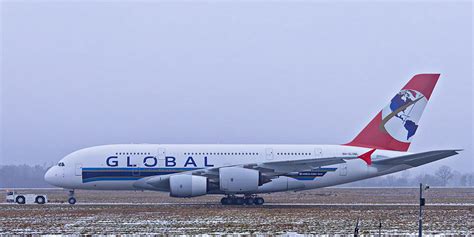
One of the most immediate and pressing concerns revolves around the aircraft itself, an ex-China Southern A380. Reports and observations from those who experienced the initial flights suggest the cabin is in a “rather sad shape,” a far cry from the luxurious, game-changing product Global Airlines has marketed. A comprehensive cabin refit is deemed desperately needed to align the onboard experience with the premium prices and aspirational branding. This refurbishment is not merely a cosmetic undertaking; it represents a significant capital expenditure and a substantial period of downtime for an airline that currently possesses only one operational aircraft. Without a cabin that can compete with, let alone surpass, established carriers, attracting and retaining a discerning clientele will be an uphill battle, especially if ticket prices are, as some have noted, higher than competitors offering a proven product on the same routes.
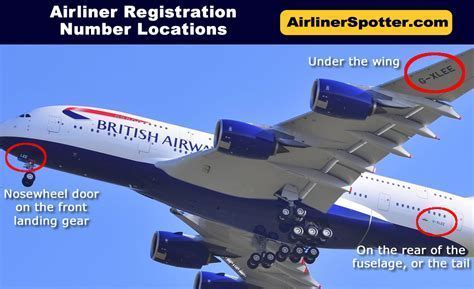
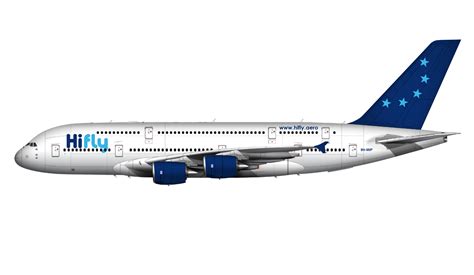
Beyond the aesthetics and passenger comfort, the aircraft, registered as 9H-MIP under HiFly Malta at least until recently, faces looming heavy maintenance requirements. Industry insiders point to an impending 12-year heavy maintenance check, a comprehensive and costly overhaul that often includes stripping the aircraft down to its floorboards. Furthermore, a full new set of landing gear is reportedly required. These are not trivial expenses; they run into millions of dollars and necessitate specialized facilities and expertise. For a nascent airline, securing the funds and logistical support for such extensive maintenance on its sole asset presents a formidable challenge. The question arises: were these substantial upcoming costs fully factored into the initial business plan and investor disclosures, or do they represent yet another unexpected financial black hole?
Operational Realities: Navigating a Complex Airspace
The complexities of running an airline extend far beyond simply acquiring an aircraft. A critical component is the Air Operator Certificate (AOC), a license granted by a national aviation authority that permits an airline to conduct commercial air transport operations. As it stands, Global Airlines reportedly does not possess its own AOC. Instead, its initial flights were operated and managed by HiFly, a Maltese charter and ACMI (Aircraft, Crew, Maintenance, and Insurance) specialist, under HiFly’s AOC. This arrangement effectively positions Global Airlines, at least in its current iteration, more as a charter broker or a brand leveraging another company’s operational infrastructure rather than a fully-fledged, independent airline. While using an ACMI provider is a common strategy for startups to get off the ground, the long-term viability of this model for scheduled services, particularly with aspirations of premium branding, is questionable. Securing its own AOC is a rigorous, time-consuming, and expensive process, with regulators like the UK’s CAA demanding robust proof of financial stability and operational competence before granting approval.
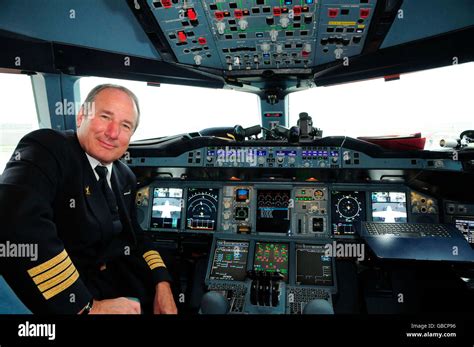
Crewing an A380 is another significant operational hurdle. The aircraft requires a substantial and highly trained flight and cabin crew. With operations currently outsourced to HiFly, it remains unclear what Global Airlines’ long-term crewing strategy is, or if they have any flight or cabin crew directly on their payroll. Building and managing such a specialized workforce from scratch is a monumental task. Furthermore, operating a regular, reliable schedule with just one A380 is fraught with risk. Any technical issue, unscheduled maintenance, or crew availability problem with that single aircraft would lead to immediate and significant disruption, cancellations, and a rapid erosion of passenger trust. Most established airlines operating long-haul routes, especially with flagship aircraft like the A380, maintain fleet redundancy to mitigate such risks. Global’s single-aircraft model offers no such buffer, making any promise of a consistent schedule inherently fragile.
The Shadow of Financial Doubt: Fueling the Superjumbo Dream
The financial underpinnings of Global Airlines have been a subject of intense speculation. The initial flights, described by some as “four random flights with no regular schedule and no connections,” are believed by many observers to have been largely funded by an initial tranche of investment, essentially paying for a limited charter operation. The critical question now is whether James Asquith, the founder, can tap investors for significantly more capital. The sums required are not insignificant: a full cabin refit, the upcoming heavy maintenance, operational costs, marketing, and the eventual (and expensive) process of obtaining an AOC and potentially expanding the fleet. Investors, particularly in the notoriously volatile aviation sector, will undoubtedly demand a clear, convincing, and sustainable long-term strategy before committing further funds. The mixed-to-negative feedback from initial influencer flights, coupled with the glaring operational and maintenance challenges, may have done little to ease investor fears or build confidence in the airline’s trajectory.
There’s a palpable sense among many industry commentators that the airline might be facing imminent financial distress. Predictions range from the operation quietly fading away to a more formal liquidation or bankruptcy if further funding doesn’t materialize swiftly. The high cash burn rate associated with A380 operations, even when outsourced, combined with the lack of revenue-generating regular flights, creates a precarious financial tightrope. The venture has been described as feeling more like venture capitalism than a safe investment, implying a high-risk, high-reward scenario where investors are aware of the potential for complete loss. However, even venture capitalists look for a credible path to profitability, a path that remains largely obscured for Global Airlines at present.
The Ownership Puzzle: Unraveling 9H-MIP’s True Custodian
A significant point of contention and confusion surrounds the actual ownership of the A380 (MSN 120). While Global Airlines has presented the aircraft as its own, public aircraft registration data, specifically from Malta’s aircraft register where 9H-MIP is listed, has indicated that the aircraft is, or at least was very recently, still owned by HiFly. This discrepancy has fueled speculation about the nature of the agreement between Global Airlines and HiFly. If Global does not outright own the airframe, but rather has a lease or a more complex CMI (Crew, Maintenance, and Insurance) contract with HiFly, it further complicates the airline’s financial structure and control over its primary asset. A CMI contract means HiFly provides the aircraft, crew, and handles maintenance and insurance, while Global Airlines would be responsible for aspects like fuel, ground handling, and selling tickets – effectively acting as a virtual airline.
This distinction is crucial. If Global is essentially a client of HiFly, chartering the A380 for a limited series of flights, then the narrative of Global Airlines as a new “owner-operator” of an A380 fleet begins to unravel. It raises questions about transparency with investors and the public. While it’s possible the ownership status might have changed very recently and registry updates are pending, the lack of clear, verifiable documentation supporting Global’s outright ownership has led to skepticism, with some cynically wondering if the entire setup is designed more to attract investment through impressive optics rather than to build a sustainable airline. The truth behind the ownership and the precise terms of the HiFly agreement are central to understanding Global’s actual capabilities and financial commitments.
Cabin Aspirations vs. Current Reality: The Onboard Experience Gap
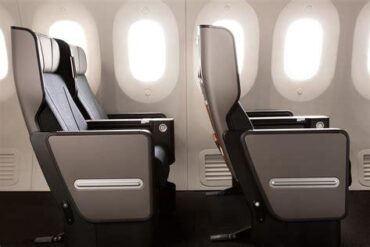
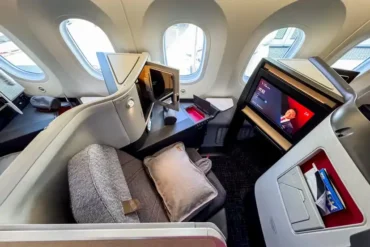
Global Airlines has heavily marketed a vision of a “game-changing” transatlantic experience, implying a level of luxury and service that would set it apart. However, the current state of the ex-China Southern A380’s cabin, which has been in service for over a decade, appears to be a significant impediment to realizing this vision. Passengers and observers on the initial flights have noted an interior that is tired, dated, and in urgent need of a complete overhaul. This is not merely about replacing seat covers; a true “game-changing” product would likely involve new seating concepts across all classes, updated inflight entertainment systems, and potentially unique social spaces, all of which are hallmarks of the A380’s potential but require substantial investment.
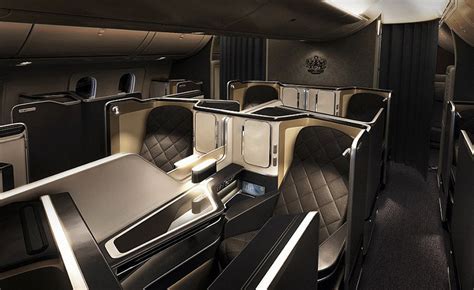
The cost of refitting an A380 to a high standard can easily run into tens of millions of dollars per aircraft. Given that Global Airlines currently only has this one aircraft, the decision to invest such a sum, and the associated lengthy downtime for the refurbishment, becomes even more critical. Without this investment, Global risks offering a product that is visibly inferior to its established competitors like British Airways or Lufthansa, who also operate A380s on routes like London to New York, often with more recently updated cabins. The promise of a superior experience is a cornerstone of Global’s marketing; failing to deliver on this due to an outdated cabin could be a fatal flaw, especially if they are attempting to command premium fares. The feedback loop from initial passengers, particularly influential travel bloggers, has been reportedly mixed to negative, highlighting this very gap between promise and reality.
Finding a Niche: Can Global’s A380 Secure a Sustainable Market?
Even if Global Airlines overcomes its financial and operational hurdles, the fundamental question of its market niche remains. The airline has touted a London-New York route, and also Los Angeles. However, these are among the most competitive and well-served long-haul markets in the world, dominated by established carriers with vast networks, frequent flyer programs, and significant economies of scale. British Airways and Lufthansa already deploy their own A380s on routes to JFK, directly competing with Global’s proposed offering. What unique value proposition can Global Airlines offer that would persuade passengers to choose a new, unproven carrier with a single aircraft and a limited schedule over these established giants?
The argument that increasing airport congestion, particularly at slot-constrained hubs like London Heathrow (LHR) and New York’s JFK, favors larger aircraft like the A380 has some merit. If an airline can transport more passengers per slot, it can maximize revenue. However, securing commercially viable slots at these prime airports is an incredibly difficult and expensive undertaking for any new entrant. Heathrow slots, in particular, are notoriously hard to come by. While Global has mentioned operating from London Gatwick (LGW) for its New York service, even Gatwick slots for desirable timings can be competitive. Furthermore, the “slot-constrained” argument doesn’t universally apply; JFK, for instance, has periods of lower congestion during the day. The idea that there’s a vast, untapped demand for A380-sized capacity on specific routes that only Global can fill seems optimistic, especially when existing A380 operators are not clamoring to add significantly more superjumbo frequencies on those same routes beyond their current deployments.
Some have suggested Hajj charter operations as a potential avenue for a spare A380, given the high-density travel requirement. HiFly itself did operate its A380 (the one previously painted in a “Save the Coral Reefs” livery, 9H-MIP, which is a different airframe than Global’s current one) for various charter missions. However, securing Hajj charters requires significant advance planning, marketing, and logistical arrangements. With the Hajj period often occurring with relatively short booking windows, it’s unlikely Global could pivot to such operations quickly, especially without a proven track record in that specific charter market. Moreover, the brand image Global is trying to cultivate – a premium transatlantic carrier – seems at odds with the typical ad-hoc, high-density charter model.
Echoes of HiFly’s A380: A Precedent with Mixed Results
It’s worth noting that HiFly, the apparent operational partner for Global, has prior experience operating an A380 (the former Singapore Airlines 9V-SKC, later 9H-MIP, which was eventually scrapped). HiFly marketed its A380 for wet lease and charter, and it saw sporadic use by various airlines needing extra capacity, including Norwegian and Air Austral. However, the aircraft was not consistently utilized and was eventually retired by HiFly, suggesting that even for a specialist ACMI provider, finding sustained, profitable work for a single A380 is a significant challenge. This precedent does not necessarily bode well for Global Airlines, unless their business model, funding, and market strategy are substantially different and more robust than what HiFly experienced with its own A380 deployment. The fact that Global is using a different A380 (ex-China Southern MSN 120, now also seemingly marked as 9H-MIP under HiFly Malta’s operation for Global) doesn’t change the underlying economics of operating such a large aircraft in a niche market.
The Prognosis: A High-Stakes Gamble Nearing its Climax
The overwhelming sentiment among aviation observers and commentators is one of profound skepticism regarding the long-term viability of Global Airlines’ A380 venture. The combination of a single, aging aircraft requiring significant investment, the lack of an independent AOC, opaque ownership and financial structures, and fierce competition on its proposed routes paints a challenging picture. While the ambition of founder James Asquith to bring a new A380 experience to the skies is acknowledged, and even admired by some for its sheer audacity, the practical and financial realities appear daunting.
The immediate future likely hinges on securing substantial new investment. Without it, the predictions of the aircraft never carrying another fare-paying passenger for Global Airlines, and instead being destined for storage or disassembly, could very well come true. The airline’s initial flights may, in retrospect, be seen as a triumph of marketing and short-term execution, getting an A380 into the air under a new banner, but ultimately failing to translate into a sustainable business. The aviation world watches with bated breath. Will Global Airlines defy the odds and soar, proving the doubters wrong with a revitalized A380 and a solid operational footing? Or will this superjumbo dream remain grounded, a cautionary tale of ambition outpacing execution in the unforgiving skies of the global airline industry? Only time, and perhaps more importantly, a significant injection of capital and a clear, credible strategy, will tell.