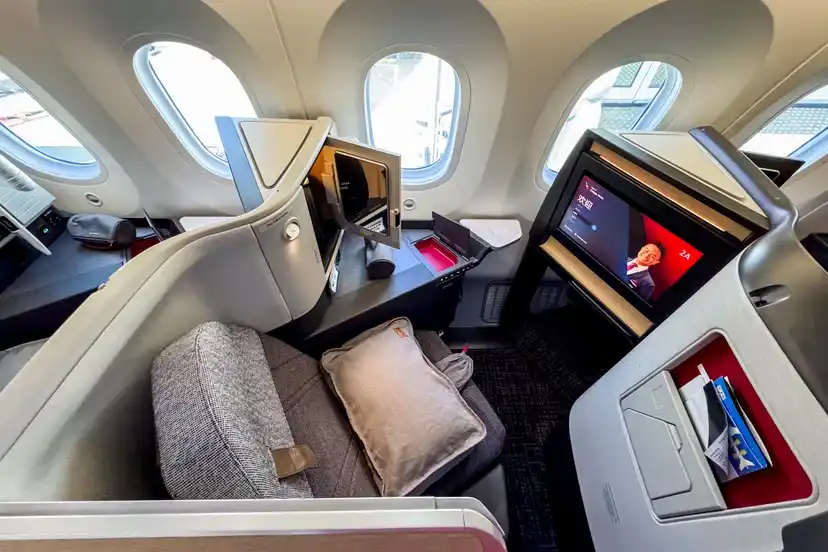
The global race to redefine long-haul comfort has intensified dramatically in recent years. Airlines from the Gulf, Europe, and Asia have poured billions into perfecting their premium cabins, each unveiling innovations that seek to outshine the last. Yet in 2025, a surprising contender has stepped boldly into the spotlight. American Airlines, long viewed as conservative in its cabin design strategy, has now introduced the Flagship Suite, a next-generation business class product deployed on its Boeing 787-9 and brand-new Airbus A321XLR fleets. This suite represents the airline’s most astonishing leap forward in over a decade.
The arrival of this ultra-modern business class seat signals a decisive transformation of the airline’s long-haul identity. Instead of dabbling in incremental upgrades, the carrier has rebuilt its premium offering from the ground up. The result is a meticulously engineered suite that blends architecture-grade privacy, opulent textures, and technology-enhanced functionality—an experience positioned to rival the most prestigious Asian and Middle Eastern carriers.
For the first time in the airline’s history, American now offers a business-class product with fully enclosed doors, chaise-style seating, expanded personal space, and enhanced service elements that elevate the entire journey from check-in to touchdown.
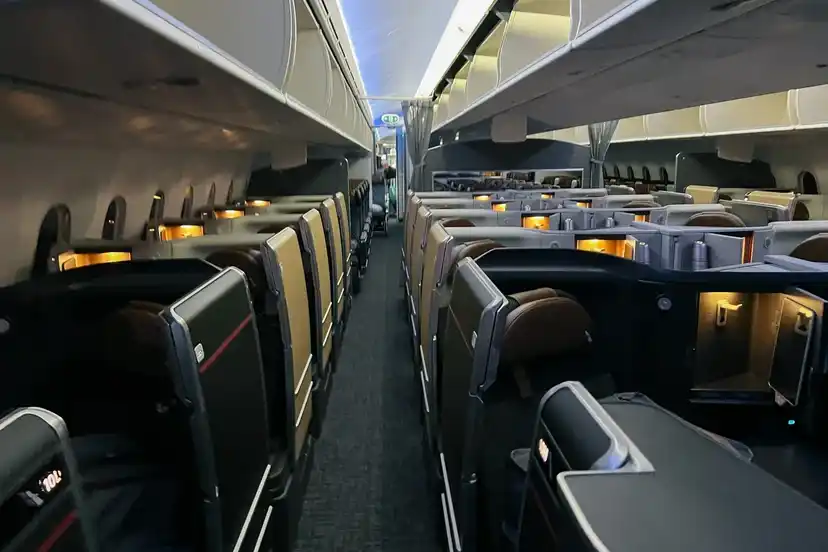
The Flagship Suite project began quietly in 2022, when American Airlines teased its vision for an entirely redesigned premium cabin for future Boeing 787-9 deliveries and Airbus A321XLR orders. Rather than merely refreshing seat upholstery or upgrading entertainment screens, the airline committed to a structural redesign of its long-haul business class environment.
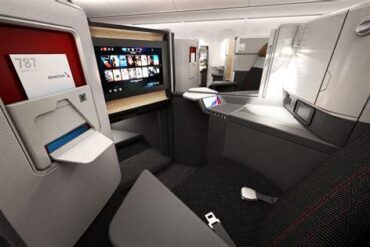
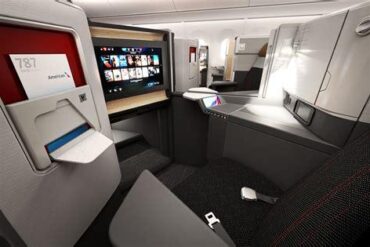
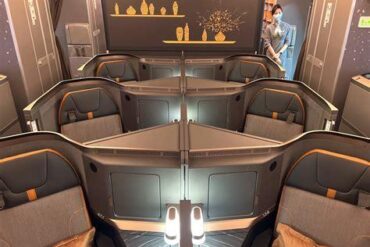
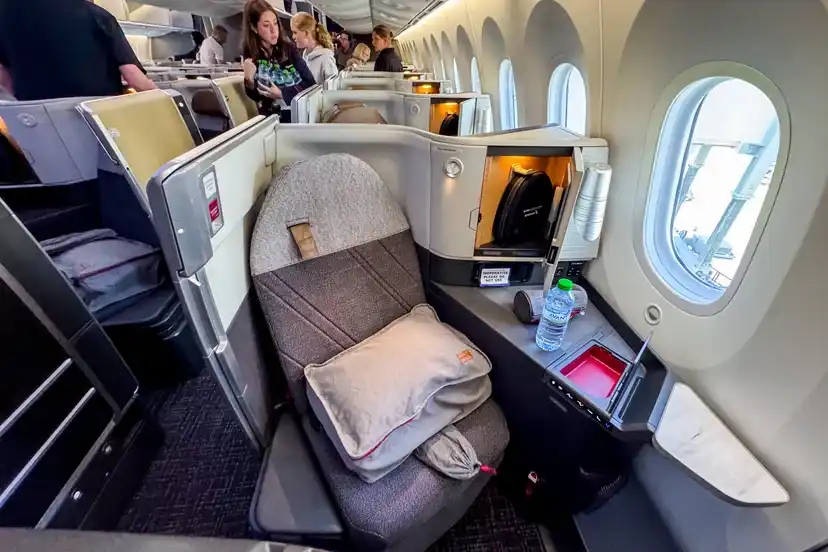
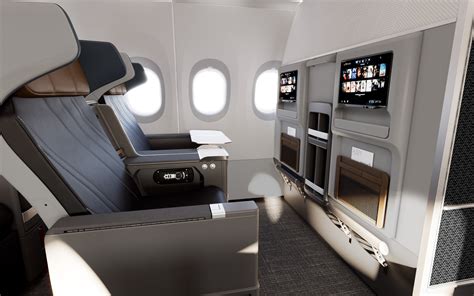
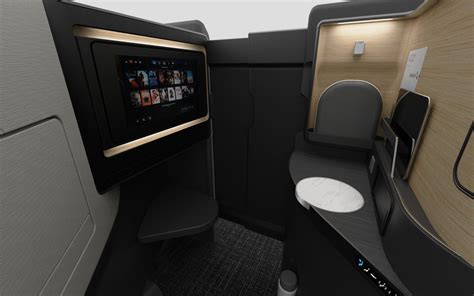
At the heart of the suite is a fully enclosed private space—a design philosophy inspired by boutique luxury hotels and the privacy-centric cabins pioneered by five-star international carriers. Every seat includes a full-height sliding door, ensuring near-total seclusion when passengers choose to close themselves off from the aisle. With direct aisle access standard, the suite eliminates the last vestiges of older designs that forced passengers to navigate over a neighbor.
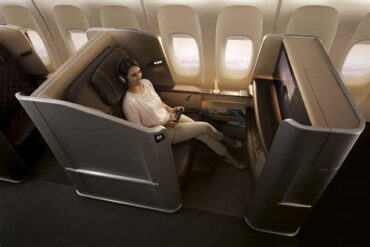
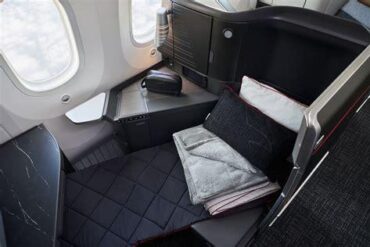
Passenger versatility is central to the suite’s configuration. The structure supports several seating modes: a deep armchair for lounging, a chaise-like recliner for mid-flight relaxation, and a fully lie-flat bed stretching across the elongated shell. Early flyers have already remarked that the suite feels more akin to a compact first-class product than a traditional business-class environment.
Cabin Layout and Aircraft Variations Across the Fleet
The rollout begins with two star aircraft: the Boeing 787-9 and the Airbus A321XLR, each tailored for specific market demands.
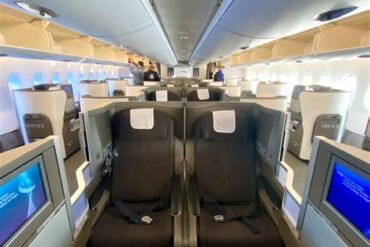
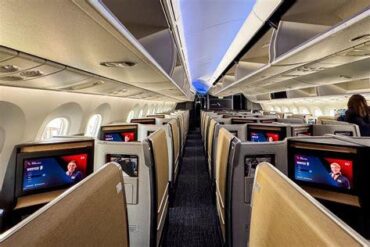
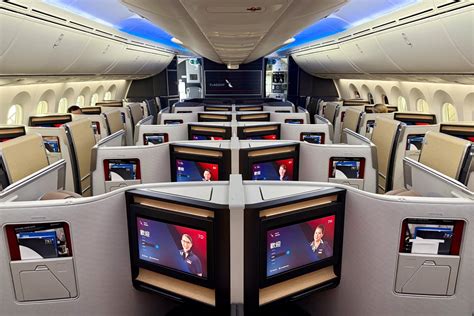
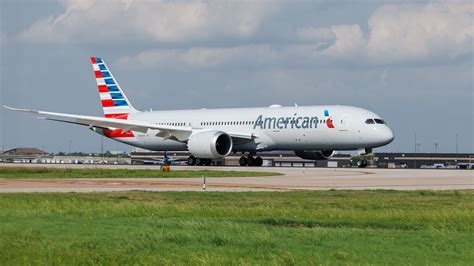
On the Boeing 787-9 (configuration code 78P), the airline installs 51 Flagship Suites arranged in a 1-2-1 configuration. This ensures full privacy for solo travelers and couples alike. The layout spans two cabins, creating a more dynamic mix of quiet zones and social areas.
By contrast, the A321XLR—designed for long-thin routes—features 20 Flagship Suites in a dramatic 1-1 layout, giving every traveler both a window and aisle access. This turns a narrowbody aircraft into an unexpectedly premium platform capable of delivering a widebody-quality experience.
Storage represents one of the most significant improvements over earlier American Airlines cabins. Every suite incorporates enlarged side consoles, multiple enclosed cubbies, and shelving spaces large enough for laptops, amenity kits, and personal electronics. This storage expansion addresses a frequent frustration among business travelers who rely on workspace-friendly environments.
Connectivity sits at the core of the suite’s design. USB-C charging, AC power outlets, and built-in wireless charging pads allow travelers to power multiple devices simultaneously. Premium bulkhead rows—branded as Flagship Suite Preferred—offer expanded living space and improved cabin separation that command higher pricing.
Launch Routes and Global Deployment Strategy
The first commercial flights featuring the Flagship Suite launched in June 2025 on transcontinental routes between Chicago and Los Angeles, immediately followed by an international debut on flights to London Heathrow (LHR). The early rollout strategy targets high-yield executive markets where premium demand is strongest and brand visibility is highest.
Following this introduction, American Airlines began deploying the 787-9P aircraft on routes linking Philadelphia and Chicago to key transatlantic destinations. By winter, services expanded further to include long-haul departures from Dallas/Fort Worth (DFW), with new seasonal rotations planned for destinations across Australia and New Zealand.
Ultra-long sectors such as Dallas–Buenos Aires also benefit significantly from the enhanced privacy and sleep-friendly design of the suite. As demand for premium seats grows on these marathon flights, the airline’s cabin transformation supports stronger fare yields and heightened customer satisfaction.
For agents and travelers booking online, the 78P configuration code serves as the key indicator for aircraft featuring the Flagship Suite. Between 2025 and 2029, American expects to operate up to 30 premium-heavy Dreamliners, dramatically reshaping its long-haul product footprint.
The Airbus A321XLR and Its Role in Expanding Premium Access
While the Dreamliner will capture the headlines, the Airbus A321XLR may ultimately reshape the airline’s long-haul strategy even more dramatically. Its extended range and fuel efficiency allow American Airlines to penetrate previously unreachable secondary markets or revive routes that could not sustain widebody aircraft.
Despite its single-aisle structure, the jet offers a premium-first experience thanks to its spacious 1-1 cabin arrangement for business class. With all 20 suites featuring sliding doors, full bedding, premium amenities, and signature dining, the XLR brings a widebody-grade premium cabin to city pairs that previously lacked such options.
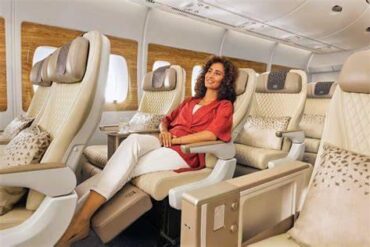
Furthermore, the aircraft supports 12 premium economy recliner seats and 123 Main Cabin seats, forming a balanced three-class configuration. Its initial deployment on high-profile U.S. transcontinental routes—traditionally served by the now-retired A321T fleet—has already received praise from frequent flyers for its comfort and privacy.
The true power of the A321XLR emerges as it stretches into overnight East Coast–Europe markets. Low operating costs paired with generous range allow American Airlines to launch routes into exclusive, underserved cities—delivering a premium product where competing airlines may be unable to operate profitably.
Upgrades to the Soft Product: Elevating the Full Journey
Hardware alone does not create a premium experience. Recognizing this, American Airlines has significantly elevated its service offering and soft product to complement the Flagship Suite.
Passengers can expect priority services from curb to gate, including expedited security and boarding. Access to Flagship Lounges—renowned for their restaurant-style dining, premium cocktails, and quiet workspaces—further enhances the ground experience.
Once onboard, a curated collection of improved amenities awaits. Bedding includes plush duvets, cool-touch pillows, and—on ultra-long sectors—first-class-level extras such as mattress pads and pajamas. The amenity kits, redesigned with high-end skincare products and structured cases, reflect a more refined visual identity.
Entertainment receives a substantial technological boost through expansive 4K screens, Bluetooth audio pairing, and Bang & Olufsen premium headsets. Wi-Fi connectivity is being upgraded to support free high-speed access for AAdvantage members, transforming the suite into a capable mobile office.
Menus follow a regionally inspired motif, emphasizing fresher ingredients, curated wine pairings, and culinary presentations that mirror global fine dining rather than mass-market airline catering.
Why American Airlines Is Making This Bold Premium Pivot
The shift toward premium-heavy cabins is motivated by long-term economics more than aesthetics. Industry data reflects a clear trend: high-yield seats deliver disproportionately strong revenue compared to standard economy seats, especially on long-distance flights where sleep, privacy, and productivity hold real monetary value for customers.
Corporate travel demand has rebounded selectively, with companies still willing to fund premium travel for essential international trips. Meanwhile, premium leisure travelers—many using loyalty points or credit card rewards—represent a growing revenue source who seek luxury products without first-class price tags.
This trend has influenced American Airlines to retire older first-class cabins on long-haul aircraft and replace them with larger business-class suites, which offer far greater flexibility and higher load factors. The Flagship Suite thus serves as the centerpiece of the airline’s strategy to increase profitability per departure.
By shifting away from densely configured cabins toward premium-dominant layouts, the airline can apply targeted discounts selectively while sustaining a strong premium brand image.
Bottom Line: A New Benchmark for American Airlines
American Airlines has stepped decisively into a new era with the introduction of the Flagship Suite. The airline is not only modernizing its business-class product but leapfrogging ahead of domestic competitors—most notably United Airlines, whose next-generation Polaris Studio has yet to enter the market.
Whether this premium transformation translates into consistently high load factors remains the central question. Investors and analysts will watch closely as the airline ramps up deployment and evaluates demand.
For now, the verdict among premium travelers is clear: the Flagship Suite delivers an extraordinary blend of privacy, design sophistication, and service elevation, rivaling the world’s top-tier airlines. If current momentum continues, American Airlines could emerge as a global premium leader well before the end of the decade.