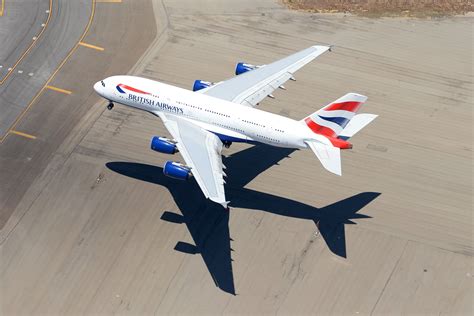
British Airways is making a bold, calculated move that signals one thing clearly: the Airbus A380 is far from finished. In an era where many airlines have retired their superjumbos, the UK flag carrier is doubling down—investing heavily in a full fleet refurbishment that will redefine premium travel at scale. At the center of this transformation is a headline-grabbing feature: the world’s largest business class cabin, with an unprecedented 110 Club Suite seats onboard.
This is not just a cosmetic upgrade. It is a strategic overhaul that reshapes how space, luxury, and profitability coexist at 35,000 feet. With a redesigned layout, next-generation seating, and a sharp pivot toward premium demand, British Airways is turning its oldest long-haul aircraft into one of the most competitive.
A Strategic Bet on the Airbus A380’s Future
The Airbus A380 has long been labeled a commercial misstep, yet its story is more nuanced. While airlines like Air France retired the aircraft early, British Airways retained confidence in its capabilities. Its fleet of 12 Airbus A380-800 aircraft, delivered between 2013 and 2016, has remained central to operations at London Heathrow—a hub defined by constrained slots and premium-heavy demand.
Unlike carriers that saw the A380 as a liability, British Airways recognized its unique advantage: high-capacity efficiency on slot-restricted routes. Instead of phasing the aircraft out, it temporarily grounded them during the pandemic and brought all units back into service once demand rebounded.
Now, with this comprehensive retrofit scheduled to begin service in 2026 and complete by 2027, the airline is making a long-term commitment. The A380 will not only stay—it will lead.
Redefining Capacity: Fewer Seats, More Premium Revenue
The most striking shift in the refurbishment lies in the aircraft’s new layout of passenger amenities (LOPA). While total capacity will drop from 469 to 421 seats, the composition tells a far more compelling story.
The breakdown reveals a decisive move toward premium cabins:
- First Class: Reduced from 14 to 12 suites
- Business Class (Club Suite): Increased from 97 to 110 seats
- Premium Economy (World Traveller Plus): Expanded from 55 to 84 seats
- Economy (World Traveller): Reduced from 303 to 215 seats
This is not a reduction—it’s a recalibration. British Airways is prioritizing yield over volume, capitalizing on strong premium demand from corporate and high-value leisure travelers.
The A380’s immense size enables this shift without sacrificing operational viability. Instead of packing more passengers, the airline is maximizing revenue per square meter, a model that aligns perfectly with Heathrow’s limited slot availability.
The World’s Largest Business Class: 110 Club Suites
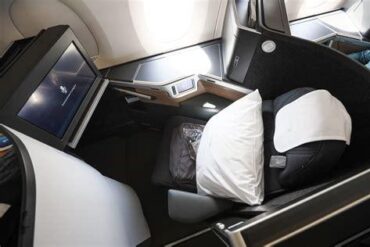
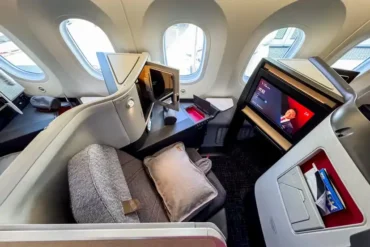
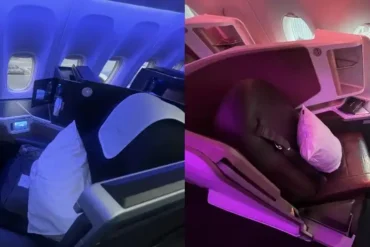
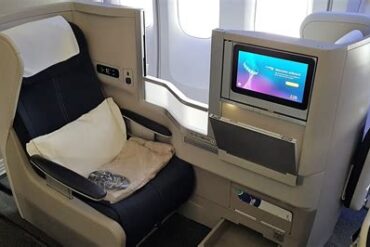
The centerpiece of this transformation is undoubtedly the Club Suite, British Airways’ next-generation business class product. Already deployed across aircraft like the Airbus A350-1000 and Boeing 777, it represents a dramatic leap from the airline’s aging Club World seats.
The A380 will elevate this concept even further by introducing 110 Club Suites, making it the largest business class cabin ever installed on a commercial aircraft.
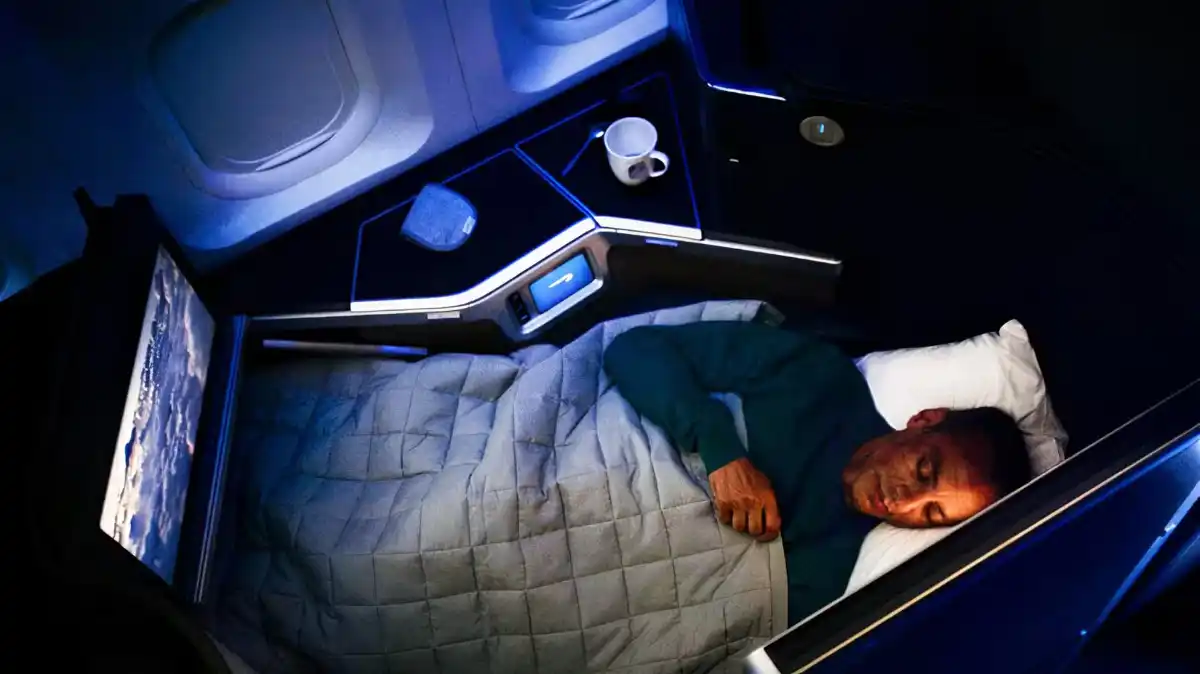
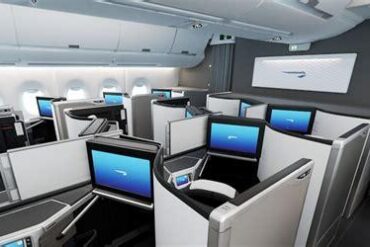
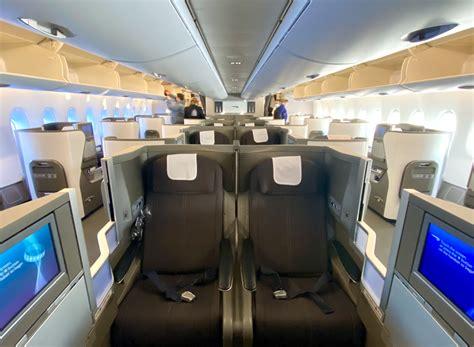
Unlike the current configuration—which features a dense, alternating “yin-yang” seating arrangement—the new layout adopts a reverse herringbone design. This ensures that every passenger enjoys:
- Direct aisle access, eliminating the need to step over others
- Enhanced privacy, thanks to sliding doors
- Consistent seat quality, avoiding the variability of older layouts
Each suite is based on the Collins Aerospace Elevation platform and includes a large 18.5-inch touchscreen display, ample personal storage, and multiple charging ports.
The most radical design decision? The entire upper deck will be dedicated exclusively to Club Suites. This creates a unique, business-class-only environment unmatched in the industry—effectively transforming the upper deck into a premium sanctuary.
From Dense to Refined: A Dramatic Cabin Reconfiguration
The existing Club World cabin on the A380 is widely regarded as outdated. Introduced in 2000, it was revolutionary at the time but has since fallen behind competitors. Its high-density configuration—up to eight seats abreast—prioritized capacity over comfort.
The retrofit completely reverses this philosophy.
Instead of cramming passengers into tight spaces, British Airways is adopting a four-abreast configuration on the upper deck. This drastically improves spatial comfort, reduces noise, and enhances the overall sense of exclusivity.
The result is a business class product that not only competes—but arguably surpasses—those offered by leading global airlines.
Next-Generation First Class: A Boutique Luxury Experience
While business class grabs the headlines, the new First Class suites represent an equally significant upgrade. Designed as a custom Collins Aerospace product, these suites introduce a level of refinement that aligns with the expectations of ultra-premium travelers.
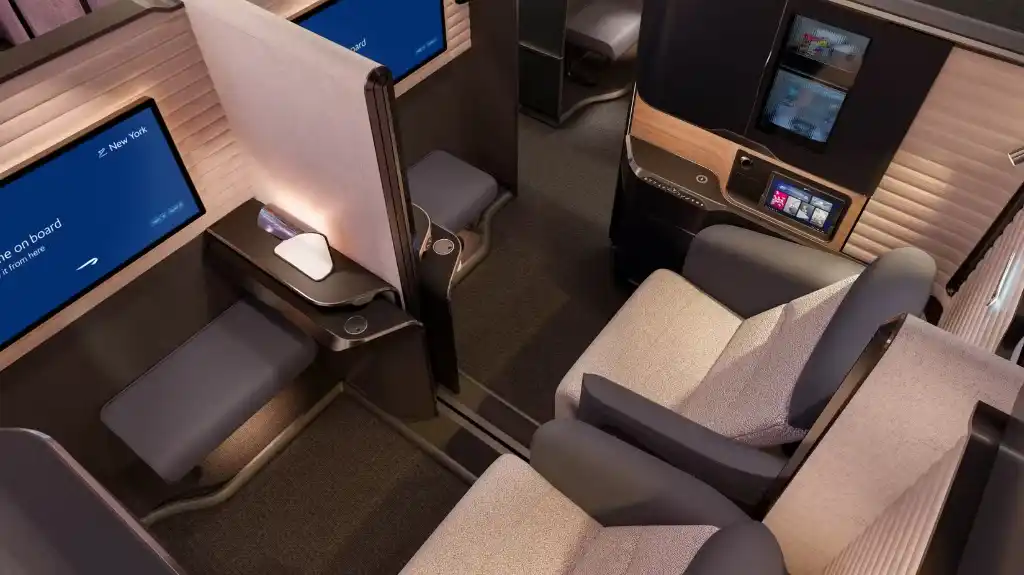
Key enhancements include:
- Sliding privacy doors with 60-inch walls
- A massive 32-inch 4K entertainment display
- Multiple charging options, including wireless charging
- Bluetooth audio connectivity
- A widened seat measuring 36.5 inches
The design draws inspiration from the iconic Concorde, blending heritage with modern aesthetics. Center suites feature retractable partitions, allowing couples to share the experience without compromising privacy.
Although the number of suites drops slightly from 14 to 12, the increase in size and luxury ensures a more exclusive, boutique atmosphere.
Premium Economy and Economy: Subtle Yet Meaningful Upgrades
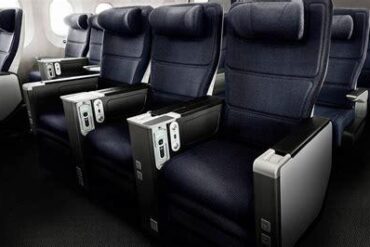
While less glamorous, the improvements to World Traveller Plus and World Traveller are far from negligible. British Airways is expected to introduce updated seat models, likely sourced from Recaro’s latest lineup, with enhancements focused on comfort and connectivity.
Premium economy will see a substantial increase to 84 seats, repositioned to the main deck directly behind First Class. This reflects growing demand for mid-tier premium travel, especially among long-haul passengers seeking better comfort without business class pricing.
Economy class, meanwhile, will be streamlined to 215 seats, all located on the main deck. Although passengers will lose access to the upper deck’s side storage bins, they will benefit from:
- Larger entertainment screens
- Improved seat ergonomics
- Enhanced power and charging options
These upgrades ensure that even non-premium passengers experience a noticeable improvement.
Connectivity Redefined: Starlink Wi-Fi for All
One of the most forward-looking elements of the retrofit is the introduction of complimentary Starlink Wi-Fi. This marks a major leap in onboard connectivity, offering:
- High-speed internet access
- Low latency suitable for streaming and work
- Availability across all cabins, not just premium
In an age where connectivity is as essential as comfort, this move positions British Airways as a leader in digital passenger experience.
How It Compares to Other A380 Operators
British Airways’ approach stands out sharply when compared to other airlines operating the Airbus A380. While carriers like Singapore Airlines and Qantas have invested in premium cabins, none have pushed business class capacity to this extent.
Typical configurations include:
- Singapore Airlines: 78 business class seats
- Qantas: 70 business class seats
- Lufthansa (post-refit): 68 business class seats
British Airways’ 110-seat configuration is not just an increase—it’s a paradigm shift. It reflects a unique combination of market demand, hub constraints, and strategic ambition.
This scale is only possible because of Heathrow’s unique dynamics. As one of the world’s busiest and most slot-constrained airports, it rewards airlines that can maximize passenger yield per flight. British Airways is leveraging the A380’s size to do exactly that.
Route Deployment: Where You’ll Experience the New A380
Starting in 2026, the refurbished A380s will be deployed on high-demand, long-haul routes from London Heathrow, including:
- Boston
- Dallas/Fort Worth
- Dubai
- Johannesburg
- Los Angeles
- Miami
- San Francisco
These routes are carefully selected for their strong premium traffic, ensuring that the expanded business class cabin operates at optimal load factors.
A380 Renaissance: Why This Move Matters
The aviation industry has been quick to write off the Airbus A380, but British Airways is proving that the aircraft still has a powerful role to play—when used correctly.
This refurbishment is more than an upgrade. It is a statement of intent. By investing in premium-heavy configurations, advanced connectivity, and cutting-edge cabin design, British Airways is redefining what the A380 can be in the modern era.
Rather than chasing volume, the airline is chasing value, differentiation, and passenger experience. The result is a product that not only competes with the best in the sky but sets a new benchmark.
For travelers, this means one thing: the return of the A380 as a true flagship experience, where scale meets sophistication in a way no other aircraft can match.