Transatlantic travel has always been one of the most competitive segments in commercial aviation, and few airlines have invested as heavily in premium cabins as British Airways. From pioneering lie-flat business-class seating to helping establish premium economy as a mainstream travel category, the carrier has long positioned itself as a leader in long-haul comfort. Today, travelers crossing the Atlantic often face a significant decision: is British Airways’ flagship Club Suite worth the substantial premium over World Traveller Plus, the airline’s premium economy product?
The answer depends on travel goals, budget, timing, and expectations. While social media frequently showcases glamorous business-class experiences, the reality is that the price difference between these two cabins can range from hundreds to many thousands of euros on exactly the same route. Understanding what drives those differences—and what passengers actually receive in return—reveals whether the upgrade represents outstanding value or an unnecessary expense.
British Airways’ newest Club Suite has transformed the airline’s premium offering. Featuring privacy doors, direct aisle access, fully flat beds, premium dining, lounge access, and personalized service, it competes with some of the most respected business-class products flying across the Atlantic today. Yet World Traveller Plus has quietly developed into one of the strongest premium economy products in the industry, delivering significantly more comfort than economy class at a fraction of the cost of business class.
How Much British Airways Club Suite Actually Costs
The price of flying in Club Suite varies dramatically depending on season, route, and booking timing. Looking at British Airways’ busiest transatlantic markets from London Heathrow, peak summer fares can reach levels that surprise even experienced travelers.
During July 2026, one of the busiest months for transatlantic travel, average one-way Club Suite fares on three major routes reached approximately €9,587 ($11,162). On individual routes, the numbers become even more striking.
Flights from London Heathrow to New York JFK averaged €8,966 ($10,439). Services to Boston Logan averaged €9,092 ($10,586). The highest fare appeared on the London-to-Los Angeles route, where average Club Suite pricing reached €10,703 ($12,462).
These are not first-class fares. They represent business-class tickets.
The numbers highlight how premium leisure travel has expanded in recent years. More travelers are willing to spend heavily on comfort, privacy, and sleep quality, especially on overnight flights where arriving rested can significantly improve the overall travel experience.
However, the story changes dramatically during the winter low season.
In February 2027, average Club Suite fares across the same routes dropped to approximately €2,085 ($2,427). London to New York averaged €1,787 ($2,080), Boston averaged €2,001 ($2,330), and Los Angeles averaged €2,467 ($2,872).
The average difference between peak summer and winter pricing reached an astonishing 363%.
This enormous gap demonstrates one of the most important realities of premium travel: timing often matters as much as cabin choice.
Why Club Suite Prices Rise So Sharply
Several factors drive these dramatic fare increases.
Summer remains the most popular period for transatlantic travel. Families travel during school holidays, business activity remains strong, and tourism demand peaks on both sides of the Atlantic. Premium cabins are particularly affected because supply remains limited while demand continues to grow.
Business-class cabins occupy valuable aircraft space. Airlines can generate substantial revenue from each seat, so pricing systems are designed to maximize yield during periods of high demand.
The New York route illustrates this perfectly. London-Heathrow-to-JFK is among the most competitive and lucrative airline markets in the world. Demand from financial services, corporate travelers, luxury leisure passengers, and premium tourists helps push Club Suite pricing more than 400% higher during peak periods.
Los Angeles, meanwhile, commands the highest absolute fares because of its longer distance. Although demand patterns influence pricing heavily, the additional operational costs associated with flying nearly eleven hours across the Atlantic and North America contribute to higher average ticket prices.
Premium Economy Costs Far Less
World Traveller Plus presents a dramatically different pricing picture.
Although premium economy is considerably more expensive than standard economy, it remains vastly cheaper than Club Suite throughout the year.
During July 2026, average premium economy fares across the same three routes reached approximately €3,219 ($3,747).
New York averaged €3,220 ($3,750).
Boston averaged €2,744 ($3,195).
Los Angeles averaged €3,580 ($4,168).
While these prices are certainly not inexpensive, they are substantially lower than Club Suite fares.
The gap becomes even more interesting during the winter season. In February 2027, average premium economy fares dropped to approximately €1,324 ($1,543).
New York averaged €1,261 ($1,469).
Boston averaged €1,360 ($1,584).
Los Angeles averaged €1,391 ($1,620).
Unlike Club Suite, premium economy experiences much less seasonal volatility. Average fares increased approximately 143% between winter and summer, compared with business class’s 363% increase.
The Real Price Difference Between the Two Cabins
The most revealing comparison is the actual gap between Club Suite and World Traveller Plus on the same routes.
During July, the average difference exceeded €6,300 ($7,400) one way.
That means a traveler purchasing a Club Suite seat instead of premium economy could spend enough extra money to cover multiple future long-haul flights.
However, winter produces a completely different calculation.
In February, the average difference shrinks to roughly €761 ($884).
Suddenly, the economics become far more compelling. Paying less than €1,000 extra for lounge access, a fully flat bed, superior dining, privacy doors, and premium service may seem like a reasonable upgrade for many travelers.
This demonstrates why experienced premium travelers frequently target low-demand travel periods. The product remains the same, but the pricing becomes dramatically more attractive.
What Makes Club Suite Special
British Airways introduced Club Suite to modernize its business-class experience and address criticism of older Club World seating.
The result is a substantial improvement.
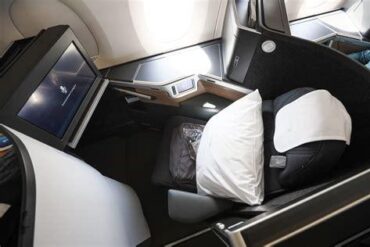
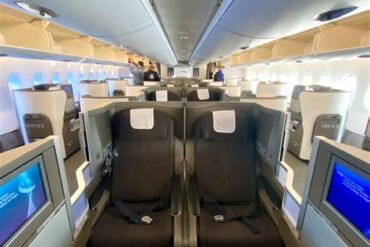
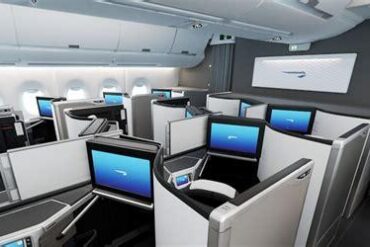
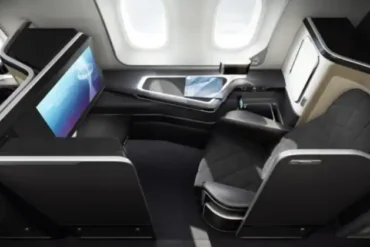
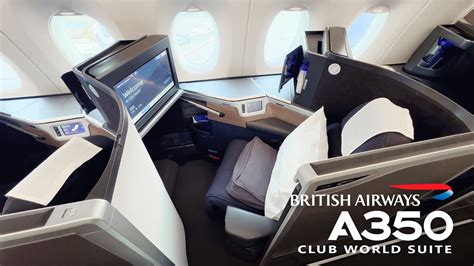
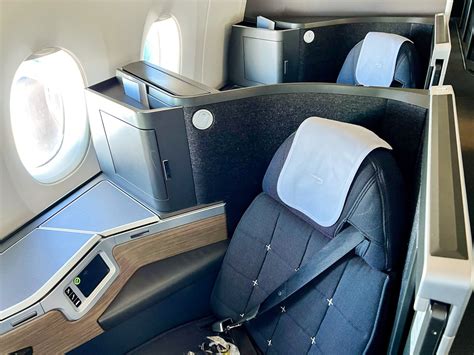
Club Suite features a 1-2-1 reverse-herringbone configuration, ensuring every passenger receives direct aisle access. This alone represents a major upgrade from previous layouts that required some passengers to step over neighboring travelers.
Privacy doors create a semi-enclosed personal space that feels more like a private room than an airline seat.
The seat converts into a fully flat bed measuring approximately 6 feet 6 inches (189 centimeters). For overnight Atlantic crossings, this capability can fundamentally transform the travel experience.
Storage areas accommodate laptops, headphones, personal electronics, travel documents, and other essentials without forcing passengers to use overhead bins repeatedly.
Each suite also includes a large 17-inch high-definition entertainment screen, providing access to extensive movie, television, music, audiobook, and gaming libraries.
Noise-canceling headphones help create a quieter environment, while premium bedding and amenity kits further enhance comfort.
The Club Suite Dining Experience
Food and beverage service represents another major distinction.
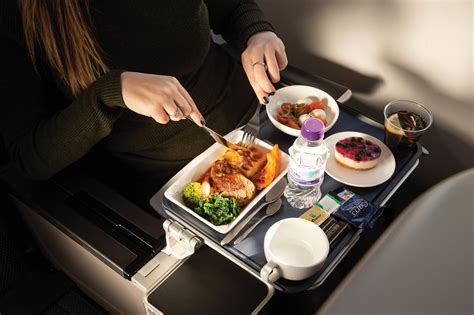
Club Suite passengers enjoy restaurant-style dining with multiple courses served directly at their seats. Menus typically include starters, main courses, desserts, and cheese selections.
British Airways also offers a broad beverage program featuring wines, spirits, cocktails, soft drinks, coffee, and tea.
On selected flights, passengers may enjoy the carrier’s well-known afternoon tea service, reinforcing the airline’s British identity.
Unlike economy cabins, where service occurs primarily at scheduled meal times, Club Suite travelers can request snacks and beverages throughout much of the flight.
The experience aims to create flexibility and personalization rather than a rigid service schedule.
What Passengers Get in World Traveller Plus
Premium economy occupies an important middle ground.
World Traveller Plus does not attempt to replicate business class. Instead, it focuses on delivering meaningful improvements over economy without entering business-class price territory.
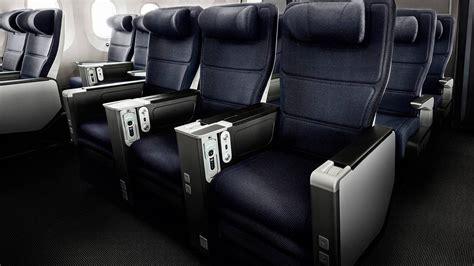
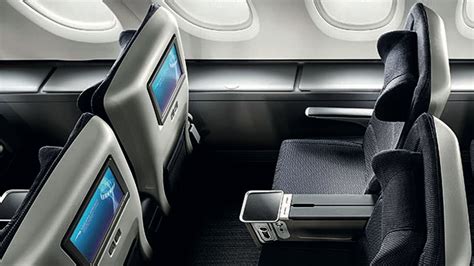
Seat pitch increases to approximately 38 inches (97 centimeters), offering significantly more legroom.
Seat width ranges from 18.5 to 19 inches, providing additional shoulder space and comfort during long flights.
Depending on aircraft type, seating is generally arranged in either 2-3-2 or 2-4-2 configurations.
Passengers receive enhanced recline, greater personal space, dedicated cabin service, and a quieter environment than standard economy.
Boarding benefits include priority lanes and expedited check-in procedures.
A welcome drink, typically sparkling wine, creates a more premium atmosphere from the beginning of the journey.
Meal service also receives upgrades through improved presentation, upgraded tableware, and enhanced menu selections.
Entertainment and Comfort Features
One area where premium economy performs particularly well is entertainment.
British Airways provides access to essentially the same content library available in business class.
Passengers can enjoy hundreds of films, television programs, music albums, podcasts, audiobooks, and games throughout the flight.
Power outlets and charging ports ensure devices remain operational during long journeys.
Amenity kits, blankets, pillows, and noise-canceling headphones further enhance comfort.
These features help narrow the experiential gap between premium economy and business class, even though the seating itself remains fundamentally different.
Avios Can Change the Value Equation
For frequent flyers, British Airways Executive Club and Avios points create another dimension in the cost comparison.
Club Suite award availability occasionally offers exceptional value.
Historically, transatlantic Club Suite redemptions between London and New York often require approximately 50,000 to 60,000 Avios, plus taxes and carrier-imposed fees.
Although taxes and surcharges can still total several hundred euros, the overall out-of-pocket cost may be dramatically lower than purchasing a cash ticket.
For travelers who collect Avios through flying, credit cards, or partner programs, business class can become surprisingly attainable.
This is particularly true during periods when cash fares exceed €8,000 or €9,000.
British Airways’ Legacy in Premium Travel
British Airways’ prominence in premium aviation is rooted in decades of innovation.
In 2000, the airline became the first carrier to introduce fully lie-flat business-class seats on scheduled services, fundamentally reshaping passenger expectations.
The move transformed business class from a larger seat into a genuine sleep-focused product.
Competitors quickly followed, triggering an industry-wide shift toward flat-bed seating.
British Airways also played a significant role in popularizing premium economy. While EVA Air introduced the concept earlier, British Airways helped bring the product into the mainstream among major international network carriers.
Today, premium economy represents one of aviation’s fastest-growing cabin categories because it appeals to travelers seeking additional comfort without business-class prices.
Is Club Suite Worth the Extra Money?
The answer depends entirely on circumstances.
If a traveler is flying from London to Los Angeles during July and faces a fare difference exceeding €7,000, World Traveller Plus may represent the better value proposition. The additional comfort of Club Suite is substantial, but the price premium is enormous.
However, during February, when the difference may shrink to less than €1,000, the calculation changes dramatically. A fully flat bed, lounge access, privacy doors, premium dining, and superior service become much easier to justify.
For overnight flights where quality sleep directly affects business meetings, vacations, or overall well-being, Club Suite often delivers meaningful benefits that extend beyond the flight itself.
For travelers primarily focused on reaching their destination comfortably while controlling costs, World Traveller Plus remains one of the strongest premium economy products available across the Atlantic.
Ultimately, British Airways offers two distinctly different premium experiences. Club Suite delivers luxury, privacy, and exceptional comfort at a premium price, while World Traveller Plus provides a carefully balanced blend of affordability and enhanced comfort. The smartest choice is often determined not by the cabin itself, but by when the ticket is purchased and how much value the traveler places on the additional comforts that business class provides.