In the annals of aviation history, few aircraft evoke the same sense of awe and engineering prowess as the Boeing 747 series. From its groundbreaking debut in the late 1960s to its final iterations in the 21st century, the “Queen of the Skies” has consistently pushed the limits of commercial aviation. Yet, among its many variants, the Boeing 747SP stands apart — not only for its dramatically altered appearance but also for its unique purpose and performance. This article explores in depth how much shorter the 747SP was compared to the 747-400 and why that mattered.
Origins of the 747SP: Purpose Over Size
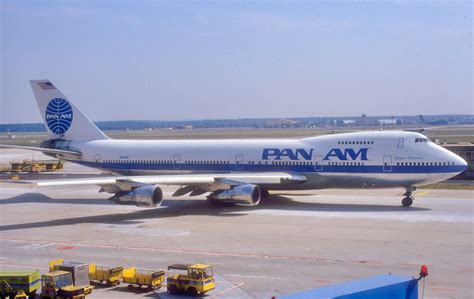
In the early 1970s, Pan American World Airways (Pan Am) approached Boeing with a specialized request: an ultra-long-range version of the 747 that could fly non-stop from New York to destinations in the Middle East and Asia, including Tehran. The result was the 747SP (Special Performance) — a compact, high-performing offshoot of the 747 family.
Unlike its larger siblings, the 747SP was created for range and performance, not passenger capacity. It took its first flight in 1973 and entered service in 1976 — a full 12 years before the 747-400 was even conceptualized.
A Tale of Two Giants: Measuring the Difference
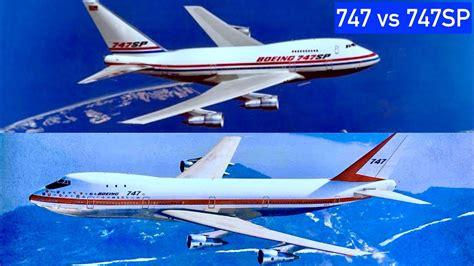
When comparing the 747SP and the 747-400, the most noticeable difference is in their length. The 747SP measures 184 feet, 9 inches (56.31 meters) in overall length, whereas the 747-400 stretches to 231 feet, 10 inches (70.66 meters). That’s a dramatic difference of 47 feet and 1 inch — nearly the length of a full-size city bus.
This truncation wasn’t achieved by simply lopping off the fuselage. Instead, it required deep structural redesigns to maintain aerodynamic stability. Engineers had to strengthen the airframe and rework internal systems, including the pressurization architecture and flight controls. To compensate for the shorter fuselage and reduced tail leverage, the 747SP’s vertical stabilizer was increased by five feet, making it the tallest 747 passenger variant ever built at 65 feet, 10 inches (20.06 meters) — even taller than the 747-400.
Structural and Cabin Configuration Contrasts
The difference in cabin layout is equally striking. The 747SP, with its reduced length, typically carried between 230 to 330 passengers, compared to the 412 to 524 carried by the 747-400 in typical three-class configurations. The SP featured eight main deck doors, while the -400, thanks to its elongated fuselage, required ten.
The 747-400 also boasted the Stretched Upper Deck (SUD) as a standard feature — a design concept born from research initiated during the SP’s development. While the SP retained the original short upper deck of the early 747s, the -400 embraced a more expansive upper level, complete with additional seating and, later, personal inflight entertainment systems.

Inside the flight deck, the generational leap is unmistakable. The 747SP relied on a three-person cockpit crew with analog gauges and a flight engineer. In contrast, the 747-400 introduced a glass cockpit and two-person crew with advanced digital Flight Management Systems (FMS), eliminating the flight engineer position entirely.
Wing Design and Aerodynamics: Subtle Yet Significant
Though both aircraft shared a fuselage width of 21 feet, 4 inches (6.5 meters), their wings told different stories of technological progress. The 747SP had a wingspan of 195 feet, 8 inches (59.64 meters) and a wing area of 5,500 square feet. The 747-400, by contrast, extended to a wingspan of 211 feet, 5 inches (64.44 meters) and a wing area of 5,650 square feet.
The -400’s wings included six-foot winglets and wingtip extensions, improving lift-to-drag ratio and fuel efficiency. The SP, meanwhile, retained simpler, single-slotted flaps — a testament to the brute-force aerodynamics of the 1970s. These differences encapsulated a broader transition in engineering: from raw power to refined efficiency.
Power Plants and Performance Metrics
Both aircraft were outfitted with four engines, but the choice and performance of these power plants reflected their respective eras.
- The 747SP was equipped with Pratt & Whitney JT9D-7J engines, each delivering 46,500 to 50,000 pounds of thrust.
- The 747-400 featured more powerful and efficient options: PW4056, GE CF6-80C2, or Rolls-Royce RB211-524, with thrust ratings between 56,000 and 63,300 pounds per engine.
This gave the 747-400 a total thrust capacity of up to 253,200 pounds, significantly higher than the SP’s upper limit of 200,000 pounds. Despite this, the 747SP still managed to impress with its raw climbing power, thanks to its lightweight design, which made it 81,500 pounds (37,000 kg) lighter than a standard -100 series 747.

Altitude, Range, and Speed: The Hot Rod 747
Nicknamed the “hot rod” of the 747 family, the 747SP was unmatched in subsonic altitude performance. It cruised at a record-breaking 45,100 feet, well above the 747-400’s typical ceiling of 41,000 feet, and even further beyond the standard cruising altitudes of most modern widebodies.
This enabled the SP to fly above turbulent weather systems and jet streams, delivering smoother rides on ultra-long-haul routes. Its maximum cruise speed of Mach 0.86 made it the fastest subsonic commercial airliner of its day — second only to the Concorde in speed, though the latter operated at supersonic speeds.
The SP’s range also defied expectations. It was designed specifically to bypass refueling stops like Anchorage, opening direct routes between continents. In fact, it famously set records for non-stop flights, including routes such as New York to Tokyo.
Operational Footprint and Legacy
Only 45 units of the 747SP were ever produced, underlining its niche role in the market. Despite this, its impact was disproportionate to its production volume. Major operators included:
- Pan Am, the launch customer, which had a hand in its development.
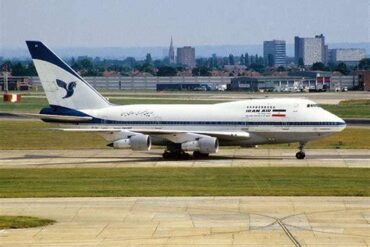
- Iran Air, notable for operating the last commercial 747SP flight in 2016.
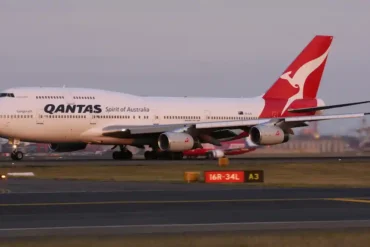
- Qantas, which used the SP for trans-Tasman and trans-Pacific routes due to short runway limitations.
- South African Airways, United Airlines, and various Middle Eastern royal families and governments also utilized the type.

The aircraft’s high-altitude performance made it ideal for use in scientific research and VIP transport. Its compact size and immense range made it a favorite among world leaders, with several SPs operated as government aircraft well into the 2000s. Notably, Las Vegas Sands Corp. employed two 747SPs for ultra-luxury guest transport.
SOFIA and the Astronomical Ambitions of the 747SP
The Stratospheric Observatory for Infrared Astronomy (SOFIA) remains one of the most iconic uses of the 747SP. Operated by NASA in collaboration with the German Aerospace Center (DLR), SOFIA involved cutting a 15-foot-wide door into the aircraft’s fuselage to house a 2.5-meter reflecting telescope.
Flying at over 43,000 feet, SOFIA operated above 99% of atmospheric water vapor, enabling observations in the infrared spectrum. It was aboard SOFIA that scientists:
- Discovered water on the sunlit surface of the Moon.
- Measured magnetic fields across entire galaxies.
- Detected the first molecule formed after the Big Bang.
- Tracked Pluto’s atmosphere during a shadow-chasing mission.
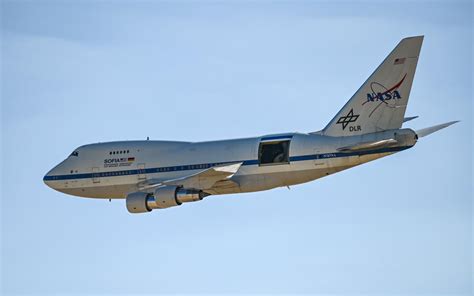
SOFIA flew science missions from 2010 to 2022 and now resides at the Pima Air & Space Museum in Arizona. Its telescope mirror is on display at the German Optical Museum in Jena.
Conclusion: More Than Just a Shorter 747
The Boeing 747SP was never meant to replace the mainline 747, nor did it attempt to match its passenger capacity. Instead, it carved a unique path in aviation history — one where range, speed, and altitude were prioritized over size. Its 47-foot reduction in length wasn’t a compromise, but a strategic engineering decision that enabled it to fly missions no other airliner of its time could achieve.
The 747-400, in contrast, represents the mature evolution of the jumbo jet lineage — more passengers, more efficient engines, and greater flexibility. It stands as a monument to 1980s and 1990s-era aviation optimization.
Yet, the legacy of the 747SP lives on — in scientific milestones, in VIP luxury, and in the memories of those who flew on one of the most unique airliners ever to grace the skies. In shortening the fuselage, Boeing didn’t just reduce the jet’s footprint; it elevated its performance beyond the reach of any other subsonic widebody of its era.