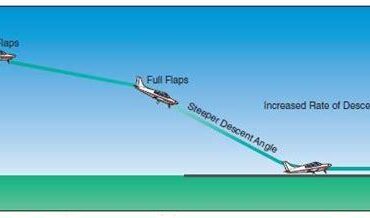
Precision in aviation is not a luxury; it is a necessity. Among the many critical aspects of flying, mastering the Float Factor during landings distinguishes a proficient pilot from an average one. At its core, the Float Factor refers to the unintended airborne drift that occurs when a plane approaches a runway too fast, leading to extended landing distances and potential safety risks.
A recent observation at Gillespie Field revealed that a significant portion of student pilots were consistently landing at 20-40% above optimal speeds, resulting in prolonged floating above the runway. This phenomenon underscores a fundamental truth in aviation: aircraft are designed to fly, and they will continue to do so if excess airspeed is not properly managed.

Understanding the Aerodynamics Behind the Float Factor
When an aircraft exceeds its ideal final approach speed, the lift generated surpasses what is necessary for a controlled descent. Clyde Cessna and Bill Piper, legendary figures in aviation, engineered their planes to maximize aerodynamic efficiency. Consequently, any surplus in airspeed translates directly into excess lift, which delays the aircraft’s transition from flight to ground roll.
In gliding, precise airspeed control is paramount. Glider pilots calculate their landing speeds meticulously, taking into account variables such as gross weight, wind conditions, and density altitude before even taking off. Once airborne, maintaining these speeds becomes a critical task, especially during the final approach phase where deviations can lead to dangerous outcomes.
Experiences from soaring highlight that being even marginally slow can lead to induced drag increasing exponentially—a phenomenon known as the region of reversed command. Unlike powered aircraft, gliders lack the luxury of a throttle, reinforcing the lesson that precision in airspeed is non-negotiable.
The Mathematics of Floating: How Excess Speed Exponentially Impacts Landing Distance
A key lesson from powered and unpowered flight alike is that even minor deviations in final approach speed can have disproportionate effects on landing distance. If a Cessna 172SP should approach the runway at 55 KIAS but instead arrives at 65 KIAS, a 20% overspeed, the landing distance does not merely increase by 20%—it balloons by approximately 44%.
Push that final approach to 75 knots, and the landing distance swells by a staggering 85%. Such figures demonstrate why mastering the Float Factor is crucial, especially when operating in environments where runway length is limited.

Short Runway Operations: Where Precision is Paramount
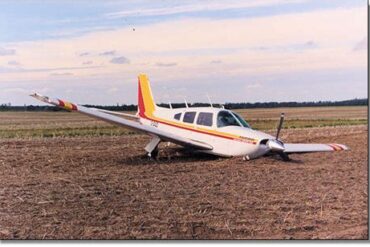
Flying into short airstrips, often defined as runways under 2,000 feet, brings the consequences of the Float Factor into stark relief. Many mountain and canyon strips present no realistic option for a go-around, meaning pilots must commit fully to a precise, well-executed landing on the first attempt.
Achieving such accuracy necessitates understanding the specific performance characteristics of the aircraft on that day. Factors such as weight, center of gravity, and atmospheric conditions can shift the aircraft’s behavior significantly. Simply relying on book values from the Pilot’s Operating Handbook (POH) — which are often derived from tests at maximum gross weight under ideal conditions — is insufficient.
Dialing in Airspeed and Power Settings for Precision Landings
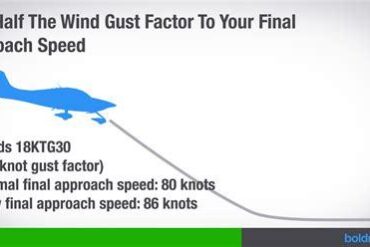
Pilots aiming to minimize float must peg their airspeed at approximately 1.2 times V_SO, the stall speed in landing configuration. The military, ever emphasizing precision, targets 1.1 times V_SO. To do this effectively, pilots must create individualized performance data each time they fly.
Variables such as:
- Runway Condition: Wet, icy, downslope surfaces extend ground roll; conversely, rough or upslope surfaces shorten it.
- Wind: Headwinds reduce, tailwinds increase ground roll; crosswinds add complexity during rollout.
- Weight: Lighter weights demand adjusted airspeeds; for example, 20% below MGW suggests a 10% decrease in approach speed.
- Density Altitude: Higher altitudes demand higher true airspeeds, requiring adjustments in both approach planning and execution.

Each of these elements must be factored dynamically into approach planning. Rule-of-thumb calculations, while useful, must be tailored with specific flight experience and conditions.
The Ultimate Standard: Consistent, Precise Approaches Every Time
Once pilots grasp the relationship between power settings and airspeed, the goal becomes one of consistency. If calculations indicate a 61-knot final approach speed, the target must not waver between 58 and 64 knots. Precision in this phase of flight can spell the difference between a safe, controlled landing and a dangerous overrun.
Pilots are encouraged to seek the guidance of instructors experienced in short-field operations to refine these critical skills. Regular practice, rigorous self-discipline, and an unyielding commitment to hitting precise targets will embed the necessary habits for superior airmanship.
Conclusion: Mastery of the Float Factor Means Mastery of the Aircraft
Understanding and controlling the Float Factor is not merely about achieving shorter landings; it is about embracing the discipline required for safe and professional flying. The lessons learned from gliding — where there is no option to add power — translate seamlessly into powered flight, where margin for error can likewise be slim.
Every pilot must internalize that aircraft will continue to fly as long as sufficient lift exists, and excess airspeed at landing only prolongs that flight to potentially dangerous effect. By committing to strict airspeed discipline, tailoring performance expectations to real-time conditions, and refusing to accept anything less than exactitude, pilots can elevate their skills, improve safety, and ensure that every landing is as controlled and efficient as possible.
Flight, after all, is about precision. And precision begins with mastering the Float Factor.