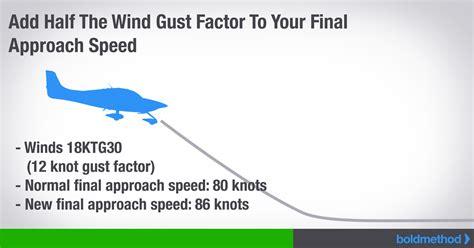
In aviation, the gust factor refers to the difference between the steady wind speed and the peak gusts that can occur during a flight. For example, if the wind is reported to be 18 knots, with gusts reaching 30 knots, the gust factor is calculated by subtracting the steady wind speed from the gust speed, resulting in a gust factor of 12 knots. This calculation is crucial because it allows pilots to anticipate fluctuations in airspeed and adjust their approach accordingly.
To maintain safety during landings in such conditions, the FAA recommends adding half of the gust factor to your final approach speed. This adjustment gives pilots a safety margin by compensating for sudden drops in the headwind caused by gusts, which could otherwise reduce the aircraft’s speed too much and bring it dangerously close to stall speed. In this article, we will explore why this method is recommended and how to apply it effectively during windy day landings.
Why Speed Matters on Gusty Days
Flying through gusty air involves significant fluctuations in wind speed and direction, which means your aircraft’s speed can change rapidly and unpredictably. While it’s always important to maintain a stable final approach speed under normal conditions, gusty winds make this particularly challenging. The last thing a pilot wants on a final approach is to be caught by a sudden gust that decreases the headwind and brings the aircraft dangerously close to stalling speed.
A stall occurs when the aircraft’s wings no longer generate enough lift to sustain flight, which can lead to a loss of control and a potential crash. When gusts reduce the headwind component, your aircraft could experience a dramatic drop in airspeed. By ensuring you maintain a slightly higher airspeed — typically by adding half the gust factor — you reduce the likelihood of entering into a stall scenario, even if unexpected gusts reduce the headwind temporarily.
The FAA’s Recommendation: Add Half the Gust Factor
The FAA’s recommendation is clear: add half the gust factor to your final approach speed when landing in gusty conditions. This simple calculation ensures that you have enough airspeed to handle wind gusts without compromising safety or control.
To understand this better, let’s break down the math. If the wind is reported as 18 knots, with gusts up to 30 knots, you first calculate the gust factor by subtracting the steady wind from the gust speed: 30 – 18 = 12 knots. The FAA’s guidance is to add half of the gust factor to your usual final approach speed. In this case, half of the 12-knot gust factor would be 6 knots.
So, if your normal final approach speed is 80 knots, you would add the 6 knots to arrive at an approach speed of 86 knots. This slightly higher speed gives you a safety margin and compensates for the unpredictable nature of gusty winds. By doing so, you maintain better control over your aircraft, even if the wind gusts suddenly decrease on final approach.
Flaps and Their Role on Gusty Days
When adjusting for gusty wind conditions, many pilots wonder how to handle flaps. Flaps are a critical control surface that increase the aircraft’s lift and drag, helping you land safely at lower speeds. However, the FAA advises against always deploying full flaps in gusty conditions, especially when adding speed to compensate for the gust factor.
While flaps are essential for short-field landings and reducing landing speeds, using less than full flaps in gusty conditions offers two significant benefits:
- Higher Pitch Attitude: With less flap extension, the aircraft will have a higher pitch attitude. This makes it easier to transition from final approach to touchdown, requiring less of a change in pitch attitude during the flare.
- Higher Approach Speed: By flying at a slightly faster approach speed (after adding half the gust factor), you maintain better control throughout the landing process, reducing the risk of stalling due to sudden wind fluctuations.
That said, it’s important to remember that adding too much speed can also have drawbacks. Excessive speed could cause the aircraft to float during the landing, pushing you beyond your desired touchdown point. Therefore, while flying faster can provide a cushion against gusts, it’s essential to balance speed with control and aim to add no more than half the gust factor to your normal approach speed.
A Safe Landing: Applying the Technique
The primary goal of adjusting your approach speed in gusty conditions is to maintain a safe margin between your actual airspeed and the stall speed. By following the FAA’s simple guideline — adding half the gust factor to your final approach speed — you provide yourself with a buffer zone that helps you remain in control throughout the landing.
It’s crucial to practice this technique regularly, especially during the spring season when wind gusts are more prevalent. With consistent practice, you will become more adept at adjusting your approach speed intuitively, allowing you to land confidently even in challenging weather conditions.
Flying in gusty conditions doesn’t have to be stressful. By following this tried-and-tested method of adding half the gust factor to your final approach speed, you can mitigate the risks of wind fluctuations and ensure a smooth, safe landing. As with all flying techniques, experience is key — the more you practice, the more proficient you will become in managing landings in gusty winds.
Conclusion: Mastering Windy Day Landings
Landing on a windy day presents unique challenges, but by adjusting your approach speed using the gust factor rule, you can dramatically improve your safety and control. Adding half the gust factor to your final approach speed gives you the necessary buffer to handle sudden gusts without veering too close to stall speeds. This simple but effective technique, when paired with appropriate flap settings and proper technique, will help you navigate even the windiest landings with confidence.
Pilots who master this technique develop a keen understanding of the relationship between wind conditions and aircraft performance, making them more capable of adapting to unpredictable circumstances. As a result, each windy landing becomes an opportunity for growth, ultimately making you a safer, more skilled pilot.
By incorporating these strategies into your routine, you’ll not only improve your wind-related landings but also enhance your overall aviation proficiency.