United Airlines moves an extraordinary number of travelers every year. Between December 2024 and November 2025, the carrier transported roughly 178 million round-trip passengers, according to data from the U.S. Department of Transportation (DOT). That scale makes United one of the most powerful forces in global aviation, responsible for carrying roughly one out of every six airline passengers in the United States.
Yet even a massive airline with a sophisticated network occasionally flies routes that look strangely quiet. Airlines operate thousands of flights across hundreds of cities, and demand rarely spreads evenly. Some flights leave the gate nearly full; others depart with rows of empty seats. The reality of airline economics means these thin routes often exist for strategic reasons rather than pure passenger demand.
Across United’s global network of more than 1,020 routes connecting 371 airports, the airline maintained an average seat load factor of 82.4% during the same period. In aviation terms, seat load factor refers to the percentage of available seats that are actually filled by passengers. While that average places United close to competitors like Delta Air Lines (84.0%) and American Airlines (83.9%), certain routes fall dramatically below the norm.
Some of the least crowded flights in the system averaged barely one-third full, and one route dipped below 28% occupancy. These are not random experiments—they are typically tied to a uniquely American aviation policy designed to keep small communities connected to the national air network.
Why Some United Flights Operate Nearly Empty
Many of the quietest routes in United’s system exist because of the Essential Air Service (EAS) program. Created after airline deregulation in 1978, EAS provides government subsidies to airlines that serve small or remote communities that would otherwise lose commercial air connections.
In practice, this means airlines sometimes fly routes with extremely limited demand because the federal government compensates them for doing so. The goal is regional connectivity rather than profit on ticket sales alone.
The result is a fascinating paradox: flights that appear inefficient on the surface can still make financial sense once subsidies and strategic network value are considered. Small cities rely on these flights to access major hubs like Chicago O’Hare, Denver, Houston, and Washington Dulles, where passengers can connect to hundreds of destinations.
United Airlines’ 10 Routes With the Lowest Seat Load Factors
Data compiled from Cirium Diio and the U.S. Department of Transportation reveals the ten least-filled United routes between December 2024 and November 2025. These routes all met the reporting threshold of at least 2,500 annual passengers within the continental United States.
- Chicago O’Hare – Fort Dodge, Iowa: 27.9% load factor
- Chicago O’Hare – Mason City, Iowa: 29.3%
- Denver – Dodge City, Kansas: 29.4%
- Denver – Liberal, Kansas: 30.7%
- Washington Dulles – Morgantown, West Virginia: 31.8%
- Denver – Devils Lake, North Dakota: 36.0%
- Chicago O’Hare – Decatur, Illinois: 36.0%
- Denver – Watertown, South Dakota: 42.9%
- Denver – Scottsbluff, Nebraska: 47.1%
- Houston Intercontinental – Victoria, Texas: 47.8%
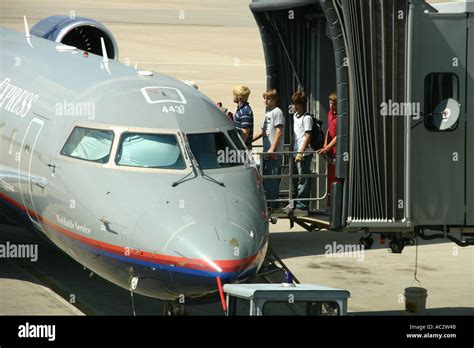
Every route on the list is tied to regional operations under the United Express brand, and nearly all are subsidized through the Essential Air Service program. Passenger volumes are modest—many of these routes carried fewer than 20,000 travelers in an entire year.
Denver to Dodge City: A Wild West Route With Sparse Demand
One of the most striking examples is the Denver to Dodge City, Kansas route. With a 29.4% load factor, it ranks among the least-filled flights across the entire United network.
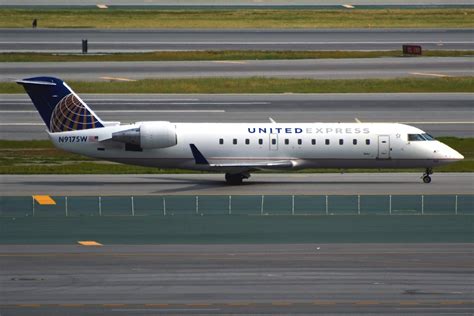
The flight covers 254 nautical miles (470 kilometers) and typically operates 12 round trips per week using SkyWest Airlines’ CRJ200 regional jets, which seat around 50 passengers in an all-economy layout. Even with such small aircraft, the flights frequently depart with dozens of empty seats.
The explanation becomes clear when looking at the demographics. Ford County, where Dodge City is located, has a population of only about 35,000 residents. That limited population means demand for regular air travel is naturally low.
Government support fills the gap. Over a three-year contract period ending in April 2027, United Express is expected to receive approximately $22 million in subsidies to maintain service. On average, this equates to about $118 in support per seat per flight.
Even with that assistance, traffic is tiny. During the analyzed period, the Denver–Dodge City local market generated only about two passengers per departure, illustrating just how thin demand can be in some rural aviation markets.
Houston to Victoria: A Short Flight That Still Matters
Unlike most routes on the list, Houston Intercontinental to Victoria, Texas sits within a large and economically active state. Yet it still recorded a relatively low 47.8% seat load factor.
The route is remarkably short—just 107 nautical miles (198 kilometers)—making it the shortest United connection from Houston’s major hub. Despite its brevity, it carried 27,700 passengers during the 12-month period, a higher volume than several other markets on the list.
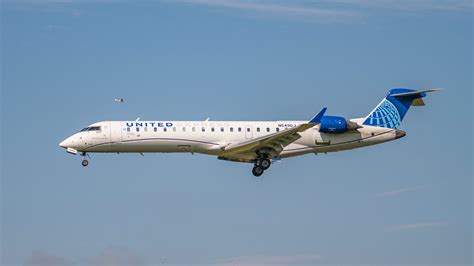
The service has an unusual history. United Express first operated the route in 2012 after inheriting it from Continental Airlines, then later resumed service in 2020. Today the flights are operated primarily by SkyWest Airlines, typically using the CRJ200 regional jet.
Financial incentives play a role here as well. United receives approximately $19 million in subsidies over three years to maintain the route. Even so, the airline appears confident in its performance. Plans for 2026 include the introduction of the larger CRJ550 and a frequency increase to twice daily flights, which will boost available seats by roughly 14% year over year.
The Strategic Value of Quiet Routes
Routes with half-empty cabins might appear inefficient, but airline networks are complicated ecosystems. Small regional flights feed passengers into large hub airports where they connect to international and long-haul services.
For United, hubs like Denver, Chicago O’Hare, Houston Intercontinental, and Washington Dulles function as enormous transportation funnels. A passenger boarding in a small town like Devils Lake, North Dakota, can connect through a hub and reach Tokyo, London, or São Paulo on the same ticket.
That connectivity gives these thin routes strategic importance far beyond their passenger numbers. The Essential Air Service program ensures that even the smallest communities remain plugged into the national transportation grid.
Viewed through that lens, the quietest flights in United’s network are not signs of failure. They are evidence of a complex aviation system designed to connect remote towns, major hubs, and global destinations into a single, functioning network—sometimes with a little help from public funding and a lot of empty seats.