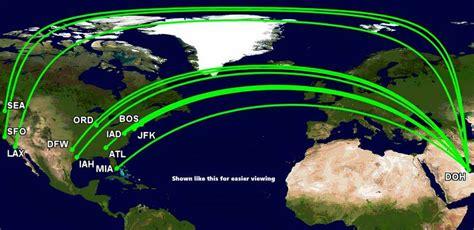
Qatar Airways has quietly engineered one of the most efficient and high-performing long-haul networks between the United States and the Middle East. In 2025, its US routes reached an extraordinary milestone—average seat load factors exceeding 90%, with several routes pushing close to full capacity. These figures are not just impressive; they reveal a deeper strategy built on precision connectivity, diaspora demand, and global transit dominance.
While competitors focus on volume, Qatar Airways has optimized route density and passenger flow, turning its Doha hub into a powerful gateway linking North America with South Asia, Southeast Asia, and beyond.
Why Qatar Airways’ US Network Is Nearly Always Full
Behind the headline-grabbing 95% load factors lies a carefully calibrated network. Unlike airlines that rely heavily on point-to-point demand, Qatar Airways thrives on connecting traffic, particularly between the US and high-growth regions like India, Pakistan, Bangladesh, and the Philippines.
This approach allows the airline to fill seats consistently, even on ultra-long-haul routes. By maintaining a relatively moderate seat count per flight—averaging around 329 seats—it becomes significantly easier to achieve high occupancy rates while maintaining operational flexibility.
Crucially, these passengers are not evenly distributed. Instead, demand is concentrated in specific high-volume city pairs, many of which are underserved by direct flights. That’s where Qatar Airways dominates.
Top 10 Busiest Qatar Airways US Routes by Load Factor
The data reveals a striking pattern: routes with the highest load factors are not always the largest markets. Instead, they are the ones with strong connecting demand and limited direct competition.
- Dallas/Fort Worth (94.7%) emerges as the most filled route, driven overwhelmingly by demand to Hyderabad—one of the largest underserved US-India corridors.
- Chicago O’Hare (94.1%) follows closely, also fueled by South Asian traffic, particularly India.
- Miami (92.5%) stands out for its unique connection to Manila, reflecting strong Filipino diaspora demand.
- Boston (90.4%) and San Francisco (89.7%) benefit from tech-driven travel to Bengaluru.
- Houston (90.8%) and Atlanta (90.5%) maintain consistent volumes linked to Mumbai and Hyderabad.
- Los Angeles (90.4%) taps into a niche but powerful Armenia-bound market via Yerevan.
- Washington Dulles (89.1%) and Seattle (87.8%) round out the list with steady flows to India’s major cities.
Each route demonstrates how targeted network planning can outperform sheer scale.
Dallas and Chicago: The Titans of High Load Efficiency
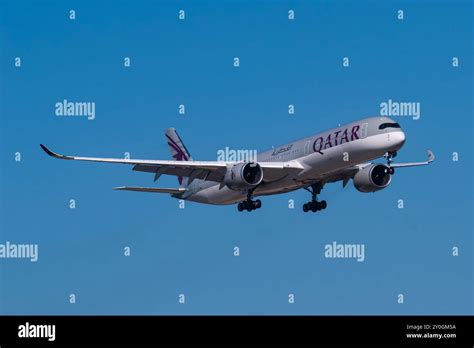
Dallas/Fort Worth is not just Qatar Airways’ fullest US route—it is a case study in strategic aviation planning. With nearly 395,000 round-trip passengers and a staggering 94.7% load factor, the route thrives on its connection to Hyderabad.
Chicago tells a similar story. Its strong South Asian ties and central geographic position make it an ideal hub for funneling passengers into Qatar’s global network. These routes succeed because they align perfectly with diaspora travel patterns and limited nonstop alternatives.
Miami and Los Angeles: Unexpected Powerhouses
Miami’s presence among the top routes might seem surprising at first glance. However, its strength lies in its connection to Manila—a route underserved by direct flights but rich in demand. Qatar Airways capitalizes on this by offering efficient one-stop itineraries that outperform longer or less convenient alternatives.
Los Angeles, on the other hand, benefits from a unique geopolitical situation. With limited competition on routes to Armenia, Qatar Airways has captured a significant share of traffic between LA and Yerevan.
The New York Paradox: Biggest Yet Not Fullest
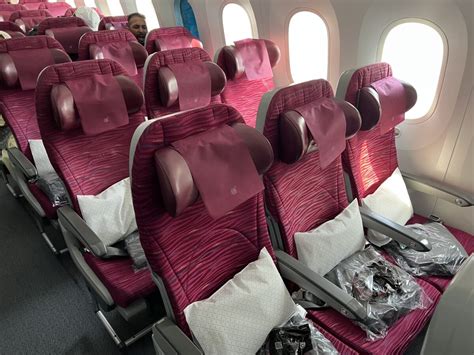
Despite being Qatar Airways’ largest US market, New York JFK does not appear among the top-performing routes by load factor. With over 531,000 annual passengers, it remains a cornerstone of the airline’s network—but its 85.1% load factor falls short of the top ten.
This paradox highlights an important reality: volume does not equal efficiency. JFK’s vast capacity, combined with intense competition and diversified demand, dilutes its load factor compared to more targeted routes.
Still, New York plays a critical role in feeding passengers into South Asia, with India alone accounting for a significant share of traffic. Dhaka also emerges as a major destination, underlining the continued importance of Bangladesh in Qatar Airways’ network strategy.
The South Asia Engine Driving Demand
A consistent theme across all top routes is the dominance of South Asian destinations. Whether it’s Hyderabad, Bengaluru, Mumbai, or Delhi, these cities form the backbone of Qatar Airways’ US operations.
This is no coincidence. The airline has positioned Doha as a global super-connector, enabling seamless travel between secondary US cities and high-growth Asian markets. By doing so, it captures demand that would otherwise require multiple connections or longer travel times.
In many cases, Qatar Airways is not just competing—it is creating the market.
Challenges Ahead: Competition and Market Shifts
While the current performance is impressive, the landscape is evolving. Airlines like Turkish Airlines are expanding aggressively, particularly in niche markets such as Armenia. As new routes emerge and geopolitical conditions shift, Qatar Airways may face increasing pressure on some of its most profitable corridors.
Additionally, the reliance on connecting traffic—while powerful—can also expose the airline to fluctuations in global demand. Any slowdown in South Asian travel could have a disproportionate impact on load factors.
A Masterclass in Network Optimization
Qatar Airways’ US network is not just busy—it is surgically optimized for maximum efficiency. By focusing on underserved routes, leveraging diaspora demand, and maintaining disciplined capacity, the airline has achieved load factors that most competitors can only aspire to.
The result is a network where planes are not just flying—they are flying nearly full, nearly every time.