British Airways remains the dominant European airline across the North Atlantic, a market that has long been aviation’s most competitive and economically vital corridor. Between December 2024 and November 2025, the airline carried approximately 7.6 million passengers between Europe and the United States, representing a striking share of the transatlantic travel ecosystem. When fifth-freedom and US carriers are included, the oneworld member still accounted for roughly one in ten passengers crossing the Atlantic between Europe and the US—a staggering level of influence for a single airline.
Yet beneath the scale and prestige lies a more nuanced story. Even aviation giants have weak spots, and detailed traffic data reveals that several British Airways routes to the United States struggled to fill seats. According to data compiled from the US Department of Transportation and Cirium Diio, British Airways operated 28 US routes during the examined period. While the airline’s overall average seat load factor reached a respectable 84.4%, some routes performed far below that mark.
Understanding those underperforming routes offers a fascinating glimpse into the realities of airline network strategy: competition, geography, seasonal demand, and alliance dynamics all play decisive roles in determining whether an aircraft departs full—or surprisingly empty.
The Transatlantic Benchmark: How British Airways Compares
Across all airlines operating between Europe and the United States, the average load factor reached 83.0%, placing British Airways slightly ahead of the broader market. Even so, several European competitors demonstrated stronger performance.
Carriers such as TAP Air Portugal (87.3%), Air France (86.4%), Iberia (86.0%), KLM (85.9%), and LOT Polish Airlines (85.5%) all recorded higher seat occupancy rates on their transatlantic operations.
Within the specific UK–US market, British Airways was actually beaten by Norse Atlantic Airways, the long-haul low-cost carrier that achieved an impressive 88.8% load factor. That comparison, however, requires context. Norse operates a far smaller network focused on highly price-sensitive leisure markets, while British Airways balances a complex mix of premium corporate demand, global connections through Heathrow, and long-haul network connectivity.
The key lesson: load factor alone does not determine profitability. A flight filled with discounted leisure passengers may look healthy statistically but generate less revenue than a half-full cabin of premium travelers.
Still, examining the least-filled routes provides clues about where market pressures are strongest.
The Ten British Airways US Routes With The Lowest Load Factors
The following services recorded the lowest seat occupancy rates during the December 2024–November 2025 period:
- London Gatwick – Tampa: 69.4%
- London Gatwick – Las Vegas: 75.9% (route discontinued October 2025)
- London Heathrow – Atlanta: 76.4%
- London Heathrow – Washington Dulles: 77.6%
- London Heathrow – Dallas/Fort Worth: 77.8%
- London Heathrow – Houston Intercontinental: 77.9%
- London Heathrow – Denver: 80.7%
- London Gatwick – Orlando: 81.1%
- London Heathrow – New Orleans: 81.1%
- London Heathrow – Baltimore: 82.7%
While several of these figures remain commercially acceptable, the contrast with the airline’s 84.4% network average reveals meaningful variation across markets.
Gatwick–Tampa: British Airways’ Emptiest US Route
Among all British Airways transatlantic services, London Gatwick to Tampa produced the lowest load factor at just 69.4%. The route carried 141,128 round-trip passengers over the measured year—respectable traffic volume, yet still far below the seat occupancy levels the airline typically expects.
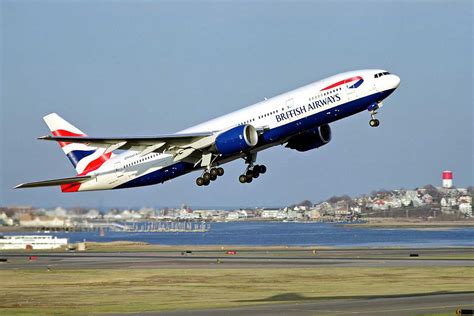
British Airways has served Tampa since 1985, inheriting the route from British Caledonian, the historic UK airline absorbed into BA in the late 1980s. For decades the Florida city represented a reliable leisure destination for British travelers seeking sunshine, beaches, and cruise departures.
But aviation markets rarely remain static. Tampa gradually attracted competitors, including FlyGlobespan, Norwegian Air Shuttle, and Virgin Atlantic, each seeking a share of the leisure demand flowing between the UK and Florida.
Virgin Atlantic’s decision to launch London Heathrow–Tampa flights in 2022 added a new layer of competition. Heathrow’s superior connectivity and premium positioning naturally siphoned some demand away from Gatwick.
Seasonality also played a major role. During February 2025, British Airways operated the route only five times per week, yet managed to fill just 52.3% of available seats. Even Virgin Atlantic, benefiting from Heathrow connections, recorded 58.1% occupancy during the same month, highlighting how weak winter demand can become in leisure-heavy markets.
Heathrow–Atlanta: Competing In A Rival Alliance Fortress
The weakest performer among Heathrow departures was London Heathrow to Atlanta, which achieved a 76.4% load factor—roughly eight percentage points below BA’s US network average.
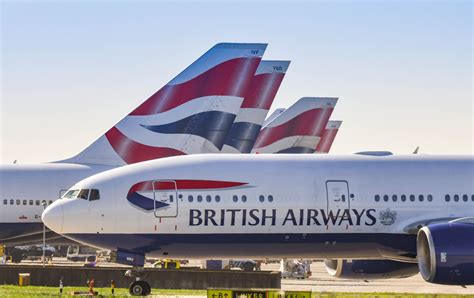
On paper the route seems promising. Atlanta is the world’s busiest airport by passenger traffic and a major economic hub in the southeastern United States. But airline alliances complicate the picture.
Atlanta serves as the primary hub for Delta Air Lines, a founding member of the SkyTeam alliance and one of British Airways’ fiercest global competitors. Delta operates multiple daily flights between Atlanta and Heathrow, often supported by joint venture partner Virgin Atlantic.
Combined, Delta and Virgin offer four daily departures on the route—dramatically more than British Airways’ single daily flight operated by the Boeing 777-200LR.
Frequency matters. Business travelers prefer flexibility, and airlines offering multiple departures gain a powerful advantage in corporate travel contracts.
Market share data underscores the imbalance. British Airways controls only about one-fifth of the nonstop passenger market between Atlanta and London, trailing far behind Delta and also Virgin Atlantic.
The Role Of Connecting Passengers
Unlike its competitors, British Airways relies heavily on connecting traffic through Heathrow to support the Atlanta route. Many passengers continue beyond London to destinations across India, Europe, and the Middle East, transforming the flight into a long-haul feeder rather than a pure point-to-point service.
India in particular represents a major onward market for passengers arriving from Atlanta. Yet this strategy has limitations. Connecting travelers typically generate lower yields compared with premium nonstop business passengers.
The competitive environment has also intensified. Etihad Airways launched Atlanta service in mid-2025, adding another pathway for passengers traveling between the US Southeast and South Asia.
That extra competition makes it even harder for British Airways to sustain high load factors on the route.
Network Adjustments And Strategic Consolidation
Two of the ten weakest routes have already disappeared from the British Airways network. London Gatwick–New York JFK and Gatwick–Las Vegas were both discontinued in October 2025, as the airline concentrated its long-haul operations more heavily at Heathrow.
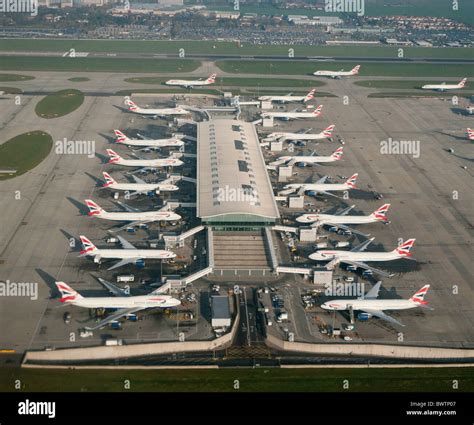
This shift reflects a broader strategy. Heathrow offers stronger connecting flows, premium passenger demand, and alliance coordination, making it far more valuable than Gatwick for most long-haul services.
By consolidating flights at Heathrow, British Airways can deploy aircraft more efficiently while feeding traffic from its global network into fewer, stronger routes.
In aviation strategy, empty seats are signals. They reveal where demand is soft, where competition is fierce, and where networks must evolve. British Airways still dominates the transatlantic landscape, but the story of its least-filled routes shows how even industry giants constantly adapt in the turbulent, data-driven chess game of global aviation.